
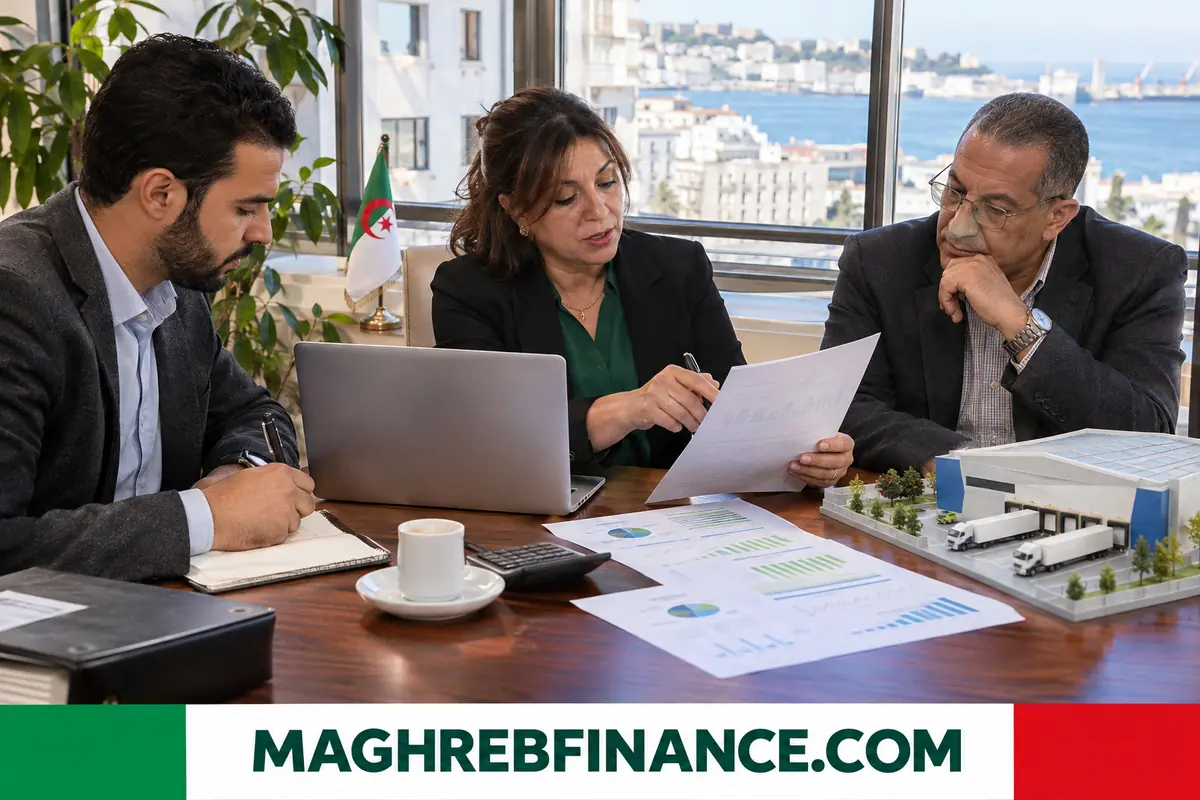
Algeria gives savers bank savings certificates, known as bons de caisse, and Treasury bills, together with other fixed-income investments in dinars. A certificate is a debt instrument issued by a bank for a set term and rate, while Treasury bills and bonds are issued by the State through the Treasury and distributed by banks acting as primary dealers. Both are alternatives to a passbook for people who can lock their money away, and both operate under the supervision of the Bank of Algeria and the Ministry of Finance.
What a bank savings certificate is
A bon de caisse is a security issued by a bank in exchange for funds received from a customer. It states the amount, the issue date, the maturity, the rate and the way interest is paid, whether periodically or at maturity.
Certificates may be registered or bearer instruments, and some banks allow them to be pledged as collateral for a loan. Compare them with a term deposit, which is booked in an account rather than as a document. The certificate's wording matters: it should say who the issuer is, whether interest is paid in advance, and how the capital is refunded.
Treasury bills and bonds explained
The State borrows by issuing short-term Treasury bills and longer-term Treasury bonds, called OAT in French. The Treasury announces auction dates and amounts, and specialised banks bid on behalf of themselves and clients. Treasury bonds can be listed on the Algiers Stock Exchange, where they trade with other bonds.
Treasury securities are considered the safest local investments in dinars because they are backed by the State, although the return can be modest and is exposed to inflation. Longer maturities carry more price risk if a holder needs to sell before the end, and shorter bills suit cautious cash management.
How individuals can invest
Most retail savers reach these instruments through a bank. Buying a certificate takes a visit to the branch with an identity card and a transfer of funds. Access to Treasury securities may involve opening a securities account with a bank or a broker, and minimum amounts are often higher than for a passbook.
Ask the adviser which instruments are open to individuals, what the minimum ticket is and whether the bank charges custody fees. Investors with large amounts, such as companies or professionals, often have easier access than households because they meet minimum thresholds.
Rates, maturities and examples of use
Maturities range from months to many years, and rates usually rise with duration. A household saving for a purchase in three years might split money between a three-year certificate and shorter deposits. A retiree wanting regular income may choose instruments paying interest every year. A business owner with idle cash between two investments may prefer a short certificate, because the money returns quickly.
- Match maturity with the date the money is needed.
- Compare rates net of tax.
- Do not commit emergency money.
- Ask whether interest is paid yearly or at maturity.
Risks and protection
The main risks are the issuer's solvency, inflation, early exit and reinvestment at lower rates. A bank certificate is a claim on the bank, so its safety depends on the institution, which is supervised by the Bank of Algeria. State securities rely on the government's credit.
Liquidity matters as well. Before maturity, a certificate can be hard to sell or redeem without a penalty, while listed Treasury bonds can be sold on the market, at a price that may be lower than the face value. Regular statements and alerts from the bank help investors track maturity dates and avoid automatic renewals at poor terms.
Taxation and paperwork
The tax treatment of interest depends on the instrument, the holder and the finance law in force. Some State securities have benefited from favourable treatment at times, but the rules change, so confirm them in writing before investing.
Keep the purchase confirmation, the certificate itself if it is a paper document, and the annual interest statement. In case of loss of a bearer instrument, report it at once to the bank because replacement may be impossible. Heirs should know where the documents are stored so that the instruments do not remain unclaimed.
Islamic alternatives and diversification
Islamic banks and windows offer investment certificates and participative deposits, while the State has issued Sukuk on the exchange as a Sharia-compliant alternative to conventional bonds. These products share profit rather than paying fixed interest, so the return is not known in advance and depends on the underlying activity.
A sensible portfolio combines a liquid reserve, term investments and, if appropriate, equities or funds, with each layer matched to a different time horizon. Spreading savings over several instruments and issuers reduces concentration risk. A written investment plan, even a one-page list of goals, amounts and dates, keeps decisions calm when interest rates or news headlines change.
Frequently asked questions
Are bank savings certificates safer than shares?
They are less volatile, because the return is agreed in advance, but they still depend on the issuing bank and on inflation.
Can I buy Treasury bills as an individual?
Access is usually through a bank or broker, and the rules on minimum amounts and eligibility vary, so ask your institution.
Can I redeem a certificate before maturity?
Sometimes, but usually with a penalty or a reduced rate. The terms are set when the certificate is issued.
What happens to a certificate if the bank has problems?
The holder is a creditor of the bank, and recovery depends on the deposit protection rules and the bank resolution procedure in force.
Where are Treasury bonds traded?
Eligible Treasury bonds are listed on the Algiers Stock Exchange, where licensed brokers carry out orders for investors.