
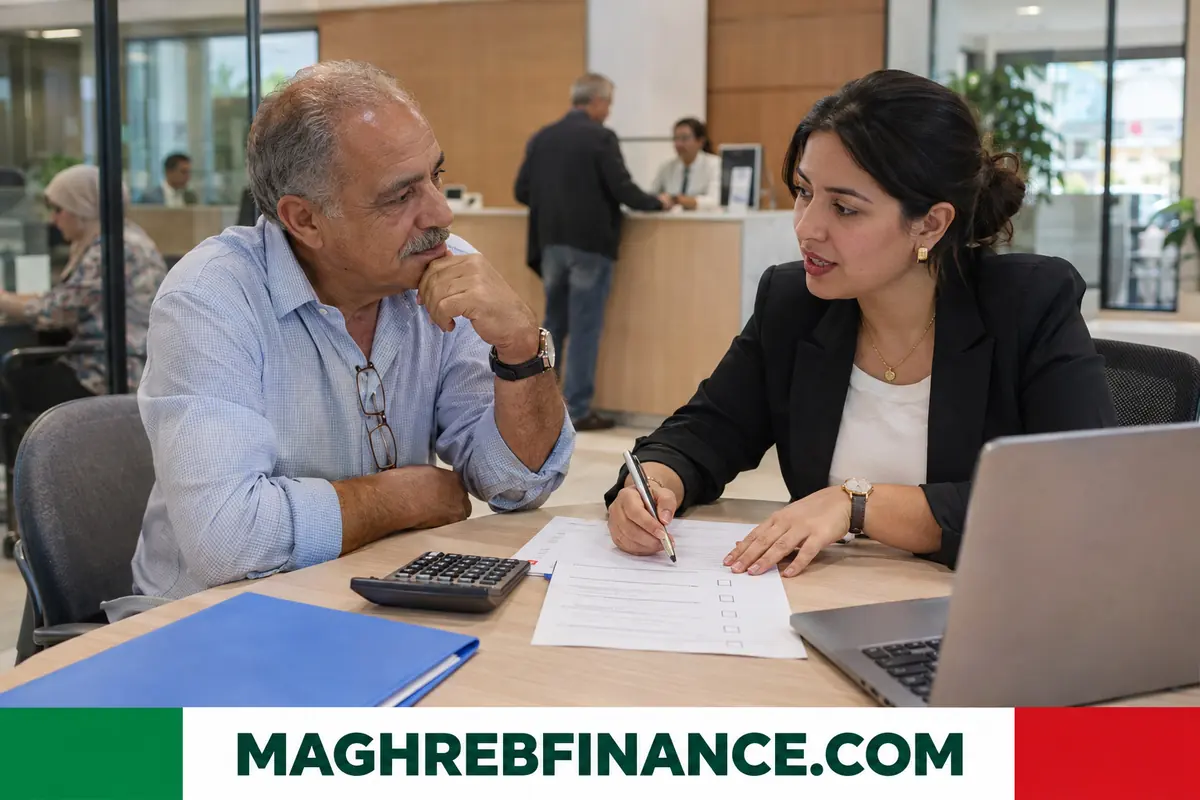
In Tunisia, banks, credit institutions, corporate banking and finance cover the licensed bodies that take deposits, grant loans and operate payment services in Tunisian dinars (TND) and, within strict exchange rules, in foreign currency. The Central Bank of Tunisia licenses and supervises them. The sector includes public and private banks, Islamic banks, leasing and factoring companies and specialised institutions. Households use accounts, cards and mortgages, while companies seek working capital, investment loans, guarantees and trade finance. Customers should compare institutions before choosing.
Banks and other credit institutions
The banking law distinguishes universal banks, Islamic banks, leasing companies, factoring companies, development and investment institutions and offshore banks. Banks can take deposits and offer a full range of services, whereas other institutions have more specific activities.
The Central Bank of Tunisia grants licences, sets capital and liquidity rules and publishes the list of authorised institutions. Customers should check that list when dealing with an unfamiliar name.
Leasing companies, which finance equipment and vehicles, and factoring companies, which advance money against invoices, are popular with firms that cannot offer property as collateral.
Public and private banks
Public and formerly public names include STB, BNA and BH Bank, the last known for housing finance. Private groups include Amen Bank, BIAT, Attijari Bank, UIB, ATB, Banque de Tunisie and BTK. Each has its own network and strengths, from retail and business banking to agriculture.
Foreign-owned banks and subsidiaries bring international links, which can help companies trading with Europe and Africa.
Banque Tunisienne de Solidarité, which focuses on small projects, and the post office network provide further routes into the formal system.
Large groups often serve companies through dedicated business centres, while retail clients are handled in branches.
Everyday accounts and personal credit
A current account receives a salary and handles cards and transfers. Savings accounts and term deposits are common, and some banks provide foreign-currency accounts for eligible customers. Consumer credit pays for goods, vehicles or works, and housing loans run over a long period with guarantees on the property.
The bank assesses the stability of income, existing debts and collateral. Prepare an identity document, proof of address, a salary certificate, recent payslips or account statements and, for a purchase, a quotation or sale promise.
For a mortgage, expect a valuation of the property, a notary or lawyer, and a requirement for borrower insurance.
A longer loan lowers the monthly cost but increases the total interest paid, so run the numbers for several durations.
Corporate banking and business financing
Companies obtain overdrafts, discounting, seasonal credit, investment loans, leasing, factoring, guarantees and documentary credit. The file typically includes statutes, commercial register extract, recent accounts, forecasts and an explanation of the project.
Specialised bodies help smaller firms: BFPME finances small and medium-sized enterprises, and guarantee schemes can reduce the collateral requirement.
Exporters use documentary credit and documentary collection to secure payment from foreign buyers, while importers rely on banks to open credits and settle invoices within exchange-control rules.
Costs, risks and comparison
Compare the interest rate, but also arrangement fees, insurance, account charges and early-repayment terms. Ask for the repayment table and check whether the rate is fixed or variable.
Foreign-currency borrowing exposes a borrower with dinar income to exchange-rate movements, and some loans require salary domiciliation. Never pay advance fees to an intermediary promising a loan.
A customer who falls behind should speak to the bank early, because rescheduling is usually easier before the account becomes irregular.
Islamic banking
Zitouna Bank, Al Baraka Bank and Wifack International Bank offer sharia-compliant products such as murabaha and ijara for individuals and companies. Their contracts avoid interest, but margins and lease payments still reflect costs, so a customer should compare the total amount to repay with a conventional offer.
The same file requirements apply as for other loans, and customers should ask which insurance and guarantees are expected under the chosen formula.
Digital banking and payments
Mobile applications, online banking, contactless cards and mobile payment tools are spreading, while cheques and cash remain common. Security habits matter: keep codes private, ignore requests for passwords by phone or message and review account notifications.
Report a lost card or an unknown transaction at once and keep a record of the report.
Contactless payment limits and daily withdrawal ceilings can be changed through the bank's application or at a branch.
Rights, complaints and deposit protection
Banks must provide information on fees and conditions and give customers a copy of the contract. A complaint goes first to the branch, then to the customer relations department and, if unresolved, to the Central Bank of Tunisia or the appropriate mediation channel.
Deposits are protected, up to a legal ceiling, by a deposit guarantee fund financed by credit institutions.
Keep copies of the contract, fee schedule and every complaint in a single folder, because documentation makes it easier to escalate a dispute.
Frequently asked questions
Which banks operate in Tunisia?
Public and former public names include STB, BNA and BH Bank, and private groups include Amen Bank, BIAT, Attijari Bank, UIB, ATB and Banque de Tunisie. They also report on topics relevant to their own customers.
Who regulates banks in Tunisia?
The Central Bank of Tunisia licenses banks and credit institutions, sets prudential rules and supervises their activity. It also publishes circulars that all banks must apply.
Are there Islamic banks in Tunisia?
Yes. Zitouna Bank, Al Baraka Bank and Wifack International Bank offer sharia-compliant products.
How should I compare loan offers?
Compare total cost, including interest, fees, insurance and early-repayment charges, and test the instalment against income. A written simulation from each lender makes this comparison easier.
Are deposits protected?
A deposit guarantee fund protects savers up to a legal ceiling if a bank cannot meet its obligations. Protection applies to eligible deposits, not to every product sold by a bank.
List of banks in Tunisia
| Organisation | Type | Website |
|---|---|---|
| Banque Centrale de Tunisie (BCT) | Central bank | bct.gov.tn |
| STB – Société Tunisienne de Banque | State-owned bank | stb.com.tn |
| BNA – Banque Nationale Agricole | State-owned bank | bna.tn |
| BH Bank | State-owned bank | bhbank.tn |
| BIAT | Private bank | biat.com.tn |
| Amen Bank | Private bank | amenbank.com.tn |
| ATB – Arab Tunisian Bank | Private bank | atb.com.tn |
| Attijari Bank Tunisie | Foreign-owned bank | attijaribank.com.tn |
| UIB – Union Internationale de Banques | Foreign-owned bank | uib.com.tn |
| UBCI | Foreign-owned bank | ubci.tn |
| Banque de Tunisie | Private bank | bt.com.tn |
| BTK – Banque Tuniso-Koweïtienne | Foreign-owned bank | btknet.com |
| Banque Zitouna | Participatory (Islamic) bank | banquezitouna.com |
| Al Baraka Bank Tunisie | Participatory (Islamic) bank | — |
| Wifak International Bank | Participatory (Islamic) bank | wifakbank.com |
| La Poste Tunisienne | Postal bank | poste.tn |
| BFPME – Banque de Financement des PME | State-owned bank | bfpme.com.tn |
Non-exhaustive list; please check with each organisation.
Pages on the same theme
Individuals — Accounts and payments
- Tunisia current account checking account banking services
- Tunisia joint youth student accounts banking services
- Tunisia foreign currency account deposits withdrawals payments
- Tunisia diaspora nonresident bank account international services
- Tunisia debit cards domestic international purchases payments
- Tunisia credit cards deferred debit revolving reserve
- Tunisia prepaid virtual cards online shopping payments
- Tunisia electronic wallet mobile payment money transfers
- Tunisia instant bank transfers automatic direct debits
- Tunisia checkbook bank check issuance payment services
Individuals — Personal borrowing
- Tunisia conventional mortgage loan financing home purchase
- Tunisia subsidized approved mortgage loans home financing
- Tunisia land purchase loans house construction financing
- Tunisia property bridging loans home purchase resale
- Tunisia personal loan refinancing debt monthly repayments
- Tunisia unrestricted personal loans individual spending financing
- Tunisia earmarked consumer loans appliances renovation solar
- Tunisia car motorcycle loans private vehicle financing
- Tunisia education health wedding travel personal loans
- Tunisia authorized bank overdraft and salary advance
- Tunisia lombard loans savings securities collateral financing
Individuals — Leasing and rental
- Tunisia car leasing purchase option personal financing
- Tunisia inclusive long term car leasing services
- Tunisia motorcycle scooter electric mobility personal leasing
- Tunisia solar household equipment leasing individual financing
Businesses — Treasury and payments
- Tunisia business company accounts professional banking services
- Tunisia foreign currency business accounts importers exporters
- Tunisia electronic payment terminals ecommerce business solutions
- Tunisia business corporate banking cards company payments
- Tunisia corporate treasury investments deposits money funds
- Tunisia centralised treasury management corporate cash pooling
Businesses — Leasing and asset finance
- Tunisia conventional movable asset finance leasing businesses
- Tunisia vehicle fleet rentals leasing purchase options
- Tunisia leasing light commercial vans refrigerated trucks
- Tunisia heavy truck tractor unit trailer leasing
- Tunisia passenger transport bus minibus taxi leasing
- Tunisia construction machinery leasing excavators cranes bulldozers
- Tunisia agricultural equipment tractor irrigation system leasing
- Tunisia medical dental laboratory imaging equipment leasing
- Tunisia industrial equipment machine tools production leasing
- Tunisia computing equipment servers software telecommunications leasing
- Tunisia office furniture equipment leasing business finance
- Tunisia restaurant hotel bakery equipment leasing finance
- Tunisia renewable energy equipment generator leasing finance
- Tunisia boats fishing vessels maritime equipment leasing
- Tunisia property leasing offices factories warehouses clinics
- Tunisia movable assets property sale leaseback financing