
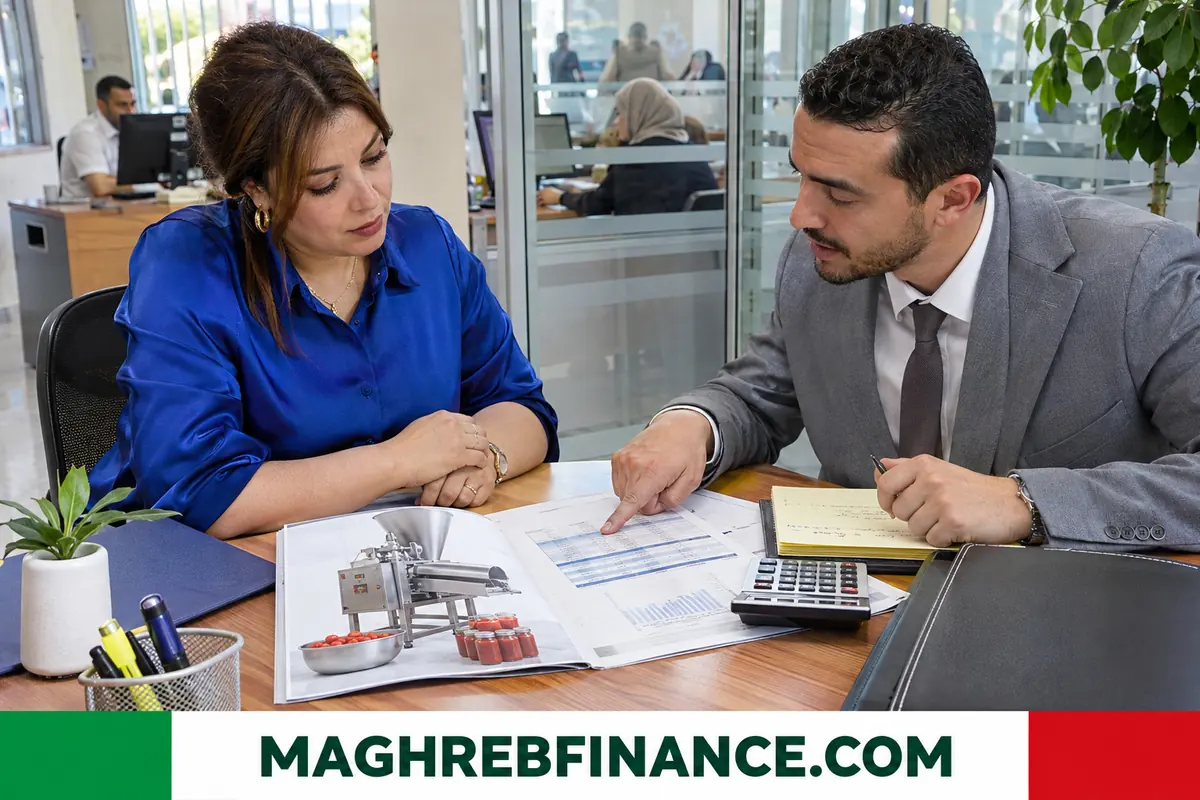
In Algeria, banks, credit institutions, corporate banking and finance cover every licensed body that collects savings, grants loans and handles payments in dinars and foreign currency. The Bank of Algeria issues licences and supervises operations. The landscape combines historic state-owned banks, subsidiaries of foreign groups and specialised financial institutions such as leasing companies. A household typically finds an account, a card and a loan there, while a company obtains working-capital, investment or trade finance, all denominated mainly in the national currency, the dinar (DZD), with controlled access to foreign exchange.
Banks and financial institutions: who does what
The Monetary and Banking Law separates two families. Banks may take deposits from the public, manage payment instruments and grant every type of credit. Financial institutions grant credit and specialised services but may not collect sight deposits.
Specialised lenders
The second family includes leasing companies such as Maghreb Leasing Algérie and Sofinance, as well as mortgage refinancing bodies. Their licences also come from the Bank of Algeria, which publishes the list of authorised entities.
State-owned banks and their specialities
Six public institutions structure the market. Banque Extérieure d'Algérie (BEA) has historically supported foreign trade and large corporates. Banque Nationale d'Algérie (BNA) and Crédit Populaire d'Algérie (CPA) serve individuals, traders and companies. BADR finances farms, cooperatives and agri-food firms. Banque de Développement Local (BDL) deals with local authorities and small businesses, and CNEP-Banque is known for housing savings and mortgage lending.
Private banks and foreign subsidiaries
Private lenders include Société Générale Algérie, BNP Paribas El Djazaïr, Natixis Algérie, Gulf Bank Algeria, Al Salam Bank Algeria and Fransabank El Djazaïr. They often target companies, managers and clients with many foreign-currency transactions.
A foreign bank enters as a branch or as a subsidiary under Algerian law, after approval by the Bank of Algeria. That status protects customers, because deposits fall under local liquidity, solvency and guarantee rules.
Personal loans: conditions and documents
Banks offer consumer loans, vehicle loans where regulations allow, home loans and renovation loans. The assessment looks at income stability, the debt ratio and collateral.
Typical file
- identity document and proof of address;
- work certificate and recent payslips;
- account statements or salary domiciliation, often required;
- a quotation or sale promise for a specific purchase;
- collateral such as a mortgage, a guarantor or borrower insurance.
Monthly instalments that absorb too large a share of income can lead to a refusal or a smaller loan.
Corporate banking and public guarantees
A company usually obtains an overdraft or working-capital line for cash flow, an investment loan for equipment or a project, and trade-finance tools such as documentary credits and documentary collections. Bank guarantees, notably for public contracts, complete the range.
The file generally contains the statutes, the commercial register extract, recent accounts, a financing plan and, for projects, a profitability study. Small firms with limited collateral can look to public guarantee funds for credit insurance and loan guarantees.
Costs to compare and traps to avoid
Compare the rate, but also arrangement fees, account charges, insurance cost and early-repayment terms. Two offers at the same rate can cost very different amounts once fees are added, so ask for the amortisation table before signing.
Points of caution
- a variable rate without a cap exposes the borrower to rising instalments;
- a salary domiciliation can be a condition for approval;
- foreign-currency borrowing brings exchange risk if income is in dinars;
- any loan that requires advance fees paid to an unknown intermediary should raise alarm.
Choosing and switching between banks
The right bank depends on the profile. A young employee may want a simple mobile app, a business owner a dedicated account manager, and a family a package that combines a loan with insurance. Comparing tariff grids and requesting a written simulation avoids unpleasant surprises.
Changing bank is possible but needs organisation: salary domiciliation, standing orders and direct debits must be moved first, and the old account should be closed only after pending operations have cleared. Branch density matters in rural areas, while urban customers tend to value digital services and card acceptance. Asking for a named adviser and a written list of fees helps from day one.
Savings, remote services and client rights
Banks open dinar current accounts, currency accounts for eligible customers, passbooks, term deposits and cash bonds. Many now offer online consulting, transfers, contactless payment and mobile apps, and customers remain responsible for their codes, which should never be shared by phone or message.
A complaint goes first to the branch, then to the bank's dedicated department, and finally to the Bank of Algeria. Deposits are covered up to a regulatory ceiling by a deposit guarantee company funded by the banks. Before opening an account at an unfamiliar institution, check its licence on the official list.
Fraud prevention deserves a habit of its own: use only official apps, ignore calls from supposed advisers asking for card numbers, and review statements regularly so that an unknown debit is reported within hours rather than weeks.
Frequently asked questions
What is the difference between a bank and a financial institution in Algeria?
A bank receives deposits and provides the full range of banking services. A financial institution, such as a leasing company, grants specialised credit but does not collect sight deposits from the public.
Which are the main public banks in Algeria?
BEA, BNA, CPA, BADR, BDL and CNEP-Banque form the public core of the sector, each with its own history and favoured clients.
Can a foreigner open a bank account in Algeria?
It is possible depending on resident or non-resident status and on exchange regulations. Each bank lists the documents it needs, including identity and proof of residence or activity.
How should two bank loan offers be compared?
Look at the total cost over the whole term, meaning interest, fees, insurance and penalties, rather than the advertised rate alone, and then test the monthly instalment against income.
List of banks in Algeria
| Organisation | Type | Website |
|---|---|---|
| Banque d'Algérie | Central bank | bank-of-algeria.dz |
| BNA – Banque Nationale d'Algérie | State-owned bank | bna.dz |
| BEA – Banque Extérieure d'Algérie | State-owned bank | bea.dz |
| BADR – Banque de l'Agriculture et du Développement Rural | State-owned bank | badr.dz |
| CPA – Crédit Populaire d'Algérie | State-owned bank | cpa-bank.dz |
| BDL – Banque de Développement Local | State-owned bank | bdl.dz |
| CNEP-Banque | State-owned bank | cnepbanque.dz |
| Algérie Poste | Postal bank | poste.dz |
| Société Générale Algérie | Foreign-owned bank | societegenerale.dz |
| BNP Paribas El Djazaïr | Foreign-owned bank | bnpparibas.dz |
| Natixis Algérie | Foreign-owned bank | natixis.dz |
| Gulf Bank Algeria (AGB) | Foreign-owned bank | agb.dz |
| Trust Bank Algeria | Foreign-owned bank | trustbank.dz |
| Fransabank El Djazaïr | Foreign-owned bank | fransabank.dz |
| Al Salam Bank Algérie | Participatory (Islamic) bank | alsalamalgeria.com |
| Banque Al Baraka d'Algérie | Participatory (Islamic) bank | albaraka-bank.com |
Non-exhaustive list; please check with each organisation.
Pages on the same theme
Individuals — Accounts and payments
- Algeria current account checking account banking services
- Algeria joint youth student accounts banking services
- Algeria foreign currency account deposits withdrawals payments
- Algeria diaspora nonresident bank account international services
- Algeria debit cards domestic international purchases payments
- Algeria credit cards deferred debit revolving reserve
- Algeria prepaid virtual cards online shopping payments
- Algeria electronic wallet mobile payment money transfers
- Algeria instant bank transfers automatic direct debits
- Algeria checkbook bank check issuance payment services
Individuals — Personal borrowing
- Algeria conventional mortgage loan financing home purchase
- Algeria subsidized approved mortgage loans home financing
- Algeria land purchase loans house construction financing
- Algeria property bridging loans home purchase resale
- Algeria personal loan refinancing debt monthly repayments
- Algeria unrestricted personal loans individual spending financing
- Algeria earmarked consumer loans appliances renovation solar
- Algeria car motorcycle loans private vehicle financing
- Algeria education health wedding travel personal loans
- Algeria authorized bank overdraft and salary advance
- Algeria lombard loans savings securities collateral financing
Individuals — Leasing and rental
- Algeria car leasing purchase option personal financing
- Algeria inclusive long term car leasing services
- Algeria motorcycle scooter electric mobility personal leasing
- Algeria solar household equipment leasing individual financing
Businesses — Treasury and payments
- Algeria business company accounts professional banking services
- Algeria foreign currency business accounts importers exporters
- Algeria electronic payment terminals ecommerce business solutions
- Algeria business corporate banking cards company payments
- Algeria corporate treasury investments deposits money funds
- Algeria centralised treasury management corporate cash pooling
Businesses — Leasing and asset finance
- Algeria conventional movable asset finance leasing businesses
- Algeria vehicle fleet rentals leasing purchase options
- Algeria leasing light commercial vans refrigerated trucks
- Algeria heavy truck tractor unit trailer leasing
- Algeria passenger transport bus minibus taxi leasing
- Algeria construction machinery leasing excavators cranes bulldozers
- Algeria agricultural equipment tractor irrigation system leasing
- Algeria medical dental laboratory imaging equipment leasing
- Algeria industrial equipment machine tools production leasing
- Algeria computing equipment servers software telecommunications leasing
- Algeria office furniture equipment leasing business finance
- Algeria restaurant hotel bakery equipment leasing finance
- Algeria renewable energy equipment generator leasing finance
- Algeria boats fishing vessels maritime equipment leasing
- Algeria property leasing offices factories warehouses clinics
- Algeria movable assets property sale leaseback financing