
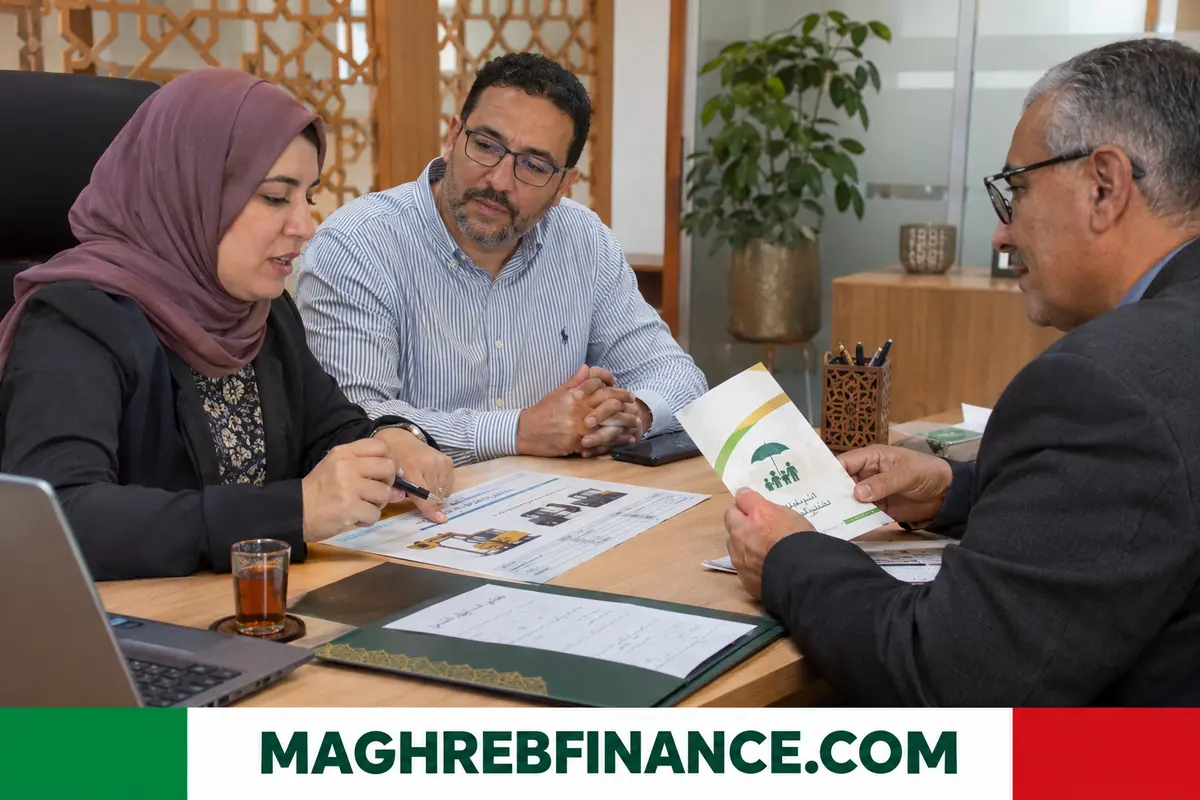
In Morocco, Islamic finance, including halal loans and takaful insurance, is offered under the label participative finance, a regulated framework that allows banks, windows and insurers to sell sharia-compliant products. Contracts avoid interest, rely on real assets and share risk, and are denominated in Moroccan dirhams (MAD). Bank Al-Maghrib licenses participative banks, a religious committee validates products, and customers of any belief can use them for housing, vehicles, equipment or savings. Offers differ by institution, so comparison between institutions is advisable.
Principles of participative finance
The core ideas are simple: no interest, no excessive uncertainty, no pure speculation and no funding of forbidden activities. The financier earns a margin on a sale, lease income from an asset or a share of profits.
It is not automatically cheaper than conventional credit, because margins reflect refinancing costs and risk. A customer should compare the total amount to repay rather than looking only at a headline percentage.
Another common misunderstanding is that participative finance is only for religious customers, whereas the products are open to everyone who accepts the contract terms.
The Moroccan framework
Participative banks and windows operate within a legal framework adopted after consultation with a national religious body, which validates products and standards. Bank Al-Maghrib authorises institutions and sets their prudential rules.
Names on the market include Umnia Bank, Bank Assafa, Bank Al Yousr, Al Akhdar Bank, Dar Al Amane and Arreda, several of them linked to established banking groups. Takaful insurers operate under supervision of ACAPS.
Customers should ask which committee has approved a given contract and request the relevant documents, because a clear compliance trail builds confidence in the product.
Financing products for households
- Murabaha: the bank buys an asset and resells it with a disclosed margin, paid in instalments; it is used for vehicles, equipment and homes.
- Ijara: leasing with an option to buy, for vehicles or property.
- Musharaka mutanaqisa: a diminishing partnership in which the customer gradually buys the bank's share of a home.
A family planning to buy a first home should ask for the schedule, the total price, the insurance requirements and the consequences of late payment before choosing between these formulas.
The bank may require a down payment, a salary domiciliation or an insurance contract, and these requirements differ from one institution to another.
Financing for professionals
Craftspeople, traders and companies use murabaha to buy goods or equipment, ijara to acquire machines or vehicles and partnership structures for projects. Documents are close to those of conventional banks: statutes, accounts, a business plan and proof of income.
The bank ensures that the asset is lawful and describes the contract steps, which can include a purchase by the bank before resale. Delays in delivery or damage to the asset raise issues that the contract must settle in advance.
A tradesperson buying a delivery van could use ijara, whereas a retailer restocking a shop might prefer murabaha on goods, and both should ask what happens if the supplier delivers late.
Accounts, savings and sukuk
Current accounts carry no interest. Investment accounts rely on profit sharing, so the return depends on results and is not guaranteed. Sukuk, which are asset-backed certificates, have been issued by the state and companies, and investors should read the prospectus to understand the underlying asset and risks.
Because sukuk prices can move, they are not equivalent to a bank deposit, even when the underlying asset is stable.
Takaful insurance
Takaful rests on mutual pooling. Participants pay contributions into a fund that compensates those who suffer a covered loss, while an operator manages the fund for an agreed fee. Surpluses may be shared according to the model.
A policyholder should ask who validates the contracts, how the fund is managed and what happens to any surplus or deficit.
Ask whether the contract includes a waiting period, exclusions and a limit on the sum paid, as with any insurance policy.
Comparing halal and conventional offers
Ask for a detailed information sheet showing margin or lease payment, duration, total payable and extra fees. Compare at least two institutions, including a conventional bank.
- Which body certifies the product as sharia-compliant?
- What is the total margin in dirhams?
- How are late payments handled?
- Are there charges beyond the margin?
A short checklist helps: compare the total cost, check the validation, read the penalties and ask for a signed copy.
Client rights and cautions
The contract must state the asset, price, margin, schedule and penalties, and clients are entitled to a signed copy and explanations. A product that carries a halal label without an identifiable validation should be treated with caution.
Participative finance has widened access to banking for households who avoided it, but information quality varies between branches, so written documents matter.
If a branch cannot explain a product clearly, ask for the document in writing or consult another institution before committing.
Frequently asked questions
What does participative banking mean in Morocco?
It is the Moroccan term for Islamic banking: banks and windows sell sharia-compliant products under Bank Al-Maghrib supervision after validation by a religious body. The contract and its validation documents should explain each mechanism.
Is murabaha cheaper than a normal loan?
Not necessarily. The margin reflects costs and risk, so the total repayable amount should be compared with a conventional offer. A written comparison of total cost is the most reliable method.
What is takaful?
It is insurance based on mutual pooling, where participants pay into a fund that compensates losses and a manager receives an agreed fee. Ask the insurer for the fund rules.
Can non-Muslims use participative products?
Yes. The products are open to any customer who accepts the contract terms.
Are Islamic investment accounts guaranteed?
No. Returns depend on the results of the underlying activity, and capital protection differs from a conventional savings book.