
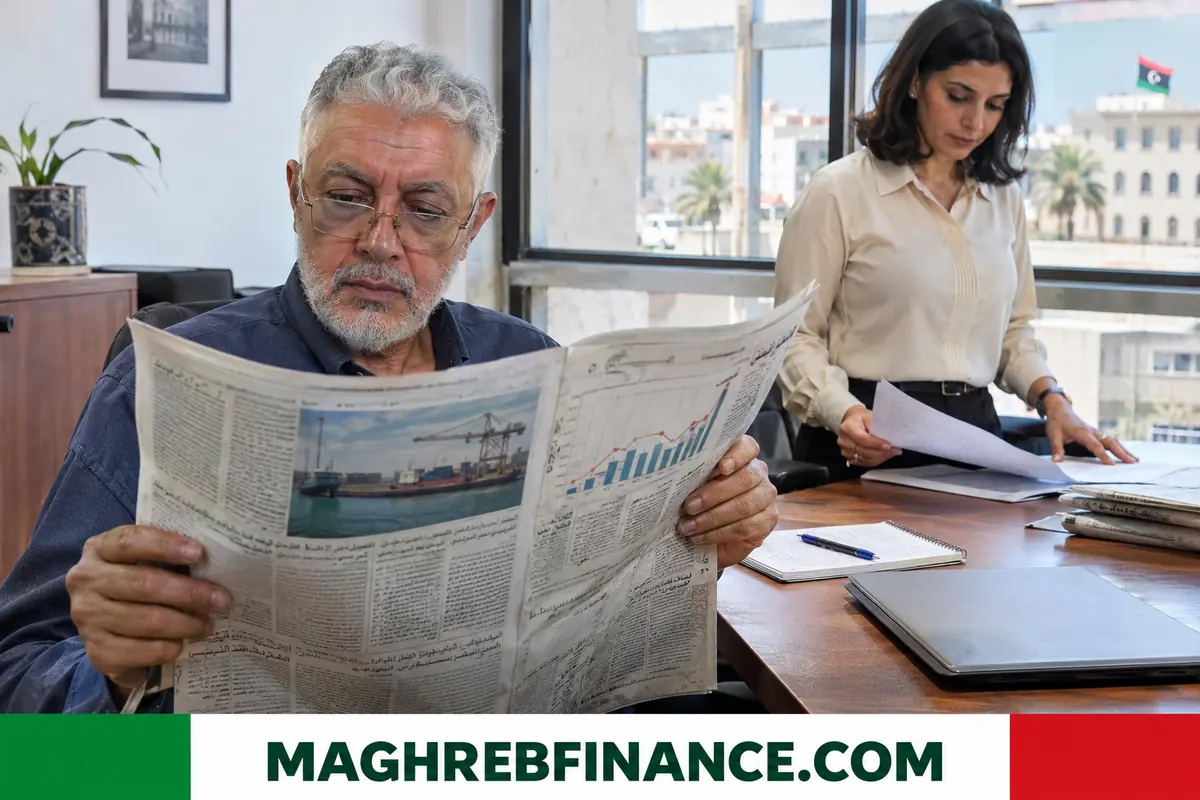
In Libya, the economic and financial press, from newspapers to business news websites and agencies, covers oil, banking, the dinar, the budget and investment, mostly in Arabic and partly in English. Business owners, bankers, students and Libyans abroad read it to follow decisions of the Central Bank of Libya and shifts in the market. Because political divisions colour tone and choice of topics, careful readers compare several outlets, check dates and confirm figures with official documents before acting on any report.
Economic and financial press: A varied and pressured media landscape
Since the fall of the former regime, Libyan media has multiplied: print titles, websites, satellite television, radio and social media pages. Freedom of tone has grown, yet outlets face political pressure, funding gaps and security risks for reporters.
For economic news, online sites dominate because distribution of paper copies is limited by distance and travel conditions.
Television channels broadcasting from abroad and from Tripoli and Benghazi add economic programmes, though their editorial lines reflect the political camps they are close to.
Local business journalists sometimes struggle to obtain official data, so some publish documents received from institutions, while others rely on expert commentary.
English-language sources
Several websites cover Libya in English. The Libya Herald is an independent online daily with business, economy, energy and infrastructure sections. The Libya Observer, run from Tripoli, publishes news, business and analysis pieces.
These titles help foreign investors and readers who do not read Arabic follow statements by the central bank governor, investment agreements and energy announcements.
Reading an exchange rate table
A rate table shows buying and selling prices of the dinar against the dollar and euro. Check whether the figure is official, bank or parallel and when it was updated.
Several of these English sites also carry short items on oil production, power cuts, port activity and the opening of new bank branches, which give a practical picture of daily business conditions.
Arabic outlets and agencies
Arabic-language coverage ranges from general news sites to broadcasters with economic bulletins. The Libyan News Agency, known as LANA, circulates official statements, while private titles such as Al Wasat offer reports and analysis.
- Announcements from the central bank, the finance ministry and the National Oil Corporation come first.
- Currency prices and basic commodity costs are tracked by specialised pages.
- Online discussion groups add colour but also spread rumours.
Television talk shows with bankers and economists are often replayed online, which makes accurate quotation easier.
Topics that shape the headlines
A few themes return constantly: oil output and exports, how revenue is shared, a unified budget, bank liquidity, the gap between official and parallel exchange rates, reconstruction and contracts with foreign firms.
Everyday prices
Reports on food prices, fuel and subsidies matter to households, especially when supply chains are disrupted. Coverage of queues at banks and limits on cash withdrawals also shapes public opinion.
Energy and public money
Monthly production and revenue statements make headlines, yet the detail sits in the reports of the institution concerned.
Reading carefully in a tense political setting
Rival authorities exist, and an outlet may lean towards one side. A story about the central bank or the budget can therefore be framed differently from one title to the next.
A good habit is to find the original press release, compare two sources with different leanings and check the date, since an old dispatch can circulate again as if it were new.
The same budget decision may be presented as a success in one paper and as a failure in another, and reading both clarifies what is really at stake.
Spotting trustworthy reporting
A solid article names its source, separates facts from opinion and states the currency and period of any figure. It avoids vague phrases and numbers with no origin.
Sensational headlines, edited images and forwarded messages without a source should be set aside. For anything involving money, confirm with the bank or institution concerned.
Reverse image search and a check on the event date help against doctored photos and videos.
Using the press for business decisions
Importers watch announcements on access to foreign currency, letters of credit and customs rules. Entrepreneurs track tenders, regulatory decisions and support programmes. Foreign investors look for signs of stability and legal certainty.
In every case the article sets the scene, while the decision rests on official documents, local legal advice and direct contact with partners.
Transport firms, builders and food wholesalers also read the press for news on port congestion, road closures and fuel availability, since these facts change delivery times and costs from one week to the next.
Building a simple monitoring routine
A few reliable sources, alerts on useful keywords, a regular reading rhythm and a spreadsheet of key figures are enough. Filing articles by theme with date and link makes later checking easy.
Machine translation of Arabic articles is useful for a first pass, but it sometimes distorts numbers and institution names, so important documents deserve a check in the original.
A short monthly summary listing five key facts and their sources is a valuable tool for a busy manager, and it can be shared with partners abroad who need context before a meeting or a payment.
Frequently asked questions
Which Libyan outlets publish in English?
The Libya Herald and the Libya Observer both publish English-language news with business coverage.
Is the Libyan press independent?
It is diverse, but some titles are close to political actors, so comparing sources is advisable.
Where can exchange rates be found?
On the Central Bank of Libya website and in tables published by some news outlets.
How can false news be avoided?
Check the source and date, and compare the story with official documents before sharing or acting.
Is French-language coverage available?
French content is scarce, with Arabic and English dominating.
List of business and financial media in Libya
| Organisation | Type | Website |
|---|---|---|
| LANA – Libyan News Agency | News agency | lana.gov.ly |
| Libya Herald | Online media | libyaherald.com |
| Libya Observer | Online media | libyaobserver.ly |
| Al Wasat | Online media | alwasat.ly |
| Libya Review | Online media | libyareview.com |
| Al Marsad | Online media | almarsad.co |
Non-exhaustive list; please check with each organisation.
Further reading
- Libya Herald : Independent English-language online daily with business, economy, energy and infrastructure coverage focused on Libya.
Pages on the same theme
Press and media — General economic press
- Libya national international daily economic financial newspapers
- Libya monthly strategy management leadership business magazines
- Libya economic geopolitics strategic intelligence analysis journals
Press and media — Financial markets press
- Libya stock market newspapers quotes equities bonds
- Libya personal finance wealth management savings magazines
- Libya specialist banking finance insurance journals publications
- Libya private-equity venture-capital mergers acquisitions journals analysis
- Libya commodities energy currencies forex analysis bulletins
Press and media — Industry publications
- Libya startup innovation technology fintech news publications
- Libya property construction public-works urban planning journals
- Libya agriculture agrifood fisheries industry news press
- Libya industry logistics transport international trade journals
- Libya business law taxation accounting specialist journals
- Libya tourism hospitality distribution industry news publications
Press and media — Official publications
- Libya official public procurement tenders notices bulletins
- Libya central banks financial regulators reports journals
- Libya commerce industry chambers employers associations bulletins
- Libya national statistical institutes studies economic outlooks