
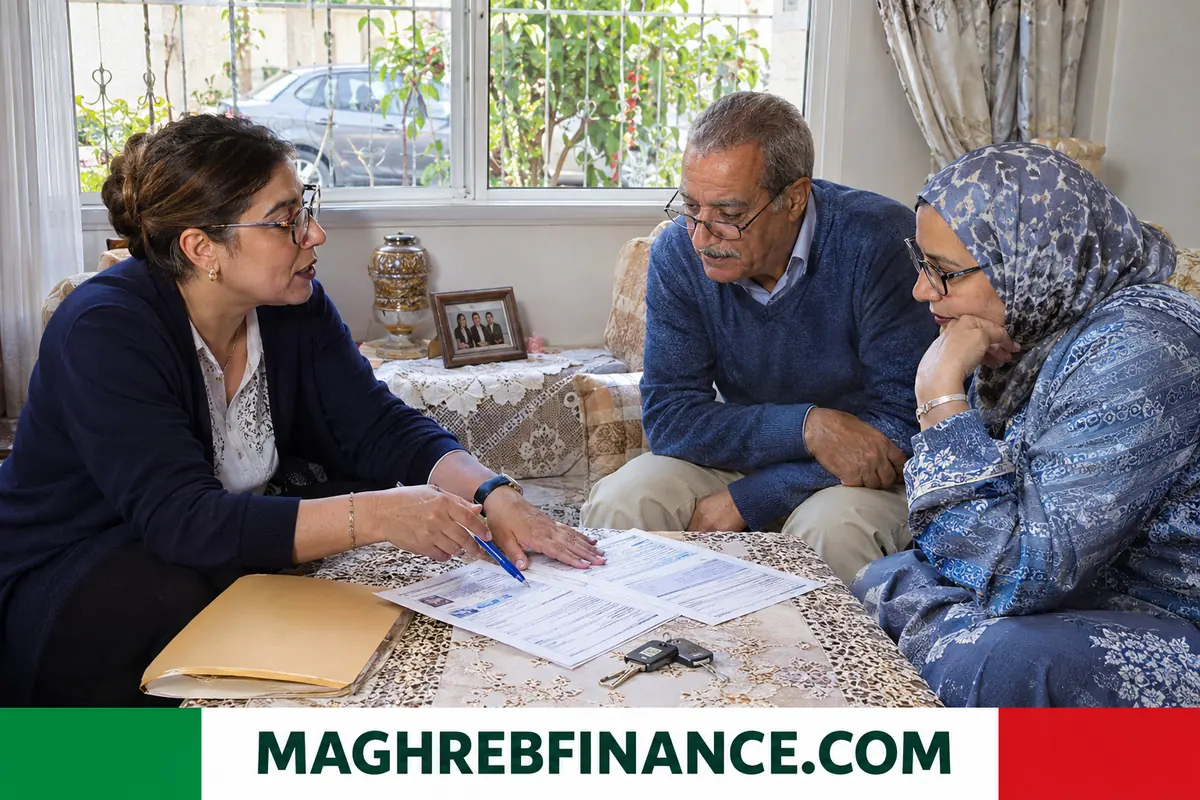
In Morocco, insurance companies and brokers sell auto, home and life policies that compensate losses from accidents, fire, theft, illness or death. The sector is governed by the Insurance Code and supervised by ACAPS, which licenses insurers and protects policyholders. Premiums are paid in Moroccan dirhams (MAD), and some cover, notably third-party motor liability, is compulsory, whereas most home, health and life products are voluntary and depend on the needs and budget of each household. Comparing guarantees matters as much as comparing prices.
How the Moroccan insurance market is organised
Insurers operate under the Insurance Code, which sets licensing, solvency and conduct rules. ACAPS supervises insurance, pensions and social-security bodies. Companies are split between non-life and life business, and many belong to large financial groups.
Well-known names include Wafa Assurance, RMA, Saham Assurance, AXA Assurance Maroc, AtlantaSanad and Allianz Maroc, together with mutual societies. Contracts are sold through agents, brokers, bank branches and online channels.
Competition has pushed insurers to offer digital quotes, mobile apps and faster claim handling, although branches remain important for complex files.
Compulsory insurance
Third-party motor liability is required for every vehicle in circulation and covers harm caused to other people. Travelling abroad by car usually requires an international motor certificate, which the insurer can supply.
Other duties apply to specific activities, such as construction liability, professional liability in regulated occupations and transport. A mortgage lender will normally ask for borrower insurance covering death and disability.
Employers also have obligations toward staff, including coverage for workplace accidents, which is arranged through insurance or social-security mechanisms.
Motor insurance in practice
A motor policy combines the compulsory base with optional guarantees such as theft, fire, glass, comprehensive damage and assistance. The price depends on the car, its use, the driver's profile and claims record.
After an accident, drivers fill in a joint accident statement and send it to the insurer within the contractual deadline. A clear sketch, photographs and the names of witnesses help if fault is disputed.
Young drivers and owners of older vehicles often pay more or receive narrower options, so asking several insurers for a quote is worthwhile.
Home and multi-risk cover
A home policy protects against fire, water damage, theft and the policyholder's liability toward neighbours or visitors. An owner insures both building and contents, while a tenant mainly insures liability to the landlord and personal belongings.
Declare the surface, the value of belongings and protective devices accurately. An understated value can cut the compensation proportionally when a loss occurs.
Flats in shared buildings may rely partly on the co-ownership policy, so tenants and owners should check what that policy actually covers.
Life, health and pension products
Life insurance includes term cover for death, protection against disability or serious illness and savings contracts with a named beneficiary. These products complement the compulsory health insurance scheme and public pensions, which form a separate base.
Savings-linked contracts have fees and charges, may not guarantee capital in every case and should be compared before signing. Takaful, an insurance model based on mutual pooling, is also available within a distinct framework.
A policyholder who plans to retire abroad or to support children's education should ask how the contract treats withdrawals, beneficiaries and tax.
Insurance for businesses
Shops, workshops and companies buy multi-risk policies, fleet insurance, goods in transit, liability, machinery breakdown, business interruption and credit insurance. Such contracts safeguard machinery, goods and income during a stoppage.
Premiums reflect the sector, turnover, claims record and prevention measures such as alarms, extinguishers and staff training.
Seasonal sectors such as farming, tourism and crafts often prefer policies that adjust sums insured when activity peaks.
Reading the contract and working with brokers
A contract has special conditions that name the insured, the assets and the sums covered, and general conditions that describe guarantees and exclusions. Check deductibles, exclusions and the time limit for declaring a claim.
A broker compares insurers and advises the client, while an agent represents one or more companies. Ask what commission is involved and who handles claims once the policy is in force.
Do not sign blank forms, and keep a copy of every document handed to the agent or broker.
Claims, complaints and recourse
After a loss, notify the insurer promptly, keep damaged items if an expert must see them and collect invoices, photos and police reports. If payment is refused, ask for the reasons in writing and file a complaint with the policy number.
Mediation, ACAPS and the courts are possible next steps. Price should not be the only criterion: compare coverage, deductibles, ceilings, speed of settlement and proximity of branches.
Keep an organised folder with the policy, premium receipts and previous claim correspondence, because it speeds up any future file.
Frequently asked questions
Which insurance is compulsory in Morocco?
Third-party motor liability is mandatory for every vehicle, and other duties apply to certain professions and activities. Health insurance is organised through the compulsory scheme. Employers and lenders may add their own requirements.
Who supervises insurers in Morocco?
ACAPS supervises insurance, pensions and social-security bodies and handles matters relating to policyholder protection.
What is the difference between a broker and an agent?
A broker advises the client and compares several insurers, while an agent distributes contracts for one or more companies as their representative.
What should I do after a car accident?
Complete the joint accident statement with the other driver, take photographs and notify the insurer within the deadline written in the contract. Keep the insurer's emergency number in the glove compartment.
Can a claim be refused?
Yes, if an exclusion applies or the deadline was missed. Ask for the refusal in writing, then file a complaint and consider mediation if you disagree.
List of insurance companies in Morocco
| Organisation | Type | Website |
|---|---|---|
| ACAPS – Autorité de Contrôle des Assurances et de la Prévoyance Sociale | Insurance regulator | acaps.ma |
| Wafa Assurance | Private insurer | wafaassurance.ma |
| AtlantaSanad | Private insurer | atlantasanad.ma |
| Sanlam Maroc | Private insurer | sanlam.ma |
| RMA | Private insurer | rmawatanya.ma |
| Allianz Maroc | Foreign-owned insurer | allianz.ma |
| AXA Assurance Maroc | Foreign-owned insurer | axa.ma |
| La Marocaine Vie | Private insurer | lamarocainevie.ma |
| MAMDA | Mutual insurer | mamda.ma |
| MCMA | Mutual insurer | mcma.ma |
| Zurich Assurance Maroc | Foreign-owned insurer | zurich.ma |
Non-exhaustive list; please check with each organisation.
Pages on the same theme
Individuals — Insurance and protection
- Morocco borrower insurance death disability incapacity unemployment
- Morocco car insurance liability comprehensive cover assistance
- Morocco motorcycle scooter insurance two wheeler protection
- Morocco comprehensive home insurance rental property owners
- Morocco supplemental health insurance mutual medical coverage
- Morocco personal accident insurance everyday life protection
- Morocco travel repatriation insurance international medical assistance
- Morocco school extracurricular insurance children student protection
- Morocco payment methods identity theft fraud insurance
- Morocco funeral insurance family protection death benefits
- Morocco long term care insurance dependency assistance
- Morocco personal legal protection litigation defense assistance
Businesses — Commercial insurance
- Morocco business property inventory equipment insurance coverage
- Morocco business interruption insurance income loss protection
- Morocco machinery breakdown computing equipment insurance coverage
- Morocco professional indemnity public liability business insurance
- Morocco decennial liability contractors all risks insurance
- Morocco directors officers corporate liability insurance protection
- Morocco vehicle fleet construction machinery insurance coverage
- Morocco cargo insurance land sea air transport
- Morocco trade credit insurance domestic export nonpayment
- Morocco cyber risk data loss insurance protection
- Morocco key person insurance director absence death
- Morocco finance lease insurance financial loss protection
- Morocco group protection supplementary pensions employee health
- Morocco workplace accident occupational disease insurance coverage
- Morocco business legal protection insurance dispute assistance