
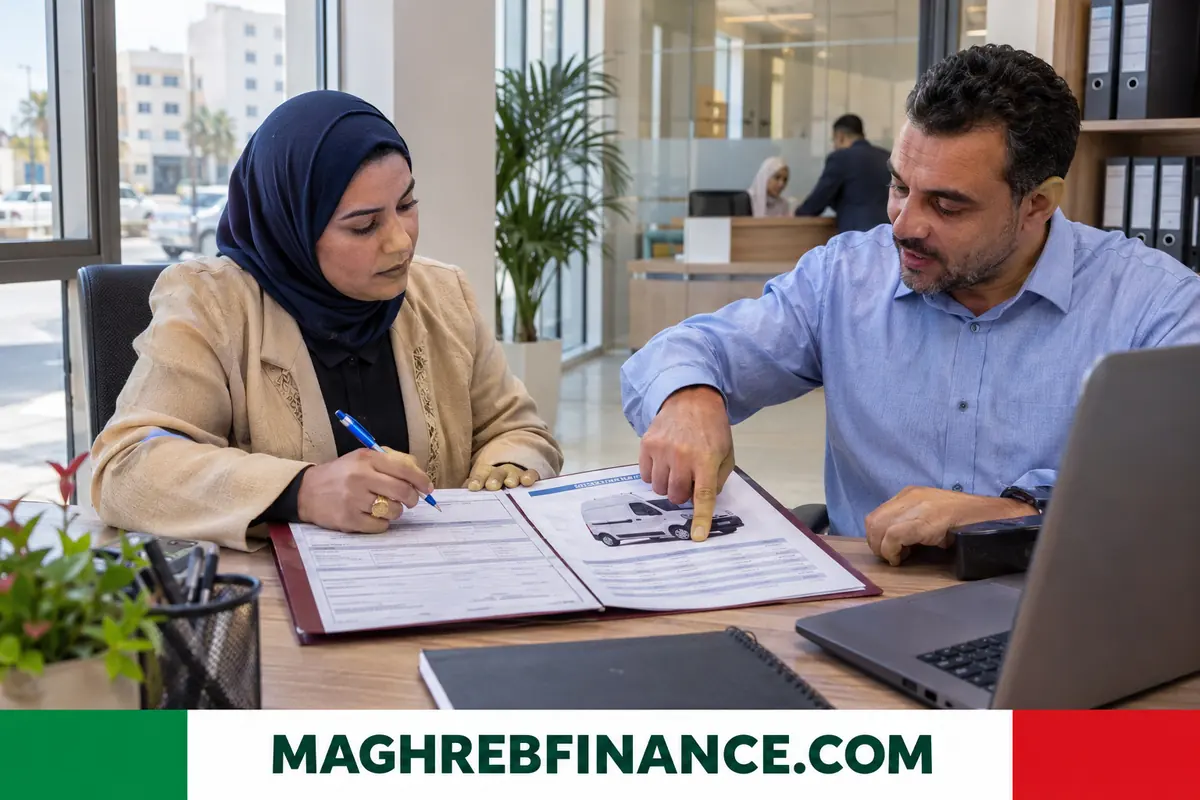
In Libya, banks and credit institutions provide corporate banking finance and household services under the supervision of the Central Bank of Libya, with accounts, cards, transfers and financing denominated in Libyan dinars (LYD). The sector brings together large state-owned banks, newer private lenders and specialised institutions. Because the law prohibits interest, credit takes the form of sharia-compliant contracts, and cash liquidity and access to foreign currency strongly shape what a customer can actually do. Comparing conditions in writing before opening an account remains the best protection.
The main families of banks
Several long-established public commercial banks anchor the system, among them Sahara Bank, Jumhouria Bank, Wahda Bank and the National Commercial Bank. They run the widest branch networks and serve many public employees whose salaries are paid by transfer.
Private institutions such as the Bank of Commerce and Development operate alongside them, and the Libyan Foreign Bank, a subsidiary of the central bank, is active in international trade and operations abroad.
Each lender targets a different clientele and service range, so customers should compare before choosing.
Banking for Libyans abroad
Expatriates sometimes open accounts to receive money or pay family costs. They compare remote access, transfer fees and the time funds take to arrive.
Customers who live far from Tripoli, Benghazi or Misrata should also ask how many branches and cash machines the bank operates in their town, since coverage differs sharply between regions.
Accounts, cards and daily services
The basic range includes current and savings accounts, local and international cards, transfers and safe deposit boxes. Some banks add mobile apps, code-based payments, messaging services and cash machines.
What to ask when opening an account
Required documents, account fees, withdrawal ceilings, card delivery times and online access conditions. Cards frequently carry an annual fee.
Prepaid cards and electronic wallets are spreading for online shopping and daily payments, and users should check their limits and top-up charges.
Salary domiciliation matters: public employees paid into a bank account often receive a card automatically, whereas private-sector customers may need to request one and wait for delivery.
Financing a project or a purchase
A financing request starts with a file: identity document, proof of income, the purpose of the funds and collateral. Banks study repayment capacity and stability, and may ask for a down payment.
- Individuals: a vehicle, equipment or housing.
- Traders: stock or machinery.
- Companies: working capital, letters of credit and guarantees.
Amounts and delays depend on the bank's liquidity and current policy.
Typical supporting documents
Payslips, an employer letter, an account statement, a supplier quotation and a land title or other security. A complete file shortens the review.
Credit without interest: how it works
With interest prohibited, banks use contracts such as the cost-plus sale: the bank buys the asset and resells it to the customer at an announced profit, paid in instalments. Other structures rely on partnership or lease-to-own.
The customer should examine the total cost, the announced margin and the penalties for late payment. Whatever its name, the contract must itemise every amount.
Early settlement is another question to settle in advance, since some contracts reduce the margin and others do not.
Penalty clauses deserve particular attention. Ask whether late payment triggers a fixed charge, a donation to charity or an increase in the margin, and request the answer in the contract itself.
Housing and property finance
Access to a home often combines family savings, the sale of another asset and bank financing tied to the purchase. Lenders request an expert valuation and clear proof of ownership.
Buyers should confirm who holds the title during the repayment period, how insurance is arranged and what happens if the building is damaged before the last instalment.
Business accounts and trade services
Merchants and firms use current accounts, payment terminals, guarantees and letters of credit to import goods. Trade operations depend on the availability of foreign currency, so an importer should ask early about allocation rules and the exchange rate used.
Documents such as invoices, contracts and shipping papers are normally required, and incomplete files cause long delays.
Small firms also compare how quickly a bank processes payroll files and supplier transfers.
Exporters, though less common, ask whether the bank can confirm letters of credit through foreign correspondents, since this affects whether a buyer abroad will accept the payment terms.
Liquidity, cash limits and digital banking
At different times banks have capped cash withdrawals because of liquidity shortages. Customers cope by using cards, transfers and mobile payments where available, but acceptance varies between cities and shops.
Digital services keep improving, with applications for balance checks, transfers and bill payments. Using official apps only and never sharing one-time codes limits fraud.
Mobile payment services launched by banks and telecom companies are used for small purchases and top-ups, yet limits on balances and monthly volumes apply. Customers should keep backup cash for places without reliable connections.
Customer rights and precautions
A client should receive a written contract, a tariff list and regular statements. Complaints go first to the bank's complaints desk and then to the supervisor.
Anyone promising a guaranteed loan against an advance payment should be refused, and the lender's licence can be confirmed with the central bank.
Keep proof of every deposit and transfer, because disputes about missing money are settled mostly on the basis of documents rather than memory.
Frequently asked questions
Who supervises banks in Libya?
The Central Bank of Libya licenses and supervises banks and credit institutions.
Can a bank in Libya lend with interest?
No. The legal framework prohibits interest, so lenders use sharia-compliant contracts.
Which documents open an account?
Generally an identity document, proof of residence and, for employees, an employer letter, though each bank sets its own list.
Are cash withdrawals restricted?
Limits have been applied at various times, so customers should ask their branch about current ceilings.
How can a loan scam be recognised?
Requests for upfront fees, unlicensed intermediaries and promises of guaranteed approval are strong warning signs.
List of banks in Libya
| Organisation | Type | Website |
|---|---|---|
| Banque centrale de Libye | Central bank | cbl.gov.ly |
| Jumhouria Bank | State-owned bank | jumhouriabank.com.ly |
| Wahda Bank | State-owned bank | wahdabank.com |
| National Commercial Bank (NCB) | State-owned bank | — |
| Libyan Foreign Bank | State-owned bank | — |
| Aman Bank | Private bank | — |
| Umma Bank | Private bank | — |
| Bank of Commerce and Development | Private bank | — |
| North Africa Bank | Private bank | — |
| Alwaha Bank | Private bank | — |
Non-exhaustive list; please check with each organisation.
Further reading
- Bank of Commerce and Development (BCD) : Libyan bank listing cash withdrawals, transfers, electronic cards, ATMs, mobile payments, safe deposit lockers and a digital banking app.
Pages on the same theme
Individuals — Accounts and payments
- Libya current account checking account banking services
- Libya joint youth student accounts banking services
- Libya foreign currency account deposits withdrawals payments
- Libya diaspora nonresident bank account international services
- Libya debit cards domestic international purchases payments
- Libya credit cards deferred debit revolving reserve
- Libya prepaid virtual cards online shopping payments
- Libya electronic wallet mobile payment money transfers
- Libya instant bank transfers automatic direct debits
- Libya checkbook bank check issuance payment services
Individuals — Personal borrowing
- Libya conventional mortgage loan financing home purchase
- Libya subsidized approved mortgage loans home financing
- Libya land purchase loans house construction financing
- Libya property bridging loans home purchase resale
- Libya personal loan refinancing debt monthly repayments
- Libya unrestricted personal loans individual spending financing
- Libya earmarked consumer loans appliances renovation solar
- Libya car motorcycle loans private vehicle financing
- Libya education health wedding travel personal loans
- Libya authorized bank overdraft and salary advance
- Libya lombard loans savings securities collateral financing
Individuals — Leasing and rental
- Libya car leasing purchase option personal financing
- Libya inclusive long term car leasing services
- Libya motorcycle scooter electric mobility personal leasing
- Libya solar household equipment leasing individual financing
Businesses — Treasury and payments
- Libya business company accounts professional banking services
- Libya foreign currency business accounts importers exporters
- Libya electronic payment terminals ecommerce business solutions
- Libya business corporate banking cards company payments
- Libya corporate treasury investments deposits money funds
- Libya centralised treasury management corporate cash pooling
Businesses — Leasing and asset finance
- Libya conventional movable asset finance leasing businesses
- Libya vehicle fleet rentals leasing purchase options
- Libya leasing light commercial vans refrigerated trucks
- Libya heavy truck tractor unit trailer leasing
- Libya passenger transport bus minibus taxi leasing
- Libya construction machinery leasing excavators cranes bulldozers
- Libya agricultural equipment tractor irrigation system leasing
- Libya medical dental laboratory imaging equipment leasing
- Libya industrial equipment machine tools production leasing
- Libya computing equipment servers software telecommunications leasing
- Libya office furniture equipment leasing business finance
- Libya restaurant hotel bakery equipment leasing finance
- Libya renewable energy equipment generator leasing finance
- Libya boats fishing vessels maritime equipment leasing
- Libya property leasing offices factories warehouses clinics
- Libya movable assets property sale leaseback financing