
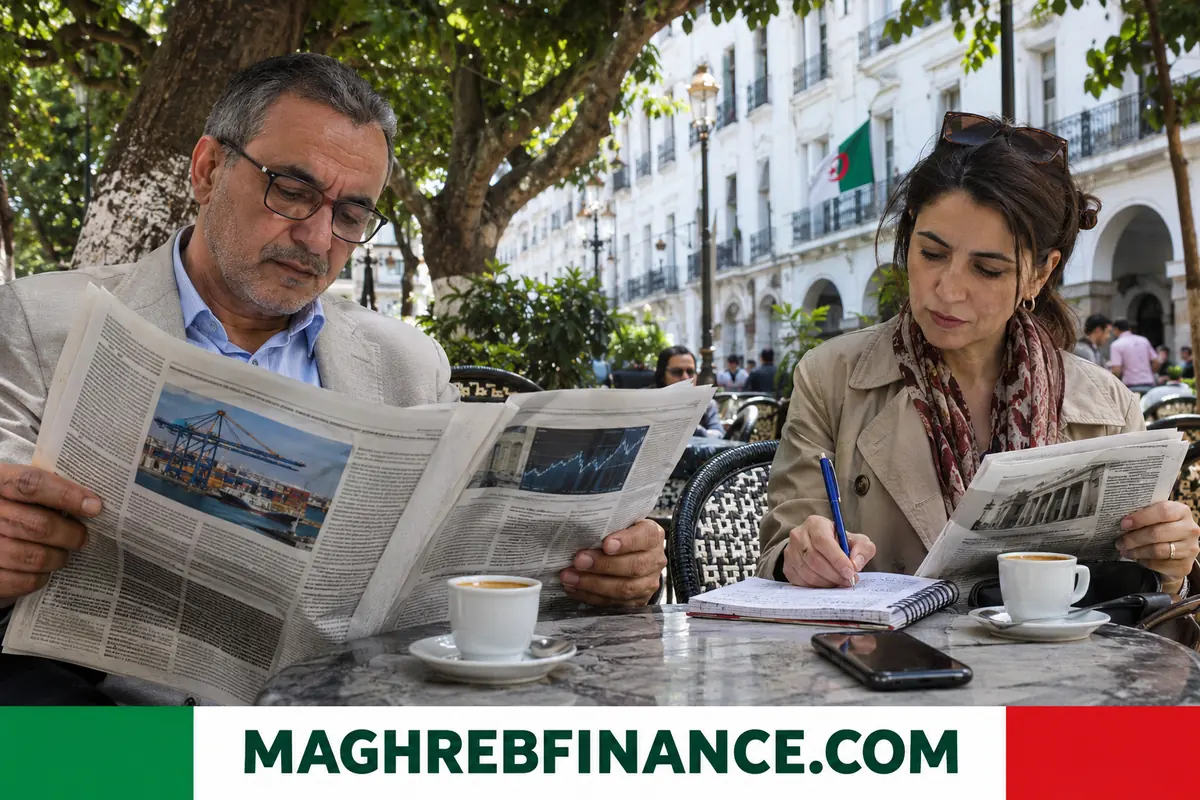
In Algeria, central banks, financial regulators, reports and journals are the publications through which the authorities explain the state of money, credit, insurance and the stock market. The Bank of Algeria, which issues the dinar (DZD) and supervises banks, holds first place with annual reports and statistical bulletins. Other supervisors, such as the commission overseeing stock exchange operations and the insurance supervision commission, publish rules, notices and activity reviews that professionals, journalists and students rely on to follow the sector and to check what a bank, an insurer or a broker is entitled to do.
The Bank of Algeria, first source of monetary information
The Bank of Algeria is the institution that issues the national currency and supervises banks and financial institutions. It publishes reports on economic and monetary developments, statistical bulletins and economic notes. These documents describe the money supply, credit to the economy, exchange rate movements, inflation, foreign reserves and the soundness of the banking system. Its rules, called regulations and instructions, bind banks and financial establishments, which makes its publications important for compliance officers as well as analysts. Many appear in French, and some summaries are available in Arabic and in English. Its statistics also cover payment systems, interest rates on deposits and loans, and the balance sheets of the banking sector, which are useful to researchers who compare Algeria with other markets in the Maghreb.
Sector regulators: stock market, insurance, financial intelligence
The financial system includes authorities other than the central bank. The Stock Exchange Operations Organisation and Supervision Commission, known as COSOB, watches over transparency in the securities market. The Insurance Supervision Commission monitors insurers and intermediaries. The Financial Intelligence Processing Unit receives suspicious transaction reports under the anti-money-laundering framework. Each body issues notices, annual reports and guidance. A reader looking for rules on insurance contracts will not find them in the central bank's bulletin, so the first step is to identify the right regulator. Professional associations, such as the banks and financial institutions association, complement the official picture with practical notes, though these are not regulatory documents.
What an annual central bank report contains
An annual report follows a recognisable plan. It starts with the international environment, then describes growth, prices, the balance of payments, public finances, monetary policy and banking activity. Boxes on specific themes, such as financial inclusion or the digitalisation of payments, deepen a topic. Annexes hold statistical tables, lists of institutions and regulatory texts adopted during the year. Reading the introduction and the summary first gives an overview, and the tables serve as reference when a precise figure is needed. Reports usually close with an outlook on risks, such as dependence on hydrocarbon revenue, but forecasts there remain cautious and conditional on assumptions that the report states.
Bulletins and journals: following the economy regularly
Alongside the annual report, more frequent publications support monitoring: quarterly statistical bulletins, monthly notes on inflation, reviews of financial developments and regulatory bulletins. They allow readers to spot a change in credit or deposit trends quickly. Academic journals and university publications add independent studies on banking, monetary policy and development finance. They are slower but often more critical, and they help place official data in a wider context. Readers who track a specific theme, such as consumer credit or Islamic banking windows, can build a spreadsheet that records each new value and its source, which makes trends easy to see.
Reading the numbers correctly
An indicator makes sense only with its definition. Annual inflation measured year on year and the annual average tell different stories. The money supply can be measured in several ways, from narrow money to broader aggregates. Before quoting a figure, read the footnote, the period and the unit. Provisional data are revised, and a change of base year can make older comparisons tricky. For exchange rates, distinguish the official rate from rates seen on parallel markets, which official reports do not endorse. A good habit is to write down the definition of each indicator in the same file as the figure, so that a colleague can reuse it without mistakes.
Using these publications at work
A finance director reads the reports to anticipate the dinar exchange rate, available credit and regulatory requirements. An exporter follows foreign exchange policy. A compliance officer tracks instructions on banks' obligations towards customers. A private individual can learn how deposit protection, payment cards or consumer credit are supervised. Students use the statistical series for dissertations, provided they cite the source, table number and date of publication. Journalists use the same documents to prepare background articles, and they usually ask the institution for a clarification when a table is unclear.
Where and how to consult official documents
Authorities publish reports on their institutional websites, often in French and Arabic and sometimes in English. Central bank regulations and instructions also appear in the Official Gazette, which gives them legal force. University libraries and economic documentation centres keep archives. It is wise to download the original file and store it with its date rather than relying on a summary. If a link is broken, search by the exact title of the report.
Limits and cautions when reading
Reports reflect the viewpoint of the institution that publishes them. They inform but do not replace independent analysis or expert advice. A critical reader checks figures against other bodies, such as the National Statistics Office or international financial institutions, and notes differences in method. Official documents rarely give forecasts for individual products, and none should be read as investment advice.
Frequently asked questions
Who regulates banks in Algeria?
The Bank of Algeria supervises banks and financial establishments and sets prudential rules through regulations and instructions.
Where can I find the annual report of the Bank of Algeria?
On the institution's website, in the section for publications, usually in French with some content in other languages.
What does COSOB do?
It oversees the securities market, aiming for transparency and investor protection, and publishes notices and reports.
How often are statistical bulletins issued?
Many are quarterly, while some notes, such as inflation reviews, appear more often.
Are these reports free to read?
Official publications are generally available online at no charge, although some commercial analyses are paid.