
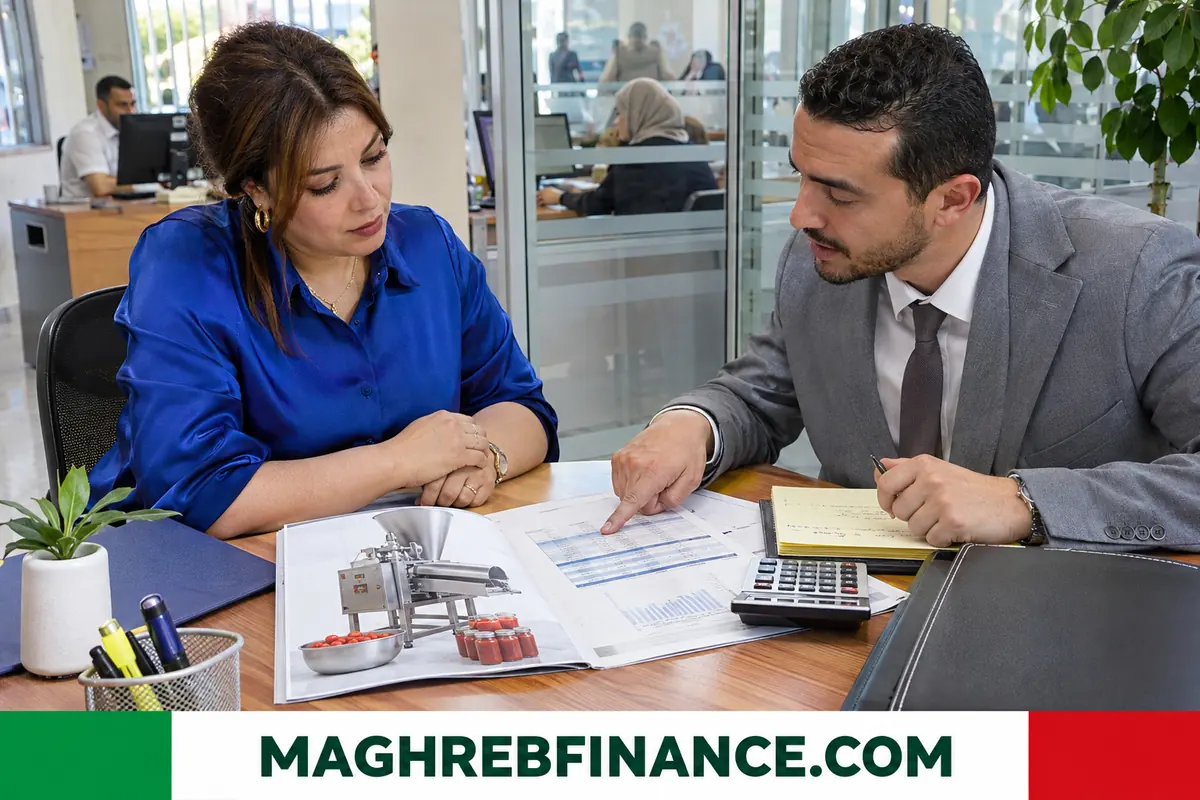
In Algeria, conventional movable asset finance leasing for businesses is a way to fund professional equipment: a leasing company buys the item chosen by the firm, makes it available against regular lease payments, then offers to sell it to the firm at the end of the contract for a residual value. It gives access to machines, vehicles and other professional assets without tying up a large amount of capital at once. Small and medium-sized firms, craftspeople and liberal professions pay in Algerian dinars (DZD) over several years, on a schedule known from signature.
What movable asset leasing is
Movable leasing concerns equipment that can be moved, as opposed to land and buildings: production machines, construction plant, medical devices, computers, vehicles and agricultural equipment. The leasing company, called the lessor, owns the asset throughout the contract. The business, called the lessee, uses it and pays periodic lease payments.
At the end, the lessee can usually buy the asset at a pre-agreed price, extend the contract or return the item. Because the lessor holds ownership, its risk is lower than in an unsecured loan, which can make approval easier for firms with limited collateral.
A craftsperson who needs a CNC machine, a clinic that wants an imaging device and a printing house renewing a press are all typical users, each choosing the equipment and negotiating the price with the supplier directly.
Legal framework in Algeria
Leasing is governed by a dedicated ordinance on leasing and by its implementing texts, together with the banking rules of the Bank of Algeria. Lessors must be licensed, either as banks or as financial institutions, and leasing contracts are subject to publicity formalities so that ownership by the lessor is recognised.
The framework distinguishes finance leasing, with a purchase option, from operating leasing, with a service element and no automatic transfer of ownership. A firm should check which type is being offered, because accounting, tax and end-of-contract rights differ.
Contract process step by step
First the firm selects the asset and obtains a pro forma invoice from the supplier. It then applies to the leasing company with legal documents, financial statements, a business plan if the activity is recent and a description of the use of the asset. The company studies the application and may ask for a deposit or guarantees.
If approved, the lessor buys the item from the supplier, delivery is confirmed in a handover note and lease payments begin. Insurance is organised in the lessor's interest. Keep all papers, including the delivery certificate, as they trigger the start of payments.
Why firms choose leasing
Leasing preserves liquidity, because there is little or no down payment and the cost is spread across the useful life of the asset. It allows a young firm to equip itself quickly and keeps bank credit lines free for working capital. Lease payments match the asset's production, so a machine can pay for itself.
It also eases renewal: when a contract ends, the firm can upgrade to newer equipment. Against these advantages, leasing is not always cheaper in total, so compare it with a bank loan and a purchase from savings.
Cost and comparison with bank credit
The total cost includes lease payments, the residual value, fees, insurance and possible penalties. Compare the effective annual cost of leasing with that of an investment loan for the same asset and period. A lower monthly payment may hide a higher final price.
Ask whether lease payments are fixed or indexed, whether a deposit is returned, what taxes apply and what the buy-out price is. For a small firm, simplicity and speed of approval can outweigh a modest difference in cost, whereas for a large purchase, a loan might be cheaper if collateral is available.
Providers in the Algerian market
Specialised leasing companies such as Sofinance, Maghreb Leasing Algérie and Arab Leasing Corporation operate alongside leasing subsidiaries of banks. Product ranges differ: some focus on medical equipment, transport or industrial machinery, while others cover many categories.
Evaluate each provider on its experience in the relevant equipment, the speed of decisions, the clarity of its contract, its network of approved suppliers and the support it offers during the contract. Ask for references from firms in the same sector.
A short list of two or three providers, each asked for the same simulation on the same equipment, produces comparable figures and shows who is most flexible on the down payment and on the length of the contract.
Obligations, risks and end of contract
The lessee must use the asset properly, maintain it, insure it and avoid moving or sub-leasing without consent. Late payment can lead to penalties and, ultimately, to termination and repossession by the lessor.
What are the accounting consequences?
Lease payments are generally treated as a business expense, but the exact treatment depends on the rules in force and on the type of contract, so confirm with an accountant.
Before the contract ends, decide whether to buy, extend or return. Check the condition required for return and the costs of repairs, which can be significant if the asset is worn.
Keep a calendar with the dates of insurance renewal, lease payments due and the option decision, so that nothing is missed during the contract.
Frequently asked questions
Who can use movable leasing?
Registered businesses, craftspeople and liberal professions that can show the need for the asset and the ability to pay.
Is a deposit always required?
Not always. Some lessors ask for an initial payment or guarantees, depending on risk and amount.
Can the equipment be bought at the end?
Usually yes, for the residual value written in the contract if the contract has a purchase option.
What if the asset breaks down?
Lease payments normally continue. Check what maintenance and warranty are included and who pays for repairs.
Can used equipment be leased?
Sometimes, under conditions on age and valuation. Ask the lessor about its policy.