
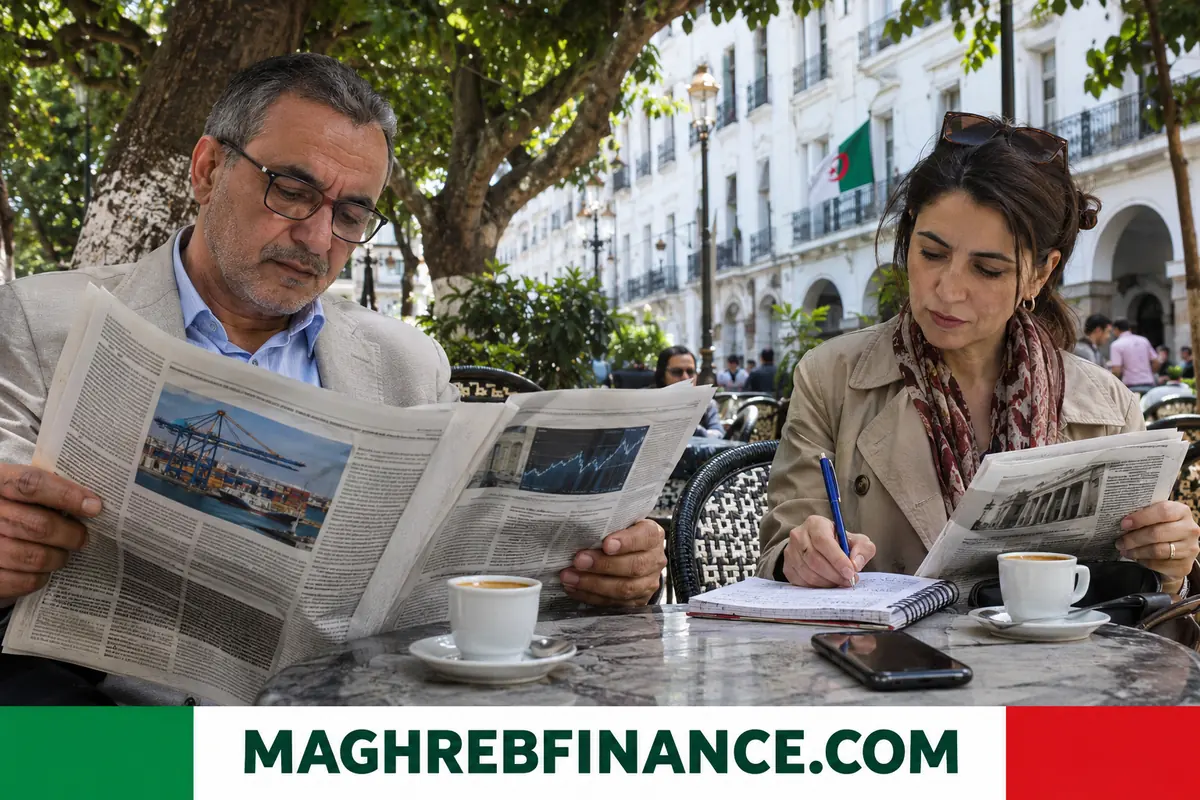
In Algeria, economic geopolitics and strategic intelligence analysis journals study how resources, trade routes, energy contracts and state power influence one another. They range from university reviews and defence journals to think-tank notes, economic media and reports by international bodies. Readers include exporters, bankers, researchers and civil servants who must judge country risk, partnerships and market access, with Algerian dinar revenues tied closely to hydrocarbons and to the foreign policy choices that surround them, so careful reading of sources matters.
Economic geopolitics: what the term means in Algeria
Economic geopolitics studies how economy, territory and power affect each other. It looks at resources, flows of goods, sanctions, trade agreements, foreign investment, supply chains and energy security.
Strategic or economic intelligence means collecting, analysing and using information to support decisions: spotting an opportunity, anticipating a risk, protecting an information asset. For a company, it is a method of watching its environment, not a secret activity.
A simple example: before signing a supply contract with a foreign partner, a firm reads recent analysis of the partner's country, trade rules and payment risks, and decides on guarantees accordingly.
The Algerian and regional context
Algeria is a major energy supplier to Europe, with gas pipelines linking its territory to Italy and Spain. Its position in North Africa, its borders with the Sahel and its place in African and Arab organisations feed a steady debate on partnerships, trade corridors and economic zones.
Frequent themes
Diversification of the economy, regional integration, the African continental free trade area, cooperation with Europe, China and Turkey, food security and the role of the state-owned energy company Sonatrach.
Publications also discuss the pace of the national industrial policy, the opening of the economy to foreign investors and the way regional tensions affect cross-border trade.
Types of publication
Several categories of publication coexist.
- Academic reviews of universities and research centres, which publish peer-assessed studies.
- Journals of defence, security and international relations.
- Economic media, such as Maghreb Emergent, which devotes sections to regional economy and energy.
- Analysis notes from think tanks, institutions and consultancies.
- Reports from international organisations on trade, energy and development.
Each type has its own purpose, readership and level of evidence, and the reader should know which one he or she is holding.
Methods of critical reading
A geopolitical analysis mixes facts, interpretations and scenarios. To read it usefully, one separates the three levels. Facts can be verified: dates, figures, signed agreements. Interpretations depend on the author's angle. Scenarios remain hypotheses.
One should also ask who the author is, which institution he or she belongs to, what interests may exist and which sources are cited. A text without references, which relies on anonymous sources to assert certainties, calls for caution.
Cross-reading two or three publications with different viewpoints is the simplest protection against a one-sided picture. Dates deserve attention: an analysis written before a major event can become outdated within weeks, and the reader notes when each text was produced.
Strategic intelligence inside a company
An exporting company or a business established abroad uses geopolitical analysis to choose markets, assess country risks, anticipate regulatory changes and secure supplies. A bank integrates it into its appreciation of foreign trade risk.
A simple routine
Name a person in charge, define a few watch topics, gather reliable sources, produce a short monthly note and discuss it in the management committee.
Protecting information
Intelligence also means protecting the company's own data: contracts, prices, plans and negotiation positions.
Energy, raw materials and corridors
Journals give a major place to energy: gas, oil, electricity, hydrogen and solar power. They analyse contracts, delivery routes, liquefaction capacity, trends in European demand and African prospects.
Strategic raw materials, such as phosphates, iron, rare earths and ores, are also in scope. Ports, railways and trans-Saharan roads are studied as levers of economic integration.
For Algerian readers, the link between these subjects and the dinar, the trade balance and public finances is a recurring question.
Precautions and ethics of analysis
The field is sensitive. Publications can be used for propaganda, relay private interests or spread rumours. The reader avoids sharing unverified information, especially on social networks.
Authors have duties too: cite sources, separate facts from opinions, avoid hasty generalisations and admit the limits of their data. Professional readers cross-check systematically before deciding, and keep the documents consulted.
Key actors and reference institutions
The reader identifies the institutions that produce analysis: universities, research centres, strategic studies institutes, chambers of commerce, regional organisations, development banks and international bodies. Each has a mission, a method and an audience.
International sources
Reports from energy agencies, trade bodies and development banks provide data series that can be compared between countries. They serve as a base for local analyses and help test the claims of other publications.
Libraries of universities and chambers of commerce often give access to subscription databases and to older reports, which helps readers who want to follow a trend over a long period.
Frequently asked questions
What is the difference between geopolitics and economic intelligence?
Geopolitics studies relations between power, territory and resources at a large scale. Economic intelligence is the practical use of information by a company or institution to decide and protect itself.
Are academic journals reliable on Algerian subjects?
They can be, particularly when articles are peer-reviewed and cite their data. Readers should still check the date, the method and whether the findings rely on official statistics.
Can a small company use this kind of analysis?
Yes. A simple monthly note on three or four topics, such as energy prices, trade rules and key markets, is enough to improve decisions on suppliers, exports and pricing.
Why do energy topics dominate these publications?
Hydrocarbons provide most of Algeria's export revenue and weigh on public finances, so energy prices and contracts shape the exchange rate, the budget and trade relations.