
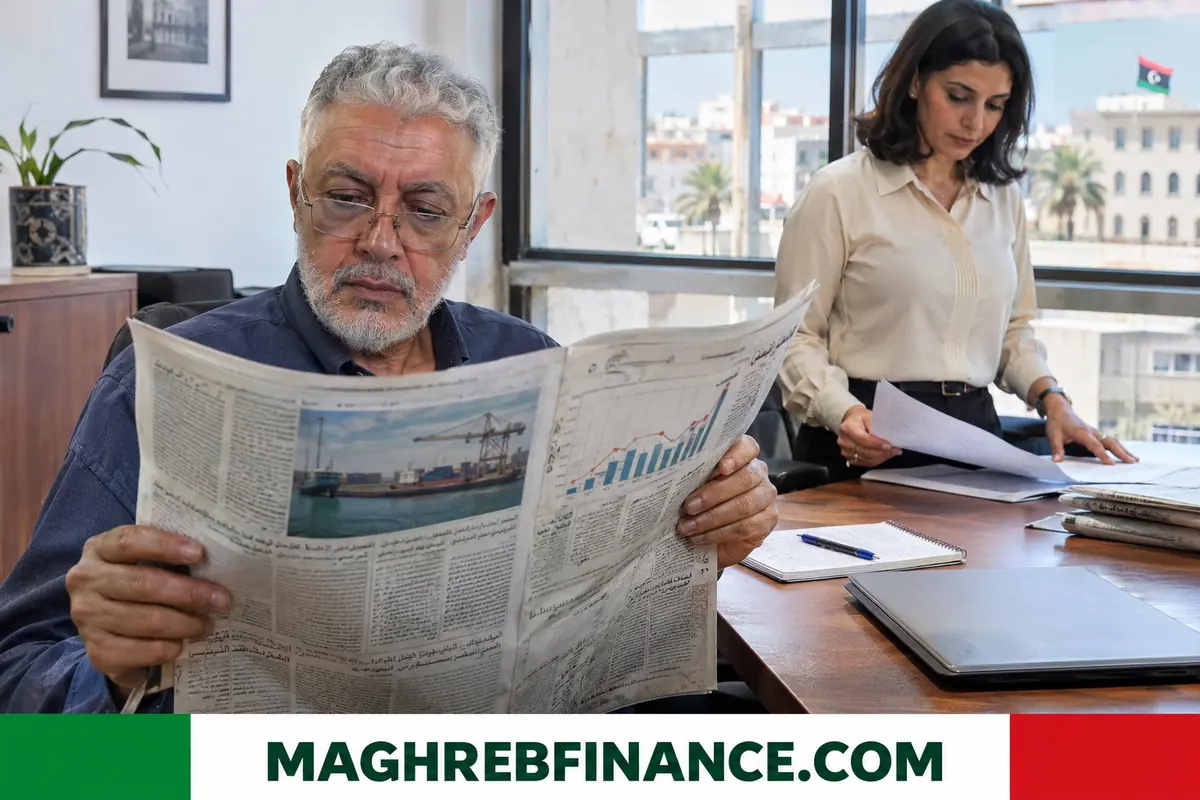
Libya: national and international daily economic and financial newspapers help managers, traders, investors and researchers follow oil output, banking decisions, exchange rates and public spending. The domestic press has changed greatly since the early years of the last decade, with fewer printed titles and more digital outlets, while international dailies and agencies provide regular coverage of Libya's economy. Readers need to compare sources, since political divisions influence reporting and official figures are not always easy to obtain. Readers should check each source before using it.
How the Libyan press market looks today
Printed dailies have declined, and most news now reaches readers through websites, social media pages and television channels. Several outlets publish in Arabic, and a smaller number in English or French.
Publication frequency, editorial independence and funding differ from one title to another. A reader looking for economic news should therefore combine several sources and consult official statements from the Central Bank of Libya, the National Oil Corporation and ministries when they are published, treating each outlet as one view among many.
Television channels and social media pages add to the mix, although they can spread unverified information as fast as accurate reports.
Domestic outlets covering the economy
Arabic-language platforms such as Alwasat report on banking measures, fuel, electricity and living costs. English-language outlets, including the Libya Herald, the Libya Observer and the Libya Review, offer coverage that reaches foreign investors and diplomats.
- Alwasat covers politics, economy and daily life in Arabic
- Libya Herald is an English-language news outlet based in Tripoli
- Libya Observer and Libya Review publish English news online
Check each site's recent updates before relying on it, as digital outlets may change ownership or stop publishing.
Arabic sites usually publish more detail on local decisions than English ones, so bilingual readers have an advantage.
International dailies and agencies
Reuters and Bloomberg report quickly on oil production, port closures, central bank decisions and sovereign investment. The Financial Times and the Wall Street Journal provide analysis of energy markets and political risk.
Regional titles such as Asharq Al-Awsat, Al Arabiya and Al Jazeera follow developments in Arabic and English. Specialist energy services, such as Argus and S&P Global, offer detailed crude oil reporting, which is vital because hydrocarbons dominate Libyan revenue. Subscriptions may be needed for full access, though headlines are often free.
Agencies often publish short flash items first, followed by longer reports with context, so reading both avoids early errors.
What economic and financial coverage includes
Daily coverage focuses on oil and gas output, tank farm and port status, the exchange rate, letters of credit, budget disputes, liquidity in banks and cash availability. Readers also find news on electricity shortages, reconstruction contracts and foreign investment talks.
Market commentary may link events to prices, though the reasons behind movements are often complex. Cross-checking numbers with the Central Bank of Libya and the National Oil Corporation reduces the risk of repeating inaccurate claims, especially when reports rely on anonymous sources.
Watch for stories on liquidity, bank branches, salaries and fuel prices, because they affect business operations directly.
Journalists often rely on central bank circulars, so reading the primary document when it is published is worthwhile.
How to assess reliability
Look at who owns the outlet, whether it separates news from opinion, whether it names sources and whether it corrects errors. Reports based on official documents or several independent sources deserve more weight than single-source claims.
Beware of old articles shared again as new, and of figures lacking a date or origin. During political tension, rumours about banks and prices spread quickly. Waiting for confirmation from a second source is a prudent habit for a business reader who takes financial decisions.
A site that hides its owners, lacks a contact page or never corrects mistakes deserves caution.
Building a daily reading routine
A practical routine starts with one international agency for market events, one regional source for the wider Arab context and one or two Libyan outlets for local developments. Set alerts for terms such as Central Bank of Libya, exchange rate, oil output and the names of main banks.
Keep a record of important decisions, such as changes in foreign currency rules, as they affect contracts. A short weekly summary for management turns scattered headlines into useful information.
Sharing the digest with colleagues ensures that decisions rest on the same facts.
Reading at a fixed hour each morning keeps the habit simple and the summary short.
Languages, access and subscriptions
Many outlets publish free articles, while others limit access or request registration. Arabic remains the main language of the domestic press, and translation tools help non-Arabic readers but can distort technical terms.
For legal or contractual decisions, rely on original texts rather than summaries. Newsletters and mobile alerts help when internet connections are unstable, and offline reading features allow articles to be saved. Choose sources that fit your language skills and budget, and review them each year.
Press releases from institutions are useful, but they present the view of the sender and need context.
Frequently asked questions
Does Libya still have printed economic dailies?
Printed circulation has fallen sharply, and most economic news now appears online or on television. Availability of paper titles varies by city.
Which sources are useful in English?
The Libya Herald, Libya Observer and Libya Review cover Libya in English, while Reuters, Bloomberg and the Financial Times provide international reporting.
Are official statistics available in the press?
Sometimes. The press repeats figures released by the Central Bank of Libya or the National Oil Corporation, but it is better to read the original publication.
How can a reader avoid misleading reports?
Check the date, the author and the sources, compare at least two outlets and look for confirmation from official bodies before acting on financial rumours.