
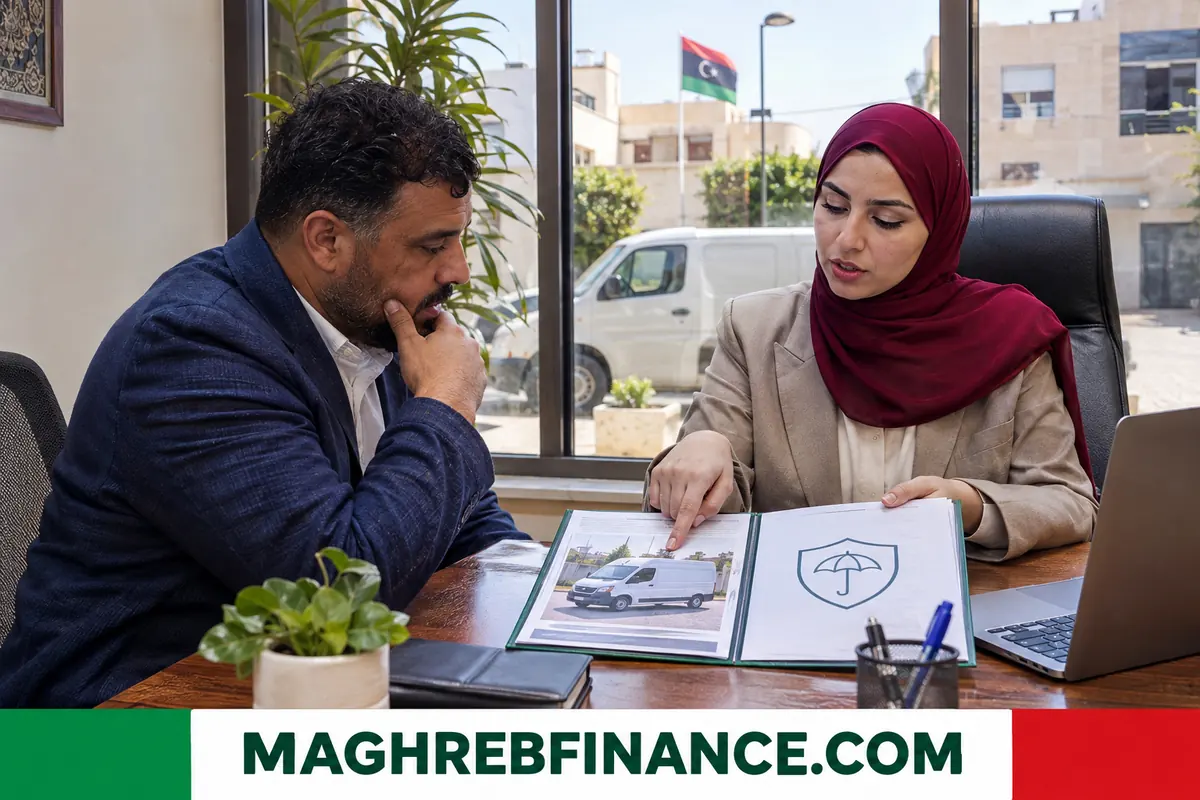
Libya, Islamic business financing through Murabaha, Istisna and Musharaka lets companies fund equipment and projects without interest-based loans. Libyan banking law moved the sector towards Islamic principles, and the Central Bank of Libya supervises the institutions that apply them. The main contracts are cost-plus sale, manufacturing or construction finance, partnership, profit-sharing and advance purchase. Each has its own rules on ownership, risk and profit, so a business should understand what the bank buys, what it sells and who bears loss at every stage before signing.
Principles behind Islamic business finance
Islamic finance avoids interest, excessive uncertainty and trade in prohibited activities. Profit must come from a real transaction or shared risk, not from lending money for a fixed charge.
For a Libyan company this means that the bank usually becomes a seller, partner or investor, not only a lender. The structure should be documented clearly, with ownership of goods or assets traced at every step.
Because Libya has a single legal and regulatory framework with different practice among banks, comparing documentation matters more than comparing labels.
Under the Libyan framework, the bank must also respect rules on disclosure, so clients should receive a clear explanation of how the profit is calculated.
Murabaha for equipment and stock
In a Murabaha, the bank buys equipment or goods chosen by the client and resells them at cost plus an agreed profit, payable in instalments or at a later date.
It is straightforward and widely used for machinery, vehicles and stock. The client should check that the bank genuinely acquires the asset first, that the total price is fixed and that late payment does not lead to an increase in the agreed profit.
If the contract involves a promise by the client to buy the goods, read the wording carefully so that you understand the obligations if market conditions change.
Istisna for projects and manufactured assets
Istisna is a contract to have an asset built or manufactured to specification, with payment in stages or at delivery. It can finance a factory building, a custom production line or a fleet of specialised equipment.
The key points are the specification, the delivery date, the payment schedule and the responsibility if work is late or defective. Inspection and acceptance procedures should be written into the contract, and independent engineers can help certify progress.
Where a project involves several suppliers, the bank may ask for a coordinator or a lead contractor to avoid confusion over responsibility.
Interim payments should be released only against inspection reports signed by both parties.
Musharaka and Mudaraba
A Musharaka is a partnership where the bank and the client both contribute capital and share profits by agreed ratios, while losses follow capital contributions. A Mudaraba places capital with the entrepreneur, who provides management and shares profit under a pre-agreed formula.
These structures suit ventures with real profit potential, but banks use them carefully because returns cannot be guaranteed. Expect close reporting, audited accounts and rules for exit or buy-out of the bank's share.
Partners should agree on decision rights, reporting, distribution dates and valuation rules at the beginning, not after a dispute has begun.
Salam for agricultural and commodity needs
Salam involves paying in advance for goods to be delivered later, with quantity, quality and date specified. It can give a farmer or producer cash before harvest, in exchange for future delivery.
The producer carries delivery risk, so the contract should reflect realistic yields. The bank will normally arrange sale of the goods after delivery, and may require guarantees to protect against non-delivery.
A small producer may find Salam useful only if the bank is willing to take delivery of the goods and has a route to sell them.
Quantities, grades and delivery places must be stated precisely, because vague descriptions cause disputes at delivery.
Conditions, documents and costs
Banks ask for registration, licences, financial statements, quotes for assets and a clear description of the project. Costs depend on the contract and include the bank's profit, administration fees, insurance and valuation.
Compare offers by the total amount payable and the schedule, and ask for the contract wording in advance. A sharia supervisory opinion or approval from the bank's own board may be available on request.
It is advisable to ask who handles disputes under the contract and which Libyan court or arbitration body would be competent.
Ask for a payment schedule in dinars and confirm whether any part is linked to foreign currency.
Risks and practical advice
Operational mistakes, disputes about ownership, delays and misunderstandings about profit calculation are common risks. Keep invoices, delivery notes and signed receipts for every stage.
Do not assume all banks interpret the same contract in the same way; terms and documentation differ. Seek legal advice for larger projects.
Many companies start with Murabaha because it is simpler, then move to more complex structures when they understand the process.
Records of signed contracts, invoices and approvals help when accounts are reviewed.
Frequently asked questions
What is the difference between Murabaha and a loan?
In a Murabaha the bank buys an asset and sells it on to the client at a fixed price, instead of lending money for interest.
When is Istisna used?
It is used to finance assets that must be built or manufactured, such as buildings or specialised machinery, with payment linked to progress.
Are profits guaranteed in Musharaka?
No. Profit is shared by an agreed ratio, and losses follow capital contributions, so returns depend on the real result of the venture.
Do all Libyan banks offer these contracts?
Availability varies by bank and by product. Ask each institution which contracts it offers for businesses and request the standard terms.