
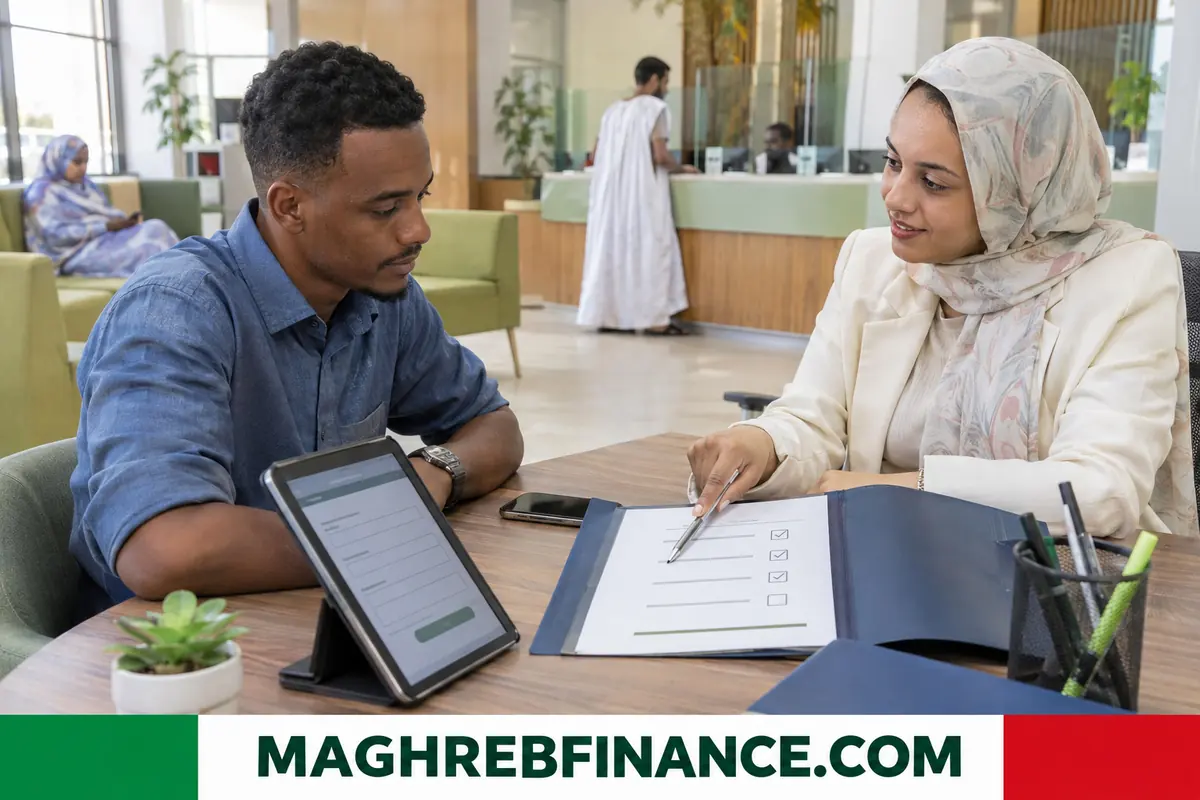
In Mauritania, car leasing with a purchase option works as personal financing: you use a vehicle in return for regular payments, then buy it at the end by paying a residual value fixed on day one. The bank or leasing company buys the car, stays its legal owner during the contract and makes it available to the customer. The offer is aimed mostly at professionals, yet it can also interest salaried staff and self-employed people who want to spread the expense. It assumes stable income, possibly a down payment and full insurance cover.
Car leasing with a purchase option: how a lease with a purchase option works
The contract runs in three stages. The bank or leasing company buys the car chosen by the customer. During the term the customer pays monthly instalments and drives the car as if it were his or her own. At the end there is a choice: pay the residual value and keep the car, hand it back or, sometimes, renew the contract.
The legal name of the operation is a finance lease. Its strength is that it spreads the cost and leaves a decision for later. Its drawback is a higher overall price than paying cash.
The total cost reads as the sum of every instalment plus the final payment, which is why you should always ask for that figure before signing.
An offer aimed first at professionals
Banque Populaire de Mauritanie presents a leasing offer for companies, liberal professions and traders covering new or used vehicles and equipment. Banque Al Wava Mauritanienne Islamique also mentions equipment leasing.
A salaried individual therefore has to ask whether the bank will contract with a private person at all, or whether it prefers to arrange the purchase through murabaha financing.
The reason is practical: the lessor must be able to recover and resell the car after a default, so it prefers customers with a steady profile. Presenting yourself clearly as a permanent employee, civil servant, professional or trader, with income paid into the bank, opens more doors than a bare request.
Instalments, down payment and residual value
The instalment depends on the car's price, the term, the initial payment and the residual value. The higher the residual value, the lower the instalment, but the larger the sum due to keep the car at the end.
A raised first instalment sometimes plays the part of a down payment. It ties up money that is not returned, so compare it with a deposit on a loan, which directly reduces the debt.
Ask for a detailed schedule showing each instalment, the residual value, the total cost if you buy and the total cost if you return the car. Find out also whether arrangement fees are paid at signing or folded into the instalments.
Insurance, upkeep and your duties
The customer must insure the vehicle with a licensed insurer, with cover that meets the lessor's requirements, and the lessor appears as beneficiary. The customer pays for maintenance and repairs and respects the terms of use: mileage, private use, and no lending, transfer or sale of the car.
Keep the service book and invoices. A car returned in poor condition leads to refurbishment charges, and non-compliant use can justify penalties.
The policy should cover the car's replacement value, because after a theft or total loss the payout is used to repay the owner. A basic third-party policy is not enough. Keep the original insurance certificate in the car and a copy at home.
Lease or classic loan
With a loan the borrower owns the car from the purchase and the bank takes security. With a lease the company remains owner until the option is exercised, which matters in a crisis because the owner can simply take the vehicle back.
Tax treatment varies and depends on your status, so ask an adviser. For a private person a loan or a murabaha gives ownership sooner and avoids uncertainty at the end of the contract.
Leasing makes sense for someone who changes cars regularly or wants to protect cash. A customer who often changes job or city gains flexibility at the end of the term, while one who keeps cars for ten years will generally find a loan cheaper.
The Islamic version: ijara and a promise to sell
Islamic banks offer a compliant equivalent, ijara wa iqtina, in which the bank stays owner and lets the customer use the vehicle before a promise of sale at the end of the term.
The difference from a conventional lease lies in how risk is shared and how the contract is worded: major maintenance and basic insurance fall on the owner, while the user bears running costs.
Ask which formula your bank uses and what its Sharia board has said about it. A clear Islamic contract states in writing who bears which risk: accidental loss without fault belongs to the owner, damage caused by negligence to the user.
Ending the contract and handling difficulties
Three outcomes are possible at maturity: purchase, return or renewal. Early termination brings compensation, and sometimes all remaining instalments are due. If you struggle to pay, tell the leasing company quickly, since repossession is the final sanction.
Before the end, have the car valued so you know its real market price. If it exceeds the residual value, buying is attractive; if not, handing the car back may cost less.
The contract must be written, signed and given to you in copy. For a dispute, send a written complaint to the company, then to the Central Bank of Mauritania, which supervises credit and finance institutions. Keep the contract, amendments, receipts and insurance certificates.
Frequently asked questions
Can an individual really obtain a lease in Mauritania?
The offer is mostly meant for professionals, so ask each bank about its conditions for private customers.
Who owns the car during the contract?
The leasing company or bank, until the purchase option is exercised.
Can the option be exercised early?
It depends on the contract. Early purchase often requires paying the remaining instalments and the residual value.
Can the car be sold during the lease?
No, unless the owner agrees in writing. A sale without consent is a serious breach.
What happens if the car is stolen?
Insurance covers the loss and the contract ends, with compensation paid to the owner.