
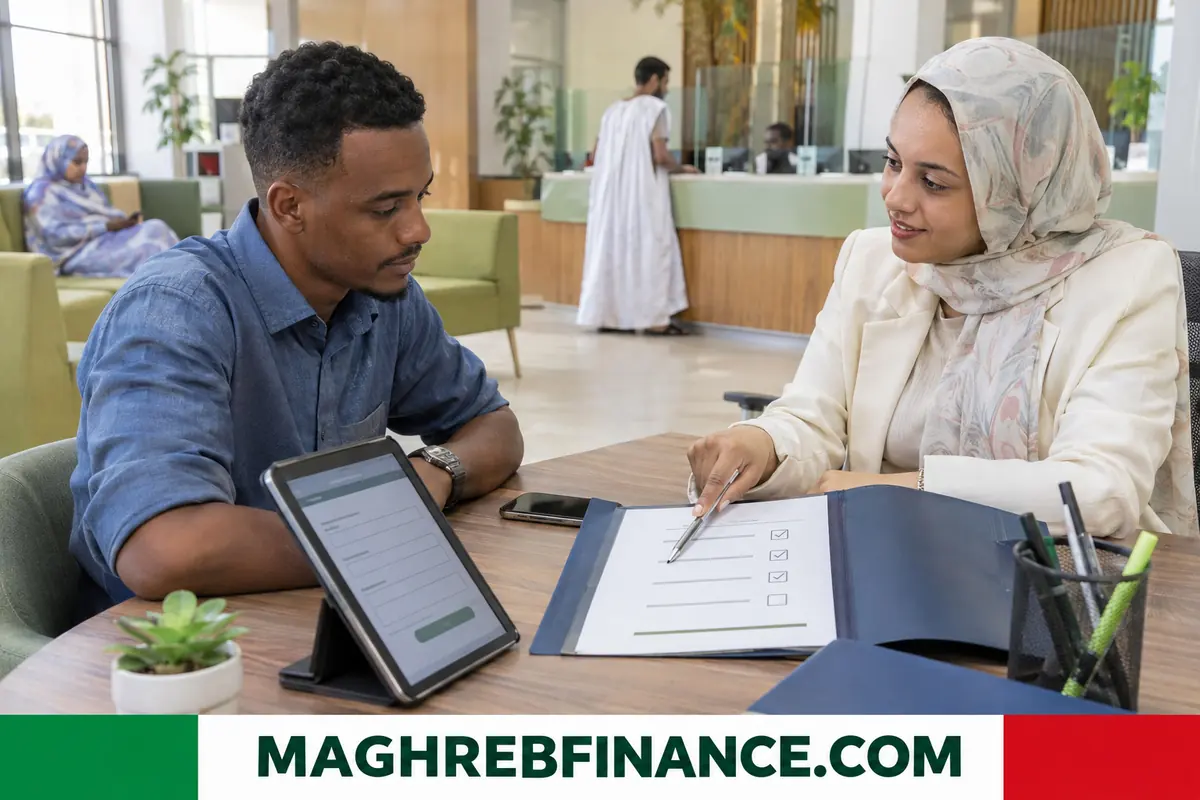
Mauritania: electronic payment terminals and ecommerce business solutions let merchants accept customers' payments without cash, by bank card, mobile application or payment link. The terminal is the device placed at the till that reads the card, while online tools serve digital shops. The market relies on interbank cards, banks and mobile payment services, some of which already offer merchant payment, in a country where cash still dominates daily trade, so merchants usually accept several methods side by side and let each customer choose.
A payment landscape in evolution
Cash remains the main means of payment for most purchases, but cards and mobile wallets are growing, especially in Nouakchott and among younger customers. GIMTEL operates the national interbank system that links banks, cards and terminals.
Banque Populaire de Mauritanie offers several card types, and its mobile service Bankily lets customers pay merchants, deposit and withdraw money, transfer funds and settle bills.
For a shop owner the question is not whether to modernise but how to do it without losing sales. Customers who prefer cash will remain for years, so a merchant should accept both.
Terminals: how they work and how to choose
A terminal reads a card by chip or contactless technology, asks for a code when needed, contacts the bank's network and prints or displays a receipt. Some models are fixed on the counter, others are mobile and connect through the phone network, useful for restaurants and delivery.
Choose according to the volume of sales, the place of use and the quality of connection. A shop with unstable internet needs a model that uses a mobile data link or works offline for small amounts.
Ask the bank who owns the terminal, who repairs it and how quickly a replacement arrives. A broken terminal during a busy day costs real money.
For a restaurant, a portable terminal that goes to the table saves time and reduces mistakes with receipts.
Mobile payments and QR codes
Mobile wallets let customers pay by scanning a QR code or entering a number. For small merchants they are cheap to set up, since they need no heavy equipment, only a phone and an account.
Check the fee per transaction, the daily limit and the time it takes for funds to reach your account. Make sure staff verify that the payment has arrived before handing over the goods.
Display a clear sign showing which methods you accept. A QR code printed on the wall is convenient, but protect it from tampering, because fraudsters sometimes stick their own codes over those of merchants.
Selling online
An online shop needs a payment page, a secure connection and an agreement with a bank or payment provider. Options include a plug-in for an ecommerce platform, a payment link sent by message or a mobile wallet button.
Because local card use online is still developing, many sellers combine online orders with payment on delivery, mobile wallet or bank transfer.
Foreign customers may want to pay by international card, which requires an acquirer able to process such payments. Ask your bank whether it provides this and under what conditions.
Costs to compare
Costs can include a one-off installation fee, rental or purchase of the terminal, a monthly maintenance charge, a commission on each card payment and a fee for settlement.
Commissions are often a percentage of the sale, sometimes with a minimum per operation. For small sales, a fixed minimum can weigh heavily.
Add the cost of paper rolls, communication charges and staff training. Ask for all prices on a single written sheet and compare them for the average ticket of your business, not only for the headline rate.
Negotiate with the bank if your volumes are high, since commission rates are not always fixed.
Security and compliance
Protect the terminal against tampering by checking it each day and keeping it out of customers' reach. Never ask a customer for a PIN or note card details on paper.
Staff should know what to do if a card is refused, if a customer reports a problem or if someone asks to change the terminal. Keep the merchant copy of each receipt.
Businesses must keep records for tax purposes. Card sales are traceable, which encourages good accounting and supports applications for credit.
Steps with the bank
Visit your bank and ask for a merchant agreement. You will need your company papers, tax number, identity of the manager and an account to receive the funds. The bank may check your activity and expected sales.
After approval, the bank or provider installs the terminal, tests it and trains your staff. Settlement normally occurs within a few days, depending on the contract.
Ask for a contact for technical problems and confirm hours of support. Keep the contract and review it every year.
Train every employee on the same procedure so that a refund or a cancelled payment is handled correctly each time.
Benefits for the merchant
Accepting electronic payments reduces the risks of holding cash, speeds up queues and attracts customers who carry little money. It also creates a record of sales that helps in budgeting.
A visible card sticker can increase trust, particularly in shops that sell higher-value goods.
Weigh these benefits against costs, and begin with the method that fits your customers best. Many merchants start with a mobile wallet, then add a bank terminal as sales grow.
Write down the daily total of card, wallet and cash sales and check it against the statements each week.
Frequently asked questions
Do I need a terminal to accept card payments?
For in-store payments, yes, unless you use a mobile solution that reads the card or a wallet.
Can small shops accept mobile payments?
Yes. A phone and a wallet account are often enough.
How long before the money arrives?
It depends on the contract and the provider, typically a few days for card sales.
Who pays if a customer disputes a payment?
The contract sets the rules, so read the section on chargebacks.
Is an online shop possible without a bank?
Some wallet and transfer methods work without a card gateway, but a bank agreement widens your options.