
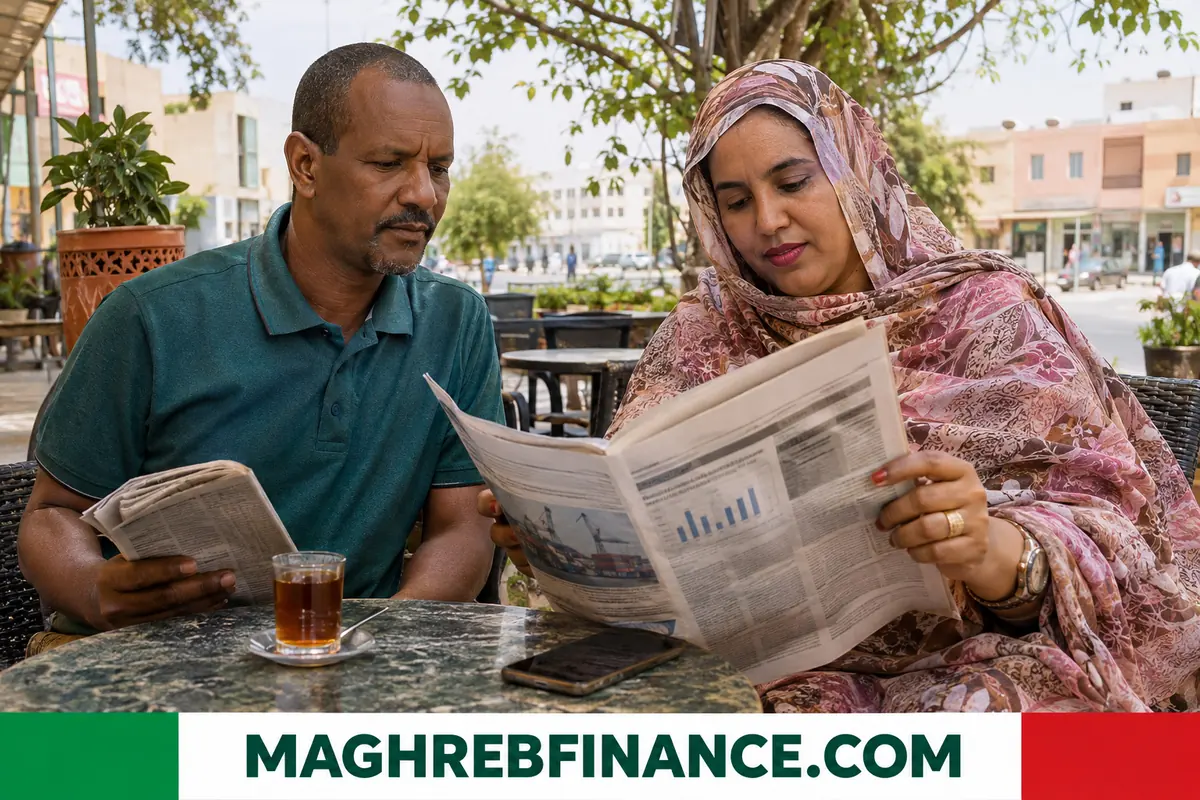
In Mauritania, industry, logistics, transport and international trade journals describe how goods enter, leave and move across a vast country. They cover the ports of Nouakchott and Nouadhibou, the ore railway, roads towards Senegal and Mali, customs formalities and transport companies. Their readers are importers, exporters, forwarders, manufacturers and trade finance bankers, who look for lead times, costs and rules to follow, with freight and duties quoted in ouguiya (MRU), dollars or euros. The aim is to help traders cut delays, understand costs and meet legal duties.
A country of long distances
Mauritania stretches over an immense, thinly populated territory crossed by desert. Goods must travel hundreds of kilometres between ports, the capital, mining areas and borders. This geography makes logistics a central factor of competitiveness: a truck delayed for days raises costs and stock needs.
Journals compare routes, transit times and tariffs, and show how businesses organise their supply chains around these constraints.
Seasonal swings, such as rains that damage tracks or festival periods that raise demand, also appear in the planning advice that journals offer.
Reliable lead times allow firms to hold smaller stocks, which frees cash that would otherwise be locked in goods waiting for the next delivery.
Ports and maritime transport
The autonomous port of Nouakchott and the port of Nouadhibou play complementary roles: the first receives much of the consumer goods, while the second is oriented towards fishing, industry and ore. Articles follow extension works, vessel waiting times, port tariffs and the arrival of new shipping lines.
Shippers read these reports to choose the port of discharge, plan stock and negotiate with forwarders.
Container availability, storage fees and the speed of customs clearance at the port often matter as much as the freight rate itself.
Rail, road and regional transit
The railway line linking the interior mining area to the coast is among the best-known works in the country, although it mainly serves ore. For other goods, the road remains the main mode, with axes to the south, to the east and to Morocco in the north.
Road transit to Senegal and Mali raises questions of border delays, informal charges, driver security and the condition of tracks, which journals document with concrete cases.
Where tracks are poor, convoys, spare parts and a reliable driver count for more than the nominal capacity of the truck.
Customs, formalities and international trade
Exporting or importing requires documents: commercial invoice, packing list, certificate of origin, customs declaration, insurance and, depending on the goods, sanitary or conformity certificates. Journals explain procedures, the role of approved forwarders and changes in customs rules.
- check the tariff classification of the goods;
- use an approved customs agent;
- keep proof of origin and of payment;
- declare the correct value to avoid penalties.
Pre-clearance of documents and a clear power of attorney for the customs agent reduce the time a container spends in the yard.
Traders are advised to ask for written confirmation of fees and charges, because informal costs undermine budgets and are difficult to recover.
Industry and local processing
The industrial fabric includes mining, fish processing, agrifood, water and drinks production, building materials and repair workshops. The challenge for the coming years is to add more value on the spot instead of exporting raw products.
Journals report on plants, investment projects, energy supply and training needs, and on how industrial firms handle imports of equipment and spare parts.
Local sourcing of packaging and spare parts, where possible, shortens lead times and reduces exposure to exchange rates.
Financing foreign trade
International operations rely on banking instruments: documentary credit, documentary collection, bank guarantees and inventory finance. A documentary credit, for example, guarantees payment to the seller against compliant documents and delivery of the goods to the buyer.
Insurance and risk
Cargo insurance and credit insurance complete the financing. Journals stress that documents must match exactly the terms of the credit, since small errors cause refusals.
Importers of machinery often combine a documentary credit with a finance lease or an operating lease to spread the cost over the useful life of the equipment.
Banks that finance trade check the carrier, the route and the insurance, and may refuse a transaction when documents show inconsistencies or unusual routing.
Transport companies and professionals
Hauliers, forwarders, shipping agents and handling companies form a dense sector. Journals present their professional organisations, safety and insurance rules, standard contracts and common disputes: damage, delay and deterioration of goods.
Choosing a reliable partner involves checking licences, references, insurance certificates and the condition of vehicles or warehouses.
Warehouse safety, fire protection and the handling of dangerous goods are subjects where regular training prevents expensive accidents.
Trade bodies and chambers of commerce offer training and arbitration services, which help to settle disputes without long court proceedings.
Digital tools, tracking and sustainability
Satellite tracking, electronic invoicing and freight booking platforms are gaining ground. They shorten waiting times and improve transparency. Articles also discuss reducing emissions from trucks and ships, and the use of solar power in warehouses.
Better data on movements helps firms plan stock and negotiate with carriers on the basis of facts.
Even simple measures, such as a shared spreadsheet of shipments and a weekly call with the forwarder, improve reliability.
Frequently asked questions
What are the main Mauritanian ports?
The ports of Nouakchott and Nouadhibou, with different roles in consumer goods, fishing, industry and ore.
Which documents are needed to import?
Commercial invoice, packing list, transport document, customs declaration, insurance certificate and any sanitary or conformity certificate.
What is a documentary credit?
A bank undertaking to pay the seller against documents that comply with the credit terms, which protects both seller and buyer.
Why does logistics weigh so much on prices?
Long distances, fuel costs, port delays and limited infrastructure add to the cost of every imported or exported product.
How is a forwarder chosen?
Check licences, references, insurance and experience on the route, and compare written quotations that show every fee.