
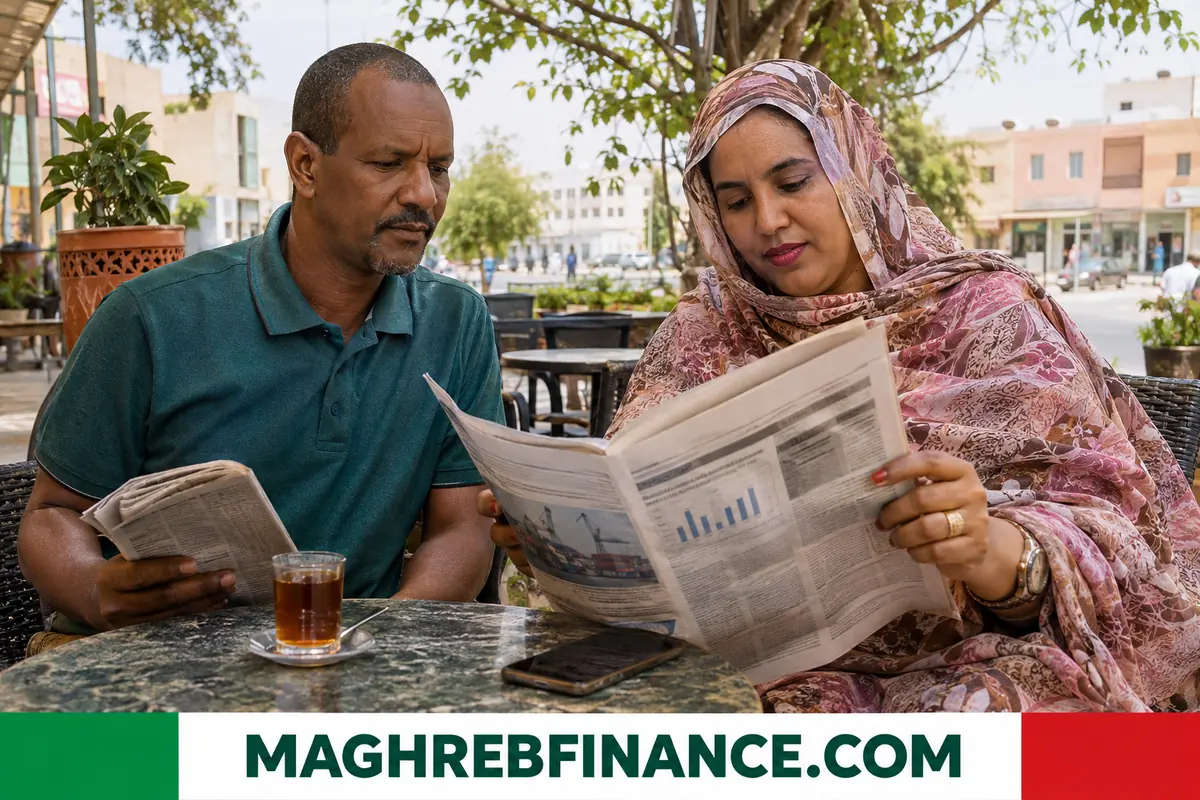
In Mauritania, personal finance, wealth management and savings magazines help households organise their budget, investments and protection. A magazine of this kind explains an account contract, compares products, decodes a loan or a retirement scheme and suggests methods for putting money aside. In a country where the ouguiya (MRU) circulates as much in cash as on bank accounts, where the extended family plays a major role and where diaspora transfers matter, such content must adapt to local habits, family duties and the uneven access to financial services across the country.
What a personal finance magazine is for
It translates financial vocabulary into daily actions: drawing up a budget, repaying a debt, building a reserve, choosing insurance. It speaks to the employee, the civil servant, the trader and the student who has never read a bank contract.
Unlike a stock market review, it stresses balance, not performance. Its aim is a household that sleeps well, not one that chases the highest return.
A good issue also lists the questions to ask a bank adviser, so that readers meet professionals better prepared.
Short worked examples, with figures in ouguiya, make advice easier to remember than general principles.
Themes suited to the Mauritanian context
Household concerns differ from one country to another. The subjects that recur here include the following.
- money received from relatives abroad and how to use it well;
- irregular income of traders, herders and fishers;
- financing of schooling, weddings, pilgrimage and family events;
- mobile money, cash habits and the move to bank accounts.
Magazines that treat these themes with local examples are more useful than copies of foreign articles that assume a regular salary and a mortgage.
Seasonal rhythms matter as well: income that peaks after a harvest, a fishing campaign or a religious festival calls for a plan that spreads spending over the year.
Precautionary savings and budgeting
The first rule advocated by almost every magazine is to build a reserve covering several months of current expenses. It protects against surprises without costly borrowing or a hasty sale of assets.
Drawing up a simple budget
List fixed and variable income, sort expenses into essential, useful and optional, and compare the total each month. For irregular earners, a budget based on the lowest typical month works better than one built on the best.
Setting money aside on the day income arrives, before spending, is more effective than saving what is left at the end of the month.
A separate account or a locked savings product, where available, helps resist small daily expenses.
Wealth management: what does it mean?
Wealth is the set of a household's assets: accounts, home, land, vehicle, livestock, shares in a business, jewellery and precious metals. Management means deciding how to divide them according to the family's goals: security, transmission and extra income.
Magazines present principles of diversification: not putting all savings into one asset, one currency or one risk. They also explain inheritance rules and the importance of written records of ownership.
Land and property documents, receipts and the contact details of a notary or a trusted adviser should be kept together and known to a close relative.
Credit, insurance and protection
An educational credit column shows how to compare the total cost of a loan: rate, arrangement fees, insurance and early repayment penalties. It explains the difference between a conventional loan and a sharia-compliant financing such as a sale with a known margin.
On the insurance side, magazines detail motor, health, home and life policies, remind readers to read exclusions and explain how to claim.
A small business owner is advised to separate personal and company money, which makes both budgeting and borrowing simpler.
Retirement and social protection
Retirement of formal-sector employees falls under social protection bodies, and many self-employed workers do not contribute. A personal finance magazine therefore stresses the importance of complementary savings and early preparation.
It invites the reader to check their rights, to request a statement of contributions and to plan for the years when income falls, taking account of family obligations.
For those who work abroad and plan to return, savings held in several currencies need an explicit plan for conversion.
Choosing a reliable magazine
Several criteria help separate information from advertising. Independence: does the magazine state its funding and mark sponsored articles? An article that systematically praises a single bank should raise doubts.
Clarity: are the examples worked out in figures, with the currency stated? Currency: is the date given? Accountability: are errors corrected? These checks take a few minutes and prevent costly choices.
A magazine that publishes a correction in a visible place deserves more trust than one that never admits a mistake.
Avoiding easy promises
Investment columns sometimes carry offers with no risk and high returns. There are none. Pyramid schemes, false investment funds and cryptocurrencies promoted without reliable information have cost many savers their money in the region.
The best tool remains a simple rule: if the offer cannot be explained in two sentences, if the promoter pressures the saver to decide fast or if the return looks far over the market, step back and ask an independent adviser.
Frequently asked questions
Are there French-language personal finance magazines in Mauritania?
Local supply is small. Readers also use French-language African and international titles, adapting the advice to local products and habits.
How much should be saved each month?
A common target is a share of income that builds a reserve of several months of expenses, adjusted to the household's means and irregular earnings.
What does managing wealth mean?
It means organising assets such as accounts, property, livestock and business shares to meet goals of security, income and transmission.
Do magazine tips all apply in Mauritania?
No. Rules on taxes, products and inheritance differ, so each tip should be checked with a local professional before use.
What signals reveal a doubtful investment offer?
Promised high returns without risk, pressure to decide quickly, unclear identity of the promoter and reliance on recruiting new members.