
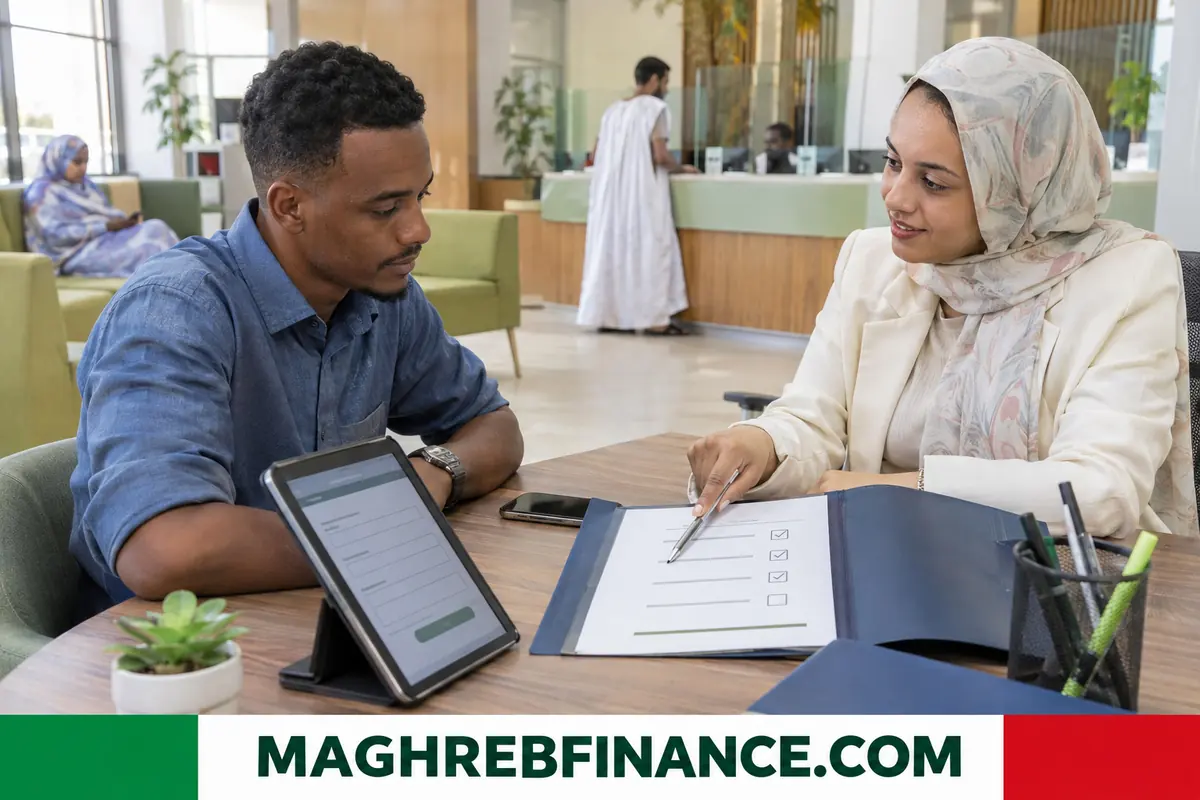
In Mauritania, personal microcredit loans for individual needs mean financing of small sums granted to people who struggle to obtain ordinary bank credit: repairing a home, buying school supplies, paying for routine medical care or equipping a household. Lenders include microfinance institutions and some banks, all under the supervision of the Central Bank of Mauritania, and loans are denominated in ouguiya (MRU). The product mainly serves households on modest incomes, women, young people and workers of the informal economy who have no payslip to show.
What a personal microcredit really is
A microcredit is a small loan repaid over a short period and aimed at clients that banks serve badly or not at all. It differs from a business microloan, which finances an activity that earns money. A personal microcredit answers a family expense: a leaking roof, a phone, the start of the school year.
Amounts are modest, paperwork is light and branches are close to the customer. Some lenders grant the money without any physical collateral, relying on their knowledge of the borrower, his or her reputation or the guarantee of a group.
A typical case is a mother who borrows a small sum to buy school supplies before term starts and repays it over several months from small sales or help from a relative.
Who lends in Mauritania
Microfinance is governed by specific rules and watched by the Central Bank of Mauritania. The landscape includes savings and credit cooperatives, specialised institutions and, in recent years, a bank devoted to microfinance such as Al-Ibdaa. Commercial banks may also offer small personal financing.
Banque Populaire de Mauritanie publishes an online simulator for murabaha-type financing aimed at personal projects and consumption, which shows that small-ticket Islamic products exist alongside classic microcredit.
Before choosing, ask several lenders for the total cost, the repayment schedule, the guarantees required and their policy on late payment. A licensed lender displays its approval and the list of its branches.
Eligibility and documents
Requirements differ between institutions, but the usual list is short:
- residence in the area served by the lender;
- an identity document and often proof of address;
- some source of income, even small or irregular;
- sometimes a savings account with a first deposit;
- a personal guarantor or the agreement of a solidarity group.
Lenders reward punctual repayment. A client who pays on time usually receives a larger amount at the next cycle, while a missed instalment can freeze the relationship.
Women and young people form a large share of microfinance clients, because they find it harder to borrow from banks. Some institutions respond with small starter loans, close follow-up and short budgeting sessions.
Amount, duration and instalments
First loans are small and grow step by step. Terms run from a few weeks to one or two years, with weekly, fortnightly or monthly instalments chosen to fit how the borrower is paid. A repayment table handed over at signing shows each due date.
Before committing, add up the total to repay and set it against what you actually earn. A loan spent on consumption produces no income, so it has to be repaid from the existing household budget.
A weekly schedule suits a small trader who takes cash every day, while an employee will prefer a monthly date that follows payday. Ask for the rhythm that matches your own cash flow, and keep a receipt for every payment, even a small one.
What a small loan costs
Small loans often cost more in proportion than bank credit, because the lender spends a lot on follow-up. Ask for the total cost, the application fee, any amount withheld from the capital and the size of any compulsory savings.
Several institutions use Sharia-compliant formulas such as a sale with a stated margin or profit sharing. The principle is the same in every case: before signing, you must know the exact sum you will pay at the end, and it must not change along the way.
Compare the formal offer with the informal alternative, which is often dearer: a private loan with a hidden rate, goods bought on credit from a shopkeeper at a mark-up, or outright usury. Contract transparency is the main strength of a regulated lender.
Solidarity groups, savings and tontines
Microfinance rests on solidarity. In a group loan each member answers for the others, which creates helpful social pressure but also a risk: one defaulting member can weigh on everyone.
Family and neighbourhood tontines are widespread. They run without a legal framework and without protection if someone fails to pay. A regulated lender offers a written contract, rules and a place to complain, whereas a tontine depends on trust alone.
Compulsory savings requested by some institutions are not lost: they remain the client's property and are returned at the end of the cycle, provided nothing is overdue. Get the refund conditions in writing.
Risks and safeguards
The main danger is over-indebtedness: taking one microloan to repay another. Never borrow from several lenders for the same need, and cap the instalment at what your budget can carry.
Stay away from informal lenders who demand very high repayments or keep identity papers as a pledge. Be wary of easy-money offers by text or phone call. No serious lender asks for a fee before releasing funds or for the secret code of a mobile wallet.
If you cannot pay, contact the lender before the due date to negotiate a longer schedule. A complaint goes first to the institution's management, then to the Central Bank of Mauritania; a consumer association or a lawyer can help with the wording.
Frequently asked questions
Is a guarantor needed for a microcredit in Mauritania?
Often yes, either a personal guarantor or a solidarity group, although some institutions release small amounts without any guarantee.
What is the average amount borrowed?
It depends on the institution and the client. First loans are small and increase as repayments are made on time.
Is personal microcredit compatible with Sharia?
Several institutions offer compliant formulas. Ask exactly how the contract works before you sign.
Can I repay early?
Usually yes, but the total cost may stay the same depending on the formula, so check the clause on early settlement.
Can a personal microloan fund a business?
It is designed for household needs. For an income-generating activity, a business microloan is the better fit.