
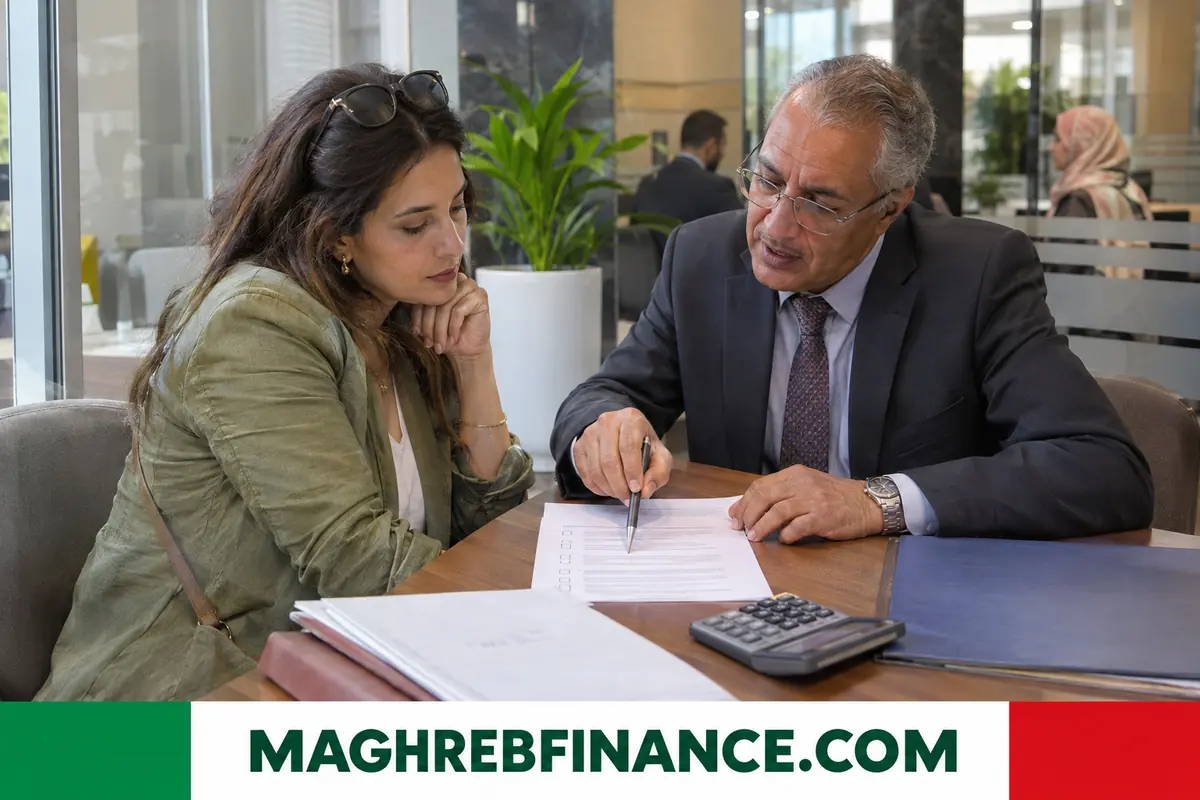
In Morocco, the current account, also called a checking account, is the core of everyday banking services for individuals. It receives the salary and allows payments, cash withdrawals, transfers and cheques, and it opens the door to cards, online banking and direct debits. Held in Moroccan dirhams (MAD) with a bank licensed by Bank Al-Maghrib, it also builds the transaction history that lenders examine when a customer later asks for credit, along with services such as standing orders and account alerts.
What a current account is used for
The current account centralises daily money flows: salary, rent, electricity and water bills, purchases and a small safety cushion. It leaves a record of operations, offers more security than cash and gives access to credit. It is also the base for other products. A debit card, a savings plan, a loan or a standing order is linked to it, and a bank judges a loan request largely by how the account has behaved over time. Keeping it in order, without overdrafts or rejected payments, is the best way to build a good relationship with the bank. Salaried workers usually domicile their pay in one bank, while entrepreneurs often keep a personal account separate from their business account to simplify bookkeeping and tax filing.
Opening an account: conditions and documents in Morocco
To open an account, the bank identifies the customer in line with anti-money-laundering rules. It checks identity, address and often professional situation. Typical documents are the national electronic identity card or a passport, proof of address such as a utility bill, a salary slip or employer certificate and, for some products, a minimum first deposit. Online and mobile opening is spreading, with identity checked through video or an agency visit. Alongside conventional banks, participative banks offer current accounts that follow their own rules, so read the account agreement before signing.
The cheque: operation and rules
A cheque is a payment order given to the bank. It must be written carefully: amount in figures and in words, payee, date, place and signature. A crossed cheque can only be credited to an account, which reduces risk if it is stolen. Issuing a cheque without enough funds is a serious matter. Incidents are recorded, and the account holder can be barred from issuing cheques until the situation is regularised. Keep the chequebook in a safe place and report any loss at once. Postdated cheques are not a legal guarantee, so treat a cheque received as a payment only once the funds have been credited to your account.
Cards, transfers and online banking
The account gives access to a debit card, used in shops, online and at ATMs. Transfers can be made at a branch, through online banking or on the mobile app, with delays depending on the channel and the receiving bank. Instant payment tools and mobile wallets are growing next to cheques. Standing orders handle fixed bills such as rent, insurance or school fees. Set up alerts for each debit to catch errors quickly. Transfers to another bank can take longer than internal ones, so schedule important payments a few days before the deadline.
Fees and pricing
Banks charge for account keeping, the card, transfers, withdrawals from other networks, paper statements or special operations. Many offer packages that combine several services for a monthly fee. To compare, ask for the complete tariff brochure and look at the annual cost for your own habits, not the headline price. A package that includes products you never use is no bargain. Banks must display tariffs and inform customers of changes. Look at hidden items too: fees for sending a replacement card, for writing a certificate, for returning an unpaid direct debit or for closing the account.
Overdraft, credit and the relationship with the bank
An authorised overdraft allows a temporary negative balance in return for interest. An unauthorised one costs more and may lead to incidents. The bank assesses income, regular inflows and existing debt before agreeing. Domiciling a salary generally helps to obtain better terms. If you foresee difficulty, speak to the adviser before the account goes negative, since renegotiating early is easier than fixing a crisis. A salary advance or a consumer loan may cost less than a repeated overdraft, so ask the adviser to compare options in writing before you borrow.
Security and good practice
Never share the card code or the codes received by message. Check statements, turn on alerts, protect the phone and beware of calls or messages claiming to come from the bank. In case of loss or theft, block the card immediately. Update your phone number with the bank so that you receive alerts and codes, and use only the official app. Treat any message that urges you to act immediately, to confirm a code or to install an app as a likely scam, and call the bank on the number printed on your card.
Customer rights and remedies in Morocco
The customer is entitled to clear information on tariffs, regular statements and an explanation of any refusal. In a dispute, write to the bank's complaints department first, then to Bank Al-Maghrib, which supervises the sector, or to a consumer association. Keep copies of letters, receipts and screenshots. A calm written complaint with dates and amounts has the best chance of a prompt response.
Frequently asked questions
Is a current account the same as a checking account in Morocco?
Yes. The terms describe the same everyday account used for salary, payments, cheques and cards, held in dirhams.
Can I open an account without a salary?
Often yes, with an identity document, proof of address and sometimes a first deposit, but products and limits depend on the bank.
What happens if I issue a cheque without funds?
The incident is recorded and you may be barred from issuing cheques until you regularise it, so check the balance first.
Are account fees negotiable?
Sometimes, especially with a domiciled salary or several products. Ask for a written offer and compare packages.
Who supervises banks in Morocco?
Bank Al-Maghrib, the central bank, supervises credit institutions and handles unresolved customer complaints.
Further reading
- Bank of Africa : Moroccan bank whose English pages present everyday banking for individuals, including accounts, payment cards, savings, loans and digital tools.