
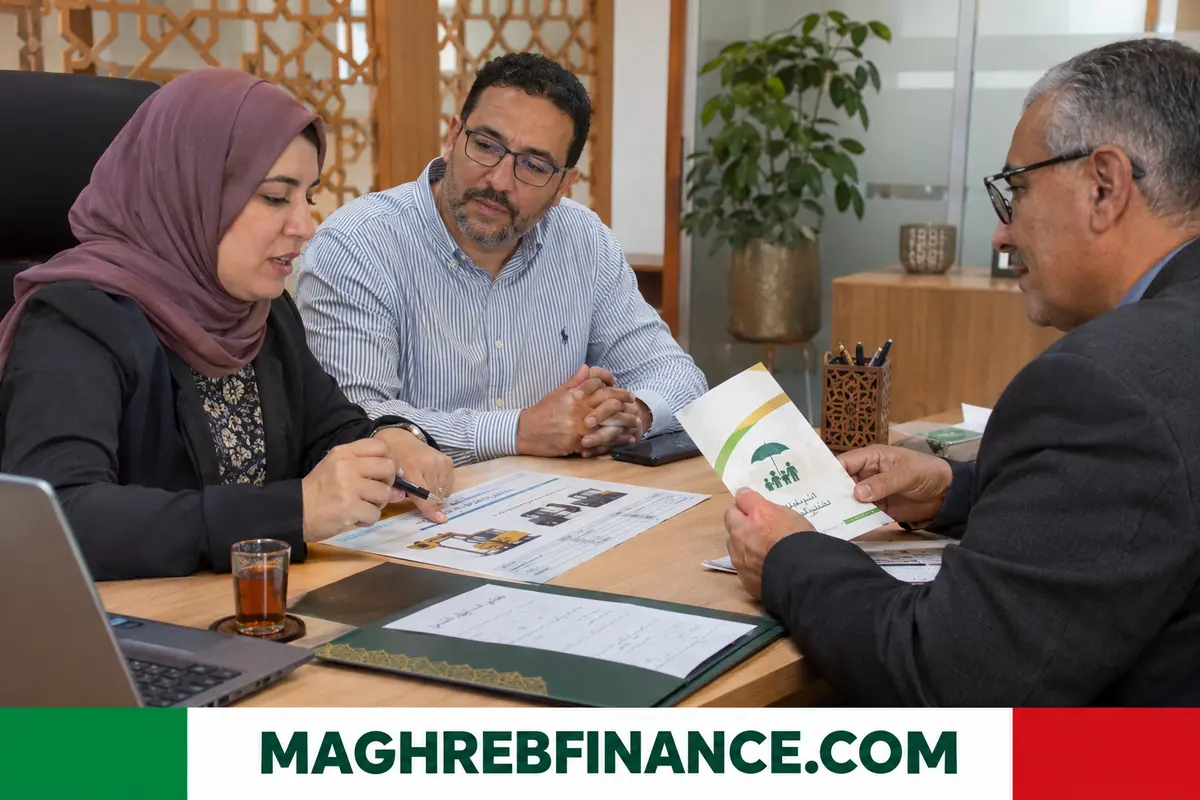
Morocco: Ijara wa Iqtina, an Islamic business leasing structure, allows a company to use equipment or premises that a participative bank has bought, in exchange for agreed lease payments, with a promise to transfer ownership at the end of the term. The arrangement avoids interest and requires the bank to own the asset and bear the risks that come with ownership. It was introduced under the participative finance framework that Bank Al-Maghrib supervises, with the Higher Ulema Council validating products, and amounts are in dirhams (MAD).
The principle: financing without interest
In an Ijara wa Iqtina contract the bank buys an asset chosen by the customer and then leases it to him for a fixed period. Payments cover the use of the asset and the bank's return, but they are not presented as interest on a loan.
The final step, Iqtina, is the transfer of ownership. It is usually promised in a separate undertaking, by gift or sale at a symbolic or agreed price, so that the lease and the transfer remain distinct from each other.
For a business, the result looks similar to a finance lease, but the legal and ethical structure follows rules of Islamic commercial law.
Morocco's participative finance framework
Participative finance in Morocco was legally opened by amendments to the banking law, and participative banks and windows began operating after Bank Al-Maghrib issued the necessary approvals. Products must be reviewed by a Sharia board attached to the Higher Ulema Council before they reach customers.
Separate rules apply to participative insurance, known as takaful, and to sukuk. The legal framework requires the institution to separate participative activities from conventional ones, with distinct accounting and governance.
For companies, this means that Ijara wa Iqtina is offered within a regulated and supervised setting.
Who offers Ijara to professionals
Dedicated participative banks such as Umnia Bank, Bank Assafa, Al Akhdar Bank, Bank Al Yousr, Dar Al Amane and Arreda operate in the country, and some conventional groups run participative windows. Their business offers vary and change over time.
Companies should ask each institution whether it finances equipment, vehicles or premises through Ijara, and for which sizes of file. Smaller firms and professionals sometimes find a lighter product range than larger companies.
Comparing two or three institutions on total cost and contractual terms remains useful.
Professionals such as doctors or craftsmen should also ask whether the institution accepts small files and how quickly it can order the equipment from the supplier.
Assets that can be financed
The asset must be lawful, identifiable and capable of generating a benefit, and the bank must be able to take ownership.
- Vehicles, vans and trucks for delivery or transport firms;
- machinery, tools and production equipment;
- medical and professional equipment;
- office premises, workshops and small commercial buildings;
- agricultural equipment in some cases.
Assets linked to activities forbidden in Islamic law, such as alcohol or gambling, are excluded. The financial institution will examine the customer's activity as well as the equipment.
Differences from a conventional finance lease
Several points distinguish the two. The bank must own the asset and bear the risks that attach to ownership, including major repairs not caused by the user and, in principle, insurance on a takaful basis.
Late payment cannot generate interest. Where penalties are allowed, they are generally directed to charitable purposes instead of increasing the bank's income. The sale of the asset at the end is arranged by a separate promise.
Costs can still be comparable, because the bank prices the arrangement on market benchmarks. A customer should compare the total repaid, rather than relying on labels alone.
File, steps and security
The company presents its corporate documents, recent accounts, tax and social certificates, the supplier's quotation and a description of its activity. The institution checks that the project complies with its Sharia framework.
The bank buys the asset from the supplier, signs the lease with the customer and records the promise of transfer. Guarantees may include a deposit, a personal commitment or a pledge on other assets, like in conventional finance.
The user is responsible for ordinary maintenance and for using the asset properly, while the bank keeps ownership until the transfer.
A written schedule of payments, the date of the transfer and the treatment of insurance should be included in the documents the customer signs.
Risks and points of vigilance in Morocco
The market is still developing, so product ranges and branches may be limited. Companies outside large cities may have fewer options.
Misleading marketing is a risk, since some offers are labelled Islamic without following the full structure. The contract and the Sharia board approval should be requested and read carefully.
Finally, default carries the same practical consequences as in any lease: the asset may be taken back and the business may lose its equipment.
Frequently asked questions
Is Ijara wa Iqtina available to businesses in Morocco?
Yes, participative banks and windows offer Ijara-based financing to professionals and companies, though ranges differ by institution and may not cover every type of asset.
Does the customer own the asset during the contract?
No. The bank owns it until the transfer is completed, usually through a promise to sell or give it at the end, once all payments have been made.
Is it cheaper than a conventional lease?
Not necessarily. Pricing follows market conditions, so the customer should compare the total repaid rather than assume that an Islamic structure costs less.
Who approves the products?
Participative products are reviewed by the Sharia board attached to the Higher Ulema Council, and the institutions themselves remain supervised by Bank Al-Maghrib.
Can premises be financed through Ijara wa Iqtina?
Yes, some institutions finance offices or workshops this way, provided the title is clear and the activity is compatible with the bank's Sharia framework.