
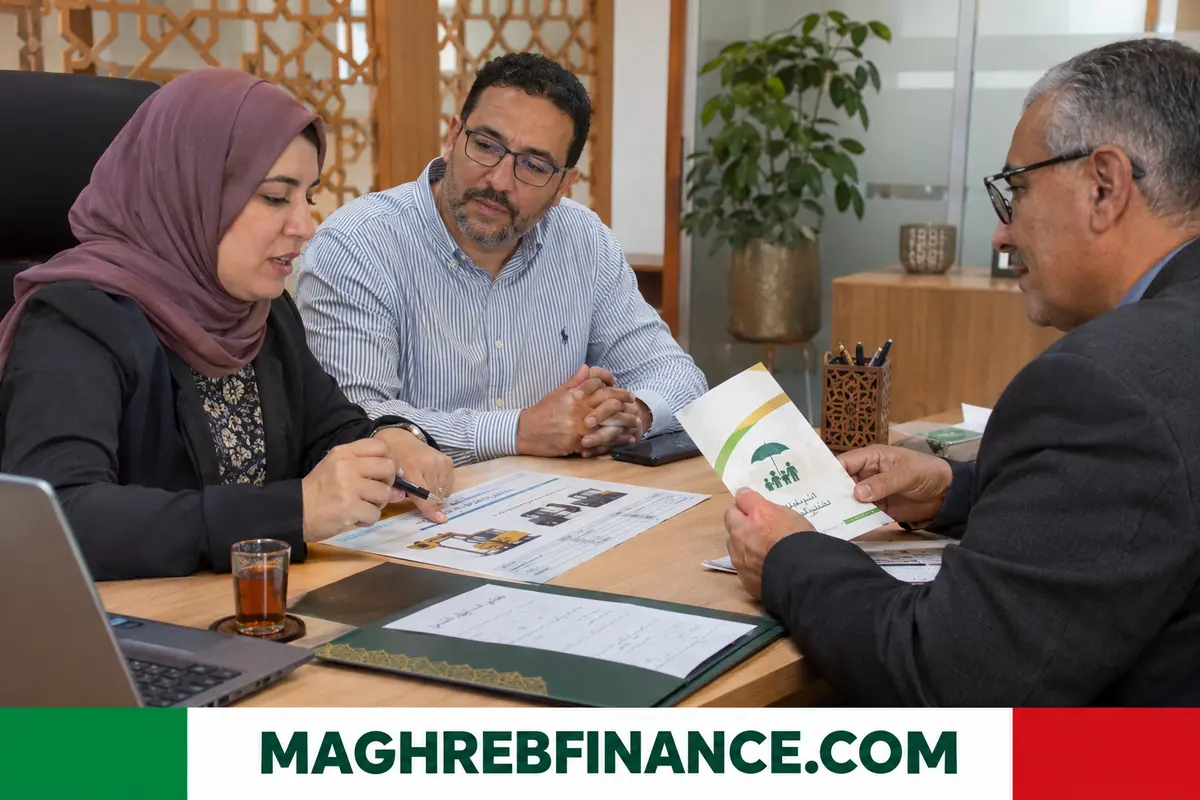
In Morocco, Islamic participative savings combine Mudarabah investment accounts and Sukuk certificates, with no fixed interest, since the saver shares in profits and possible losses with the bank. They are offered by participative banks and windows authorised by Bank Al-Maghrib, with approval from the Shari'a committee for participative finance. They suit individuals who want to place dirhams according to ethical principles and wish to understand the contract fully, keep a prospect of return and receive clear information on how their funds are used, rather than simply chasing the highest advertised figure.
Participative: sharing instead of lending
In conventional finance the depositor lends to the bank, which pays interest fixed in advance. In participative finance the ban on interest leads to another scheme: the saver entrusts money to be invested in lawful activities and receives a share of the result. The gain is therefore not promised; it depends on the profits made.
This sharing comes with the exclusion of sectors considered unlawful, such as alcohol, gambling or conventional interest-based finance, and with the requirement that the bank describes what it does with the funds.
Mudarabah: the contract behind investment accounts
Mudarabah is a capital management contract. The saver supplies the money, the bank invests and manages it as a professional. Profits are divided according to a ratio agreed at signature, for instance a share for the customer and a share for the bank. Losses, if the manager is not at fault, fall on the saver within the limit of the capital.
Practical consequences
- the return varies and cannot be promised;
- the sharing ratio is fixed in the contract;
- the capital is not guaranteed in the investment account;
- the bank must report on results at agreed intervals.
Investment accounts and deposit accounts
Participative banks distinguish two kinds of account. The deposit account, with no return, protects the capital and works like a current account. The investment account, built on Mudarabah, accepts exposure to risk in exchange for a share of profits.
Do not confuse the two. A saver seeking total safety should stay on a deposit account, while one who accepts variation can place a part of the money in an investment account. Many combine both: deposits for security and investment for medium-term goals.
Sukuk: certificates backed by assets
A Sukuk is a certificate representing a right in an asset, an activity or a project. The holder receives income drawn from that asset, such as rent or profits, rather than interest on a loan. The mechanism finances infrastructure, companies or the State.
Morocco has adapted its legal framework to allow these issues, and the State has issued sovereign Sukuk. Individuals usually reach them through funds or through a securities account at an intermediary, and the terms differ from one issue to another, so read the information note of each one.
Who offers these products and how to compare them
Participative banks such as Bank Assafa and Umnia Bank, and participative windows of conventional banks such as Arreda, present savings and investment accounts. Offers differ in duration, sharing ratio and charges. Each product must have received the opinion of the religious compliance committee.
To compare, look at the sharing ratio, the method for calculating the result, how often profits are distributed, the minimum amount and the exit conditions. Ask for past distributions, remembering that they do not promise future returns.
Tax, risks and transparency
Tax on income from an investment account falls, depending on the case, under the regime applicable to investment income of individuals. A note from the bank should state the treatment. The main risk is the variability of profits, which can even lead to a loss.
Transparency is central: the bank must inform the saver about the use of funds, the composition of the portfolio and the way profit is calculated. A bank that cannot explain these points clearly is a warning sign. Also check that the entity is licensed and that its products carry the compliance approval.
Differences with a passbook, and an example
A passbook or term deposit pays a rate announced in advance and guarantees the nominal capital. A Mudarabah investment account promises neither rate nor capital, but may deliver a higher return when activity is good. The choice depends on risk tolerance and personal convictions.
A teacher in Fès wants to place part of her savings in line with her principles. She compares a participative bank and a window of a conventional bank, asks about the sharing ratio, charges and past results, and opens an investment account for part of her money while keeping the rest on a deposit account. Each quarter she reads the information supplied by the bank and notes the distributed profit. After a year she reviews the split between the two accounts, and she asks the adviser to explain any change in the sharing ratio before she renews. She also keeps the written approval of each product in her file, so that she can show it if a question ever arises about the compliance of her savings.
Frequently asked questions
Is participative savings the same as Islamic savings in Morocco?
Participative finance is the Moroccan term for finance that follows Islamic principles, with products approved by a religious committee.
Is the return guaranteed?
No. In a Mudarabah account the return depends on profits and the capital is not guaranteed.
What is a Sukuk?
A certificate that represents a right in an asset or project and pays income from it instead of interest on a loan.
Who regulates participative banks?
Bank Al-Maghrib licenses them, and a Shari'a committee gives an opinion on the compliance of each product.
Can I lose money in an investment account?
Yes. Losses not caused by the bank's fault are borne by the saver within the limit of the capital invested.