
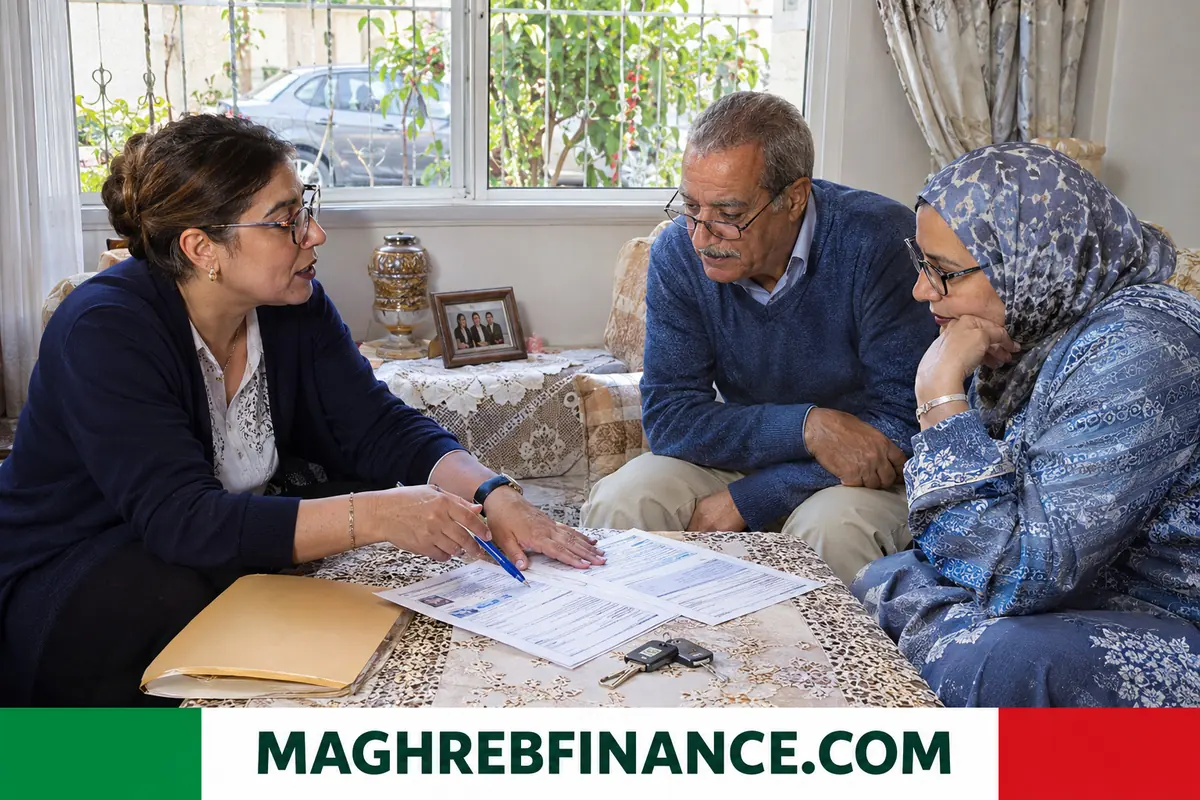
Morocco offers personal accident insurance, often known by the initials GAV, as everyday life protection that pays the insured person or the family when an accident causes injury, disability or death. It covers accidents at home, during leisure or sport and on the road, even when no third party is responsible and no other policy steps in. It is aimed at individuals, parents, amateur sportspeople and self-employed workers without cover, under the supervision of ACAPS, the insurance regulator, and offered by most insurance companies.
A risk other policies leave out
A fall on the stairs, a burn in the kitchen, a cycling accident or an injury during a friendly football match is covered neither by motor insurance nor by home insurance. Civil liability compensates other people, never the insured. Health insurance pays for treatment, but not for lost income or lasting after-effects.
Personal accident insurance combines these missing elements in one contract and pays whether or not anyone is at fault. That makes it a useful complement for people whose work or lifestyle exposes them to physical risk, and for families with active children. A parent who sells goods in a street market, a driver who works alone or a freelance builder may have no income protection at all after an injury, and this policy helps to fill that gap.
Usual benefits
Contracts generally offer several benefits that vary by formula.
- a lump sum for accidental death, paid to the named beneficiary;
- a lump sum or an annuity for permanent disability, calculated by a rate;
- refund of medical, pharmacy or hospital costs;
- a daily allowance during temporary work stoppage;
- costs of rehabilitation or home adaptation.
Not every contract offers all of these, and the amounts can differ widely, so the table of benefits is the most important page of the policy.
How disability is rated
Once the condition has stabilized, a doctor assesses the rate of permanent disability, expressed as a percentage, using a scale written into the contract. Compensation is proportional to that rate and to the insured capital. Some contracts set a minimum threshold under which nothing is paid.
The scale, the possible deductible and the way the doctor is chosen should be examined before signing, since two policies with the same capital can pay very different amounts for the same injury. A progressive scale, which pays more than proportionally for severe disability, is more generous than a straight one.
Who can be covered
The contract may be individual or family. A family formula covers the policyholder, the spouse and the children, sometimes at a favourable price. Certain contracts include specific cover for children, such as school or sports accidents.
Age limits apply at signing and for renewal. Some risky occupations and sports require a declaration and an extra premium, and others are simply excluded, so be honest about activities at the start. A false declaration can reduce or cancel payment, even long after the contract was signed.
Exclusions and limits
Typical exclusions include illness, suicide or attempts during an initial period, acts of war, driving while intoxicated, undeclared dangerous sports, intentional acts and workplace accidents covered by another scheme.
The cover does not replace health insurance or the protection against accidents at work. It supplements them, and several benefits may be paid together when they have different purposes, depending on the contract wording. A policyholder should ask the insurer in writing how benefits combine with payments from other schemes, before an accident occurs.
Premium and comparison
The premium depends on age, family make-up, the capital chosen and the guarantees. It is generally modest compared with other insurance, but it reflects the level of protection.
To compare, look at the capital for death and disability, the scale used, any waiting period and the services attached. A very cheap offer may pay little for partial disability, which is the most frequent outcome of an accident. The yearly premium should also be set against the capital, to see what each dirham of protection costs.
What to do after an accident
The insured declares the claim within the contract deadline, with an initial medical certificate, a description of the circumstances and proof of costs. He or she follows the treatment, keeps all documents and undergoes the medical examination requested by the insurer.
When recovery is stable, the insurer calculates the compensation. In case of disagreement on the disability rate, the contract may provide a second opinion by an independent doctor, or the matter can go to the complaints service. Keep every medical report, x-ray and invoice, since a missing document is the most common cause of delay.
Rights, appeals and data protection
The insurer must give a clear information notice and explain any refusal. The insured has friendly remedies first, with the complaints department, then the supervisory authority, before any court action.
Health data collected is protected by the personal data law. The insured may ask for access to the file and for correction of errors, and should be told who sees the medical report. A written request for a copy of the file is the simplest way to check what the insurer holds.
Frequently asked questions
Is personal accident insurance compulsory in Morocco?
No, it is optional. It protects against accidents that no other mandatory insurance covers.
Does it pay if I am responsible for the accident?
Yes. The benefit does not depend on fault, which is the main difference from liability insurance.
Can I cover my children?
Yes, with a family formula or a specific child contract. Check whether school and sports accidents are included.
Is it the same as health insurance?
No. Health insurance reimburses treatment, while this cover pays a capital, an annuity or an allowance after an accident.
Which sports are excluded?
It depends on the contract. Dangerous sports are often excluded or need a declaration and extra premium, so ask for the list.