
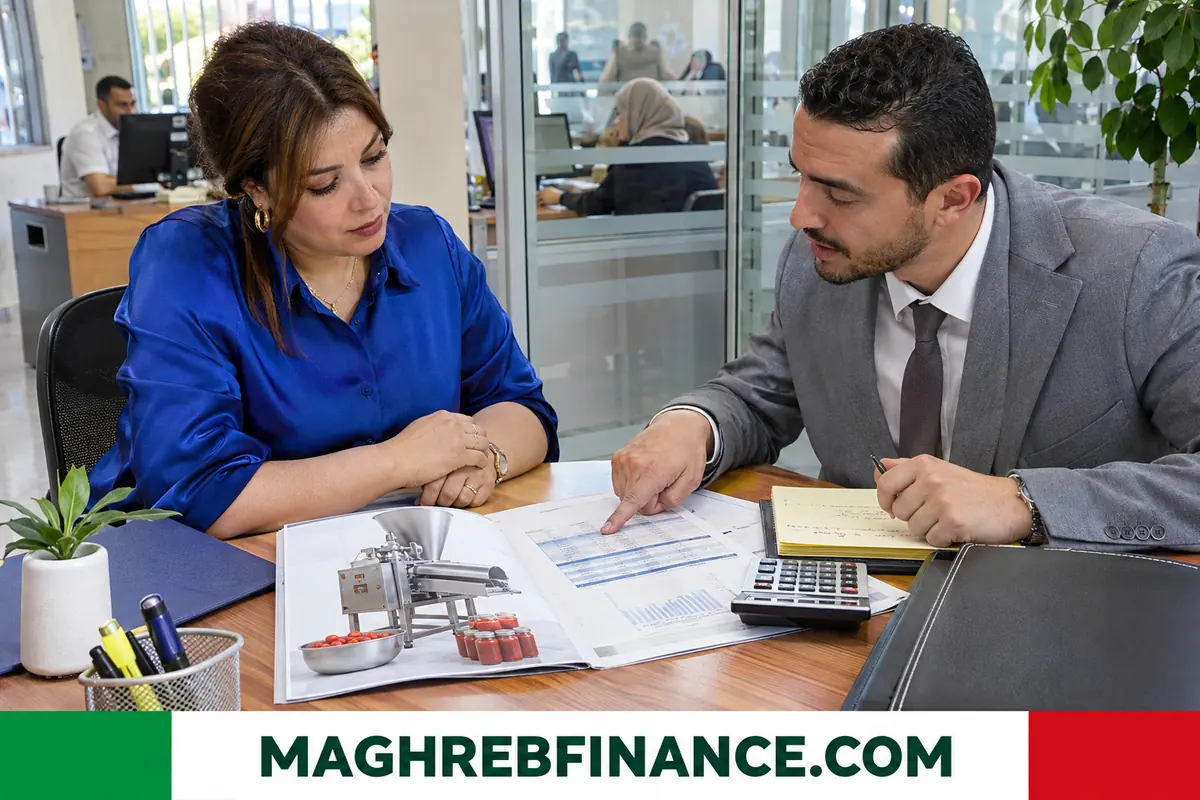
Algeria uses earmarked consumer loans to pay for specific goods such as household appliances, renovation works and solar equipment for the home, with the bank paying the seller or contractor directly on presentation of a pro forma invoice or quotation. The borrower repays in dinars through monthly instalments debited from the account, usually after domiciling a salary at the lender. The scheme has been interrupted and reshaped over time and tends to favour locally produced goods, under the Bank of Algeria's supervision.
How earmarking works
An earmarked loan is linked to one purchase. The customer chooses the item or the contractor, obtains a pro forma invoice, and the bank pays the supplier once the file is approved. The money never passes through the borrower's hands, which protects the lender and prevents spending on something else.
The loan contract and the sales contract are connected, so a problem with the goods may affect the financing.
This structure also helps the customer, who receives goods or services of an agreed value rather than cash that might be spent differently, and who can see the full price before any commitment.
Household appliances
Refrigerators, washing machines, cookers and air conditioners are the classic examples. Banks may limit financing to goods made or assembled locally and sold by registered retailers or manufacturers' networks, with a down payment and a defined repayment term.
Compare the cash price with the total cost of the loan, and ask the retailer for the warranty terms and after-sales service in writing. A cheaper model with strong support can be better value than a prestigious brand without service.
Delivery, installation and the first service visit should be covered in the quotation, so that no hidden charges appear after the bank has paid.
Renovation and home improvement
Loans can finance painting, plumbing, electrical work, tiling, kitchens and bathrooms. The bank asks for a detailed quotation from a registered business or tradesperson and may pay in stages according to the progress of the works.
Heavy structural work, such as adding a storey, belongs more to construction financing. Obtain several quotations, check the contractor's registration and insurance, and keep final invoices, which prove how the funds were used.
For larger works, a signed contract with a schedule and penalties for delay protects the household, and photos taken before and after help to settle disagreements.
Solar equipment and energy savings
Rooftop solar panels, solar water heaters and efficiency upgrades are increasingly attractive in a sunny country with high demand for electricity. Some banks promote green renovation financing, often without requiring a mortgage, and public programmes may offer support from time to time.
Ask the installer for a performance estimate, the equipment's technical datasheets, the guarantee period and the maintenance plan. Verify whether the installation requires an authorisation or connection agreement with the electricity distributor.
Households with a stable roof, good orientation and regular daytime consumption benefit the most, while those who are tenants should obtain the owner's written consent before any installation.
Conditions and documents
- Identity card, proof of residence and employer certificate.
- Recent pay slips and statements of the salary account.
- Pro forma invoice or quotation from the seller or contractor.
- Commercial registration of the supplier, where required.
Banks require a clean credit record and a payment that stays within a safe share of income. A down payment or a salary domiciliation may be required.
Some banks accept spouses as co-borrowers, and each applicant's income can be combined, which may raise the amount granted.
Cost and repayment period
Duration varies with the type of purchase: shorter for appliances, longer for renovation or solar equipment. The cost combines interest, insurance and fees. Ask for a repayment table and for the total in dinars, then compare it with the supplier's instalment offers.
Borrower insurance usually covers death and disability. Check whether it is compulsory and whether you can choose your own insurer.
Promotional zero-interest offers from retailers sometimes exist, and comparing them with the bank loan can reveal a cheaper solution for small purchases.
If the household expects to receive a lump sum, such as a bonus, ask whether partial early repayment is allowed without penalty.
Consumer rights and precautions
The buyer keeps legal rights on conformity and hidden defects. If the goods are faulty, inform both the seller and the bank, as the two contracts are linked. Never sign blank documents, read the schedule, verify the total due and keep copies of everything.
Be cautious with door-to-door sales and pressure tactics. If you have difficulty paying, speak to the bank early, since rescheduling is usually easier than recovering from penalties.
Written guarantees, receipts and the supplier's contact details should be stored together, because they are the first documents requested if a dispute arises.
Frequently asked questions
Can I use an earmarked loan for any appliance?
Not always. Banks may limit the products or brands eligible, especially goods produced or assembled in Algeria.
Who receives the money?
The bank pays the seller or contractor directly after approving the file and receiving the invoice.
Can I finance solar panels with a bank loan?
Some banks offer green financing, but availability varies. Ask the branch and the installer about eligible equipment and documents.
What if the appliance is defective?
Contact the seller under the warranty and inform the bank, because the loan contract is tied to the purchase.
Can I choose my own contractor?
Usually yes, if the contractor is registered and provides a detailed quotation that the bank accepts. Ask the branch for its requirements first.
Do I need a salary domiciled in the bank?
Often yes, because the instalments are collected from the account.