
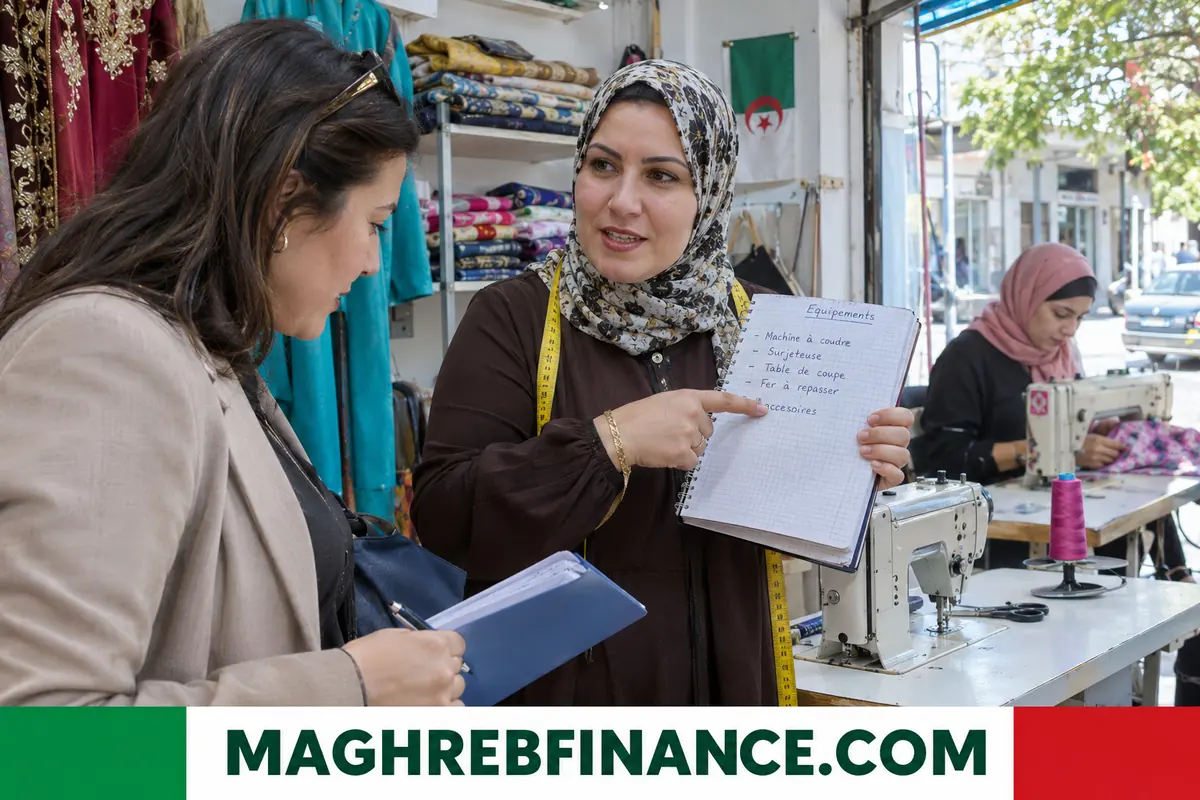
In Algeria, personal microcredit loans are small credits in dinars granted to people on low incomes for individual needs, in practice a form of financing for a small activity that improves the household budget. They target those whom conventional banks serve little. The public scheme rests on the National Microcredit Management Agency, known as ANGEM, which mainly supports income-generating activities. Pure consumption spending usually falls instead to family solidarity, zakat or a classic bank loan, so applicants should present a productive project.
What microcredit really covers
The word microcredit suggests a small loan for any need. In Algeria the public scheme is designed first to finance small activities: purchase of raw materials, equipment or tools that allow someone to produce, sell or provide a service.
Everyday personal needs such as food, bills or medical care are not at the core of the public scheme. The applicant should therefore present a modest productive project rather than a consumption request, and ask the local office which expenses are eligible.
ANGEM and the other actors
The National Microcredit Management Agency supports small project holders, notably in rural areas and among unemployed people. It operates local branches that guide candidates, help build the file and follow the project after the loan is granted.
Public banks take part as financing partners, and a guarantee fund covers part of the risk. Associations and local development bodies sometimes help with training and accompaniment. This network matters because many applicants have no banking history, and the adviser's support makes the difference between a rejected and an approved application.
Usual eligibility conditions
The exact criteria belong to the agency and to the texts governing the scheme. The usual requirements are:
- reaching the minimum age and living in the area of the local office;
- not having a sufficient stable income;
- presenting a simple, achievable project with an estimate of needs;
- not already benefiting from another start-up support scheme for the same project.
The agency checks the file and may suggest short training before approval.
Concrete uses
Microcredit funds modest activities that can complete or create household income. The most common examples are sewing and embroidery, pastry or home catering, handicrafts, small trade, small-scale livestock and local services.
The effect on the daily budget is indirect: the income from the activity then covers household needs. A woman who buys a sewing machine, for example, can turn a skill into regular earnings, and a young person can buy tools for a repair service. The choice of activity should match local demand and the applicant's real skills.
Seasonal activities deserve extra thought: a stall that sells only before holidays produces uneven income, so the schedule of repayments should be discussed with the adviser at the outset. A small cash buffer built from the first earnings protects against slow weeks and against the cost of replacing a broken tool.
How to apply
The process starts at the local office. The adviser meets the candidate, assesses the idea and, if needed, proposes short training. The file is then built.
Documents
An identity document, proof of residence, a family status certificate, quotations or proforma invoices and sometimes a training certificate. The applicant explains the project and states the need in figures.
Approval and payment
After approval, the supplier is often paid directly for the equipment, which limits the risk of diverting the funds.
Repayment and its consequences
The instalment is calculated to stay compatible with the expected income of the activity. Respecting the schedule is essential: a missed payment can bring reminders, loss of the possibility to renew the loan and, eventually, recovery procedures.
A good repayment record opens access to a larger loan, a second financing or a normal banking relationship. If the activity runs into difficulty, the borrower should contact the agency early to discuss a solution rather than let arrears grow. Keeping simple records of sales and expenses helps to show the adviser where the difficulty lies, and it also proves the borrower's seriousness when a new loan is requested later on.
Solutions for a consumption expense
When the need is a simple household expense, other answers exist. The Zakat Fund can grant aid or charitable loans in some cases under social criteria. Charities and neighbourhood solidarity complete the picture. A bank personal loan remains possible for employees with a domiciled income.
Family and close circle are often the first resort, and an informal arrangement should be written down to avoid misunderstandings. Whichever route is chosen, the amount borrowed should match the capacity to repay.
Avoiding fraudulent offers and informal loans
Offers of fast small loans on social media or messaging apps are frequently fraudulent. A licensed body never asks for an advance payment to release financing, nor for a bank card code.
Warning signs
An unrealistic rate, pressure to answer quickly, no physical address or a payment demanded before approval are signs to take seriously. Always go to the official local office and check the name of the institution.
Frequently asked questions
Can microcredit pay for daily expenses?
The public scheme mainly finances small income-generating activities. Daily consumption expenses are better met through savings, family help, zakat or a bank loan.
Who can apply?
People on low incomes without sufficient stable earnings, living in the area of a local office and presenting a simple project.
Is there a fee to apply?
An official body never asks for payment to release a loan. Any request for money in advance is a warning sign.
What happens if I cannot repay?
Contact the agency quickly. Arrears may lead to reminders, loss of renewal rights and recovery actions.
Can I borrow a second time?
Often yes, after repaying the first loan properly, subject to the scheme's conditions and the progress of the activity.