
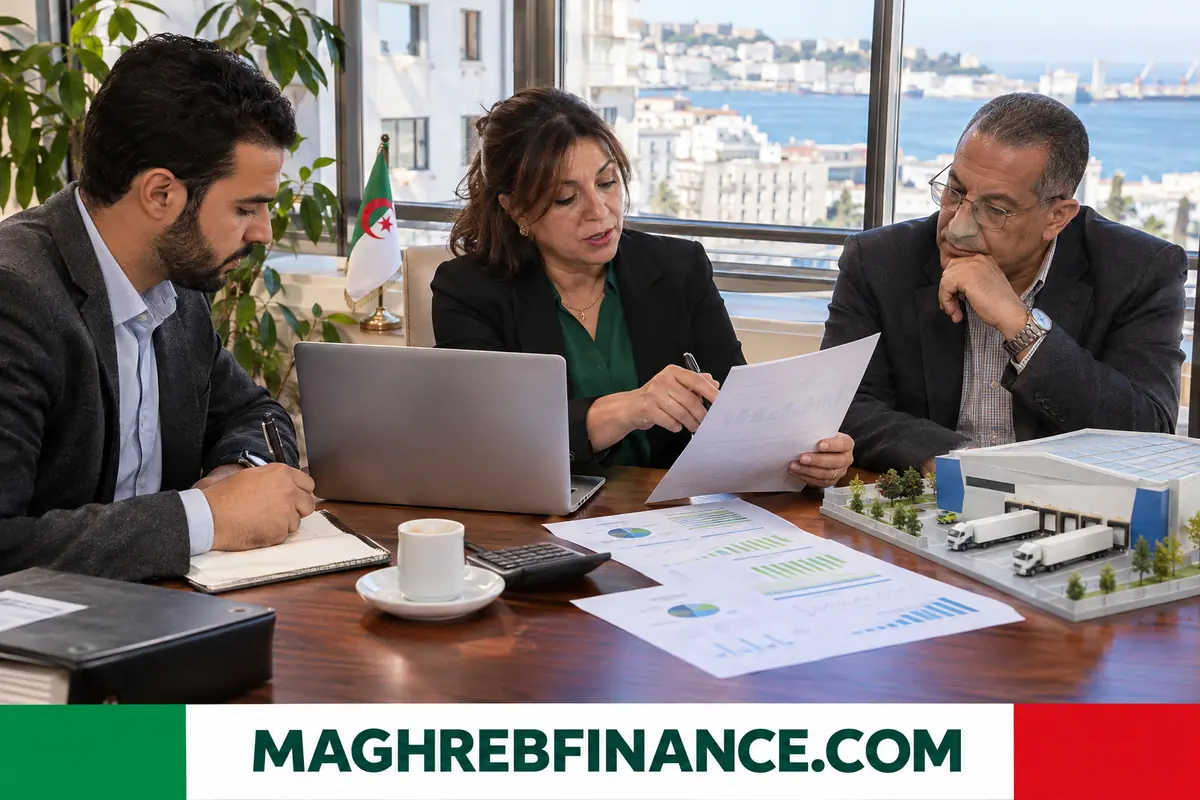
In Algeria, documentary collection, known as REMDOC, is one of the international trade payment services that banks offer: the exporter entrusts shipping documents to its bank, and the buyer's bank releases them only against payment or acceptance. It costs less than a documentary credit but does not guarantee payment: the exporter bears the risk of non-payment and must know its customer well. It suits established trading relationships, with prior bank domiciliation and foreign currency payments subject to Algerian exchange rules, which makes it a common choice between established partners.
The principle of documentary collection in Algeria
The exporter ships the goods, then gives its bank, called the remitting bank, the commercial and transport documents with precise instructions. That bank sends them to a presenting bank near the buyer, which hands them over according to the instructions.
Banks act as intermediaries only. They do not check the goods, guarantee payment or settle disputes between seller and buyer.
The collecting bank has no duty to examine the documents for compliance with the sales contract, and it does not release the goods itself. It only acts according to the instruction letter, which is why the wording of that letter deserves close attention.
Documents against payment or against acceptance
With documents against payment, the importer pays the amount due to obtain the documents and collect the goods. With documents against acceptance, the importer accepts a bill of exchange payable on a later date, which gives time but increases the exporter's exposure.
The exporter should choose the form that matches its confidence in the buyer and its own cash needs, and set deadlines clearly in the instructions.
When a bill of exchange is accepted, the exporter may hold it until maturity or ask its bank to discount it, which brings cash earlier at a cost.
When to prefer it to a documentary credit
Collection is appropriate when supplier and buyer know each other, amounts are moderate or country risk is low. It is simpler, with fewer formalities and lower charges. A documentary credit remains preferable for a new customer, a large order or an unstable market.
Between the two lies a documentary credit with confirmation, which brings security at higher cost. Collections are also useful for recurring flows of regular shipments.
For example, an Algerian exporter of dates sending regular cartons to a long-standing distributor may choose documents against payment because the relationship is stable and the sums are modest.
Applicable international rules
Operations follow the Uniform Rules for Collections of the International Chamber of Commerce, cited by their publication number, URC 522. They set out the banks' duties, the presentation of documents, the handling of protests and the treatment of unpaid items.
The instructions given to the remitting bank must be complete and unambiguous, as the banks will follow them literally.
The rules also deal with partial payments, protest of unpaid bills and the duty to advise the remitting bank of the outcome of each collection.
Specifics for Algerian companies
An Algerian importer receiving a documentary collection must have the operation domiciled with its bank, hold the foreign currency needed in line with regulation and respect customs formalities. An exporter based in Algeria must also respect the rules on repatriation of proceeds.
Banks may ask for supporting documents such as the contract, the pro forma invoice or the transport papers before they process an outward or inward payment.
Currency purchases for import payments are made through the bank in line with Bank of Algeria regulation, and delays can occur, so the exporter should allow for them when agreeing the payment date.
Risks to anticipate in Algeria
The main risk is that the importer refuses to pay or to accept the documents, leaving goods blocked at the port with storage, demurrage and return costs. Plan for this possibility by naming an agent at destination, agreeing what will happen to the goods and insuring them.
Unclear instructions, missing documents and delays between banks can also create disputes, so each step should be recorded.
Interest and charges may accrue if the goods stay long in the port, and the exporter should know who pays them under the contract.
Good practice for the exporter
Before delivery, check the buyer's creditworthiness, obtain written confirmation of the payment method, consider credit insurance if the amount is high and verify the accuracy of every document. After shipment, follow the collection with the bank and keep the original transport document secure until payment.
Exporters in Algeria may also turn to the credit insurance and guarantee body for exports and to the trade promotion agency for market advice.
Comparing documentary collection, documentary credit and bank transfer
Three payment methods coexist. A simple transfer, in advance or on receipt, is the cheapest but places all the risk on one party. A documentary credit balances risks at higher cost. Collection sits in the middle: lower fees than a credit, more security than an open account, but no bank guarantee of payment.
Making the choice
Consider the amount, the history with the customer, the product and the market. Many exporters mix methods, using collections for regular clients and credits for first orders.
The best method is the one that balances cost and risk for the specific transaction, and it can be reviewed after each shipment as trust grows.
Frequently asked questions
What is the difference between D/P and D/A?
Documents against payment means the buyer pays to receive the documents. Documents against acceptance means the buyer accepts a draft payable later.
Does the bank guarantee payment in a collection?
No. Banks only handle documents and follow instructions, so the exporter carries the risk of non-payment.
Which rules apply?
The International Chamber of Commerce rules for collections, URC 522, govern the roles of the banks and the handling of documents.
Is a domiciliation needed in Algeria?
Yes. Trade operations are normally domiciled with an Algerian bank, which also checks currency and customs requirements.
Can a documentary collection be combined with credit insurance?
Yes. Exporters often add credit insurance to cover the buyer's refusal to pay or insolvency, which reduces the main weakness of the method.
Further reading
- Arab Bank Algeria : English-language site of Arab Bank in Algeria, presenting corporate banking and trade finance services for businesses.