
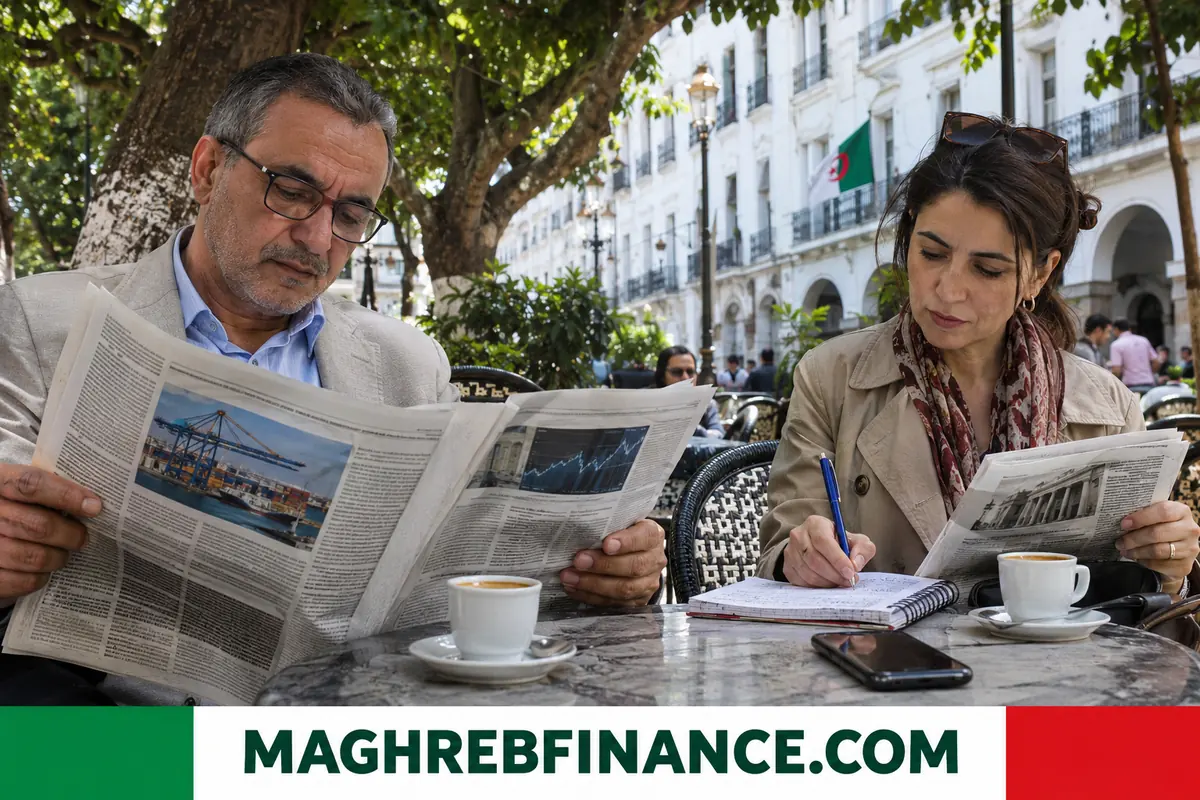
In Algeria, stock market newspapers and quotes covering equities and bonds are scarce, because the Algiers Stock Exchange has few listed companies and modest trading volumes. No daily paper is devoted entirely to the market, so investors piece together information from the exchange management company, economic media, news agencies and company announcements, and then they read prices in Algerian dinars (DZD) with the date and volume always in mind. The market regulator, COSOB, supervises disclosure by listed companies and intermediaries.
A narrow market, scarce information
The Algiers Stock Exchange has a small number of listed companies and modest trading volumes. There is therefore no daily paper entirely dedicated to the stock market, as in larger financial centres. Market information is spread across several sources.
The exchange's management company publishes prices for each session, volumes, indices, notices and the list of listed securities. Economic media take up these elements in finance sections. Listed companies publish announcements about results, dividends and capital operations.
For a reader, this means that the best view comes from combining the official price list with company announcements and a few trusted economic outlets, rather than from one publication alone.
Sources to consult
To follow markets, several sources can be combined.
- The website of the exchange's management company, for prices, listed securities, notices and reference texts.
- The finance sections of economic media such as Algérie Eco or Maghreb Emergent, which cover banking, currencies and the budget.
- News agencies, for official announcements.
- The websites of listed companies, for accounts and information documents.
- The publications of financial institutions and of the market regulator, COSOB.
How to read a quotation
A quotation shows the price of a security, its change from the previous session, the volume traded and sometimes the best buy and sell offers.
Benchmarks
The closing price is the last price of the session. The percentage change measures the rise or fall. Volume shows activity: a price that moves on thin volume is less significant. An index summarises the movement of a group of securities.
Context
An isolated price means little. It should be compared with the security's past, its sector and the results of the company.
A reader who sees a rise of several per cent should ask how many shares changed hands, because on a thin market a few small orders can move a price without any real change in the company's prospects.
Equities and bonds in the financial press
For equities, newspapers report annual and half-yearly results, proposed dividends, capital increases and new listings. They comment on the company's policy and sector.
For bonds, they point out issues, offered rates, maturities, any ratings and subscription conditions. Treasury securities attract specific information, notably issue calendars.
These articles use technical vocabulary: coupon, maturity, nominal value, yield. A reader who does not master it risks misreading a headline and drawing a wrong conclusion. A government bond and a corporate bond, for instance, carry different risks, and press articles that mix them can mislead.
Basic vocabulary to know
A few terms come back constantly.
- Price: the value of a security at a given moment.
- Market capitalisation: the total value of a company's shares.
- Dividend: the share of profit paid to shareholders.
- Coupon: the interest paid by a bond.
- Volatility: the size of price movements.
- Liquidity: the ease of buying or selling without moving the price.
- Securities intermediary: an authorised professional who executes orders.
Mastering these words avoids misreading a press headline and taking a hasty decision.
Checking and cross-reading
Stock market information should be verified before any decision. The figure published by a medium is compared with the official source. The date matters, because prices change at each session. The author and his or her possible interest in the matter should be identified.
Rumours on social networks and messaging applications, particularly those announcing a security about to soar, are common in every country. Serious investors do not rely on them. Buying advice should come from authorised professionals who know the investor's situation.
Building a monitoring routine
An individual investor can organise follow-up simply: check prices at the end of the session, read the announcements of the companies held, scan a weekly financial press review and note decisions and their reasons.
He or she keeps a table of positions, with purchase price, fees and dividends, and sets reflection thresholds, for example a sharp fall that requires re-examining the case, instead of reacting on impulse.
To progress, training courses, conferences and university programmes can help.
Economic press and macroeconomic context
Financial markets depend on the economic environment: hydrocarbon prices, budget policy, inflation, exchange rate and reserves. The economic press reports on them and places prices in context.
The dinar and foreign currencies
The official dinar rate is published by the Bank of Algeria. Media comment on it and sometimes compare it with other references. Professionals use the official rate for declared operations.
Energy prices
The price of a barrel of oil influences public revenue and investor sentiment, even for a market with few listed companies.
Savers who hold dinar deposits or Treasury securities also watch inflation and rate decisions of the Bank of Algeria, since these influence what bonds and savings accounts return.
Frequently asked questions
Is there an Algerian newspaper entirely about the stock market?
Not in the usual sense. Market information comes from the exchange management company, economic media, news agencies and the announcements of listed companies.
Where are official stock prices published?
The management company of the Algiers exchange publishes session prices, volumes and notices. Media repeat these figures, but the original source is safer and shows the date.
Can bonds be followed in the press?
Yes. Newspapers report issues, rates, maturities and subscription conditions, including government securities. The prospectus or notice remains the reference for the exact terms.
Should stock tips on social networks be trusted?
No. Unverified tips and promises of quick gains are frequent and risky. Advice should come from authorised intermediaries, and the investor should read official notices first.
Further reading
- Algeria Press Service (APS) : Algeria's public news agency, with an English edition covering national news, the economy and world affairs.