
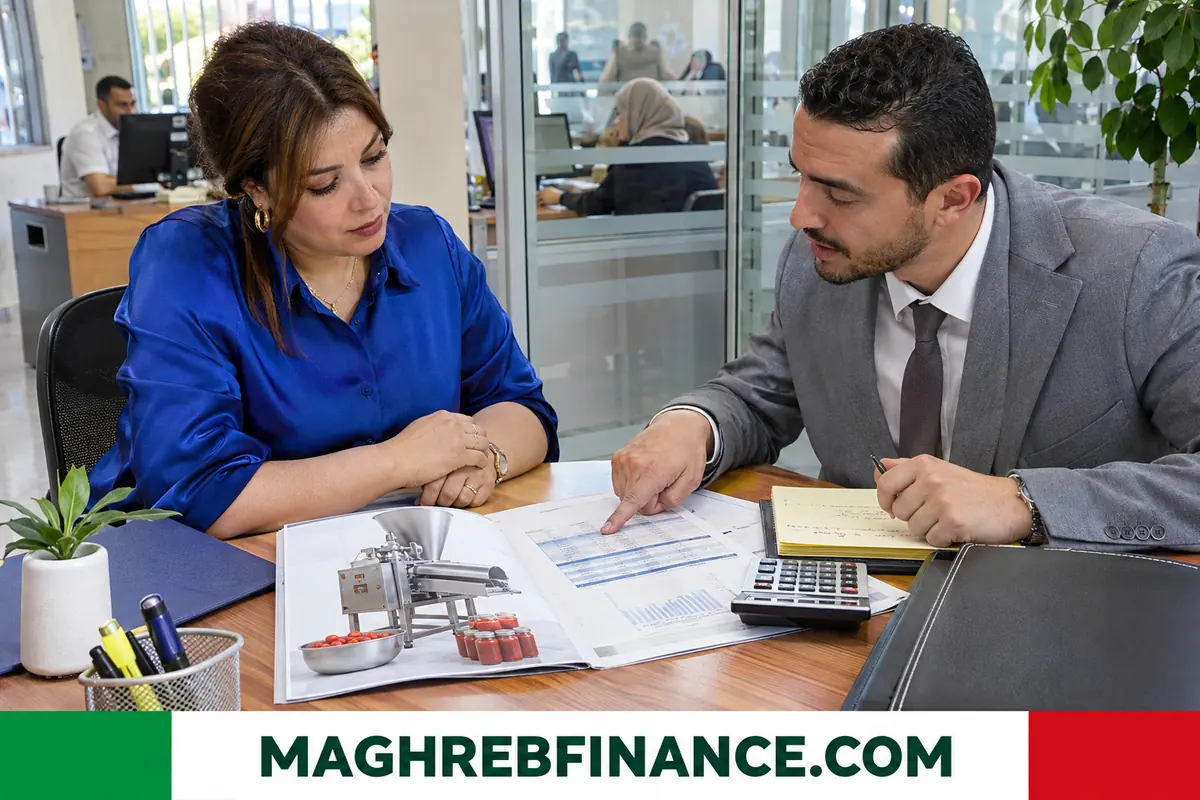
Algeria draws a line between earmarked credit and unrestricted personal loans, a free-use credit for individual spending whose financing depends on current regulation and on each bank's policy. The borrower receives dinars and decides how to use them without presenting an invoice or purchase contract. Because consumer lending to individuals has been suspended, reopened and redirected at different times, a completely free loan is not always on offer for every customer, and the Bank of Algeria supervises what banks may propose.
Free-use loans compared with earmarked credit
An earmarked loan is tied to a specific purchase, such as a car or an appliance, and the bank pays the seller directly. A free-use personal loan puts the money in the borrower's account for any lawful purpose. It is therefore more flexible but also more risky for the lender, which often means stricter conditions.
In Algeria, earmarked loans are more common than unrestricted ones, so customers should ask exactly what each product allows before filling in an application.
For a household, this means that a salary-linked loan with a specific purpose, such as a medical bill or school fees, may be easier to obtain than a general cash loan, even if the amount is similar.
Needs a personal loan can cover
Typical uses include medical costs, a family ceremony, education expenses, travel within the rules, paying off a small debt or covering a temporary cash shortfall. It should not serve to speculate or to finance a long-term investment with uncertain returns.
- Define the need and the exact amount.
- Check whether savings or a payment plan could do the same job.
- Ensure the repayment fits the monthly budget with a margin.
Using borrowed money for daily expenses is a warning sign, since repayment will compete with the same budget that created the shortfall in the first place.
Regulatory background
Consumer credit to individuals was restricted for years and later reopened in a limited form, with attention given to goods produced or assembled locally. For that reason, a fully free personal loan is not offered everywhere or at all times, and terms can change according to the regulation of the Bank of Algeria and the finance laws.
Ask the branch which products are currently open to individuals and whether any restrictions on purpose, amount or duration apply.
Information published by banks and by the central bank is the safest guide, and advertisements from unlicensed lenders or social media offers should be treated with great caution.
Eligibility and borrower profile
Banks look for stable employment, regular income domiciled in the account and a clean record at the credit register. Civil servants and employees of large companies often get the easiest approval. Self-employed applicants and those with irregular income may face higher requirements.
The monthly instalment must stay within a prudent share of income, taking other debts into account. Age limits apply at the end of the loan, so older applicants may be offered shorter terms.
A guarantor, usually a family member with stable income, can sometimes help an applicant with a short work history, but the guarantor becomes responsible if payments stop.
Documents and procedure
The file usually contains the identity card, proof of residence, an employer certificate, recent pay slips and statements of the account where the salary is paid. The bank consults the Bank of Algeria's credit register, studies the file and, if it agrees, sends an offer that sets out amount, duration, rate and insurance.
After acceptance, funds are credited to the account and repayment is debited monthly. Keep a copy of the signed contract and the repayment schedule.
Applicants who prepare certified copies in advance and answer every request quickly usually receive a decision sooner than those who submit an incomplete file.
Monthly payment and total cost
The cost depends on the rate, the duration and the fees. A longer term reduces the instalment but increases total interest. Ask for the effective cost expressed in dinars, not only a percentage, and for a table showing each payment.
Borrower insurance, file fees and early repayment charges all add to the bill. Compare offers from different banks and check whether the rate is fixed or can change during the loan.
A practical rule is to keep total debt payments comfortably under a third of net monthly income, leaving room for rent, food, transport and unexpected costs.
Risks, insurance and alternatives
Borrowers face the risk of overextending their budget and of losing income through unemployment or illness. Insurance can cover death or disability, but not always job loss. Missing payments leads to penalties and may be reported to the register, which affects future borrowing.
Alternatives include savings, an advance on salary where the employer allows it, a family loan or a participative financing such as Murabaha for a specific purchase. A small emergency fund often solves the need without any debt.
Reading the clauses on late-payment interest and on default before signing is essential, as these are the terms that matter when circumstances change.
Frequently asked questions
Can I get a personal loan without giving a reason?
Free-use loans are less common than earmarked ones. Ask the bank whether such a product exists and under which conditions.
Do I need to domicile my salary?
Many banks require it, because it lets them monitor income and collect the instalments automatically.
What is the credit register?
It is a database kept by the Bank of Algeria that records borrowers' commitments, and banks consult it before lending.
Can I repay the loan early?
Often yes, but the contract may include a fee or notice period. Check before signing.
Are there Islamic alternatives?
Islamic banks offer financing for specific purchases through Murabaha, but not usually free cash loans with interest.