
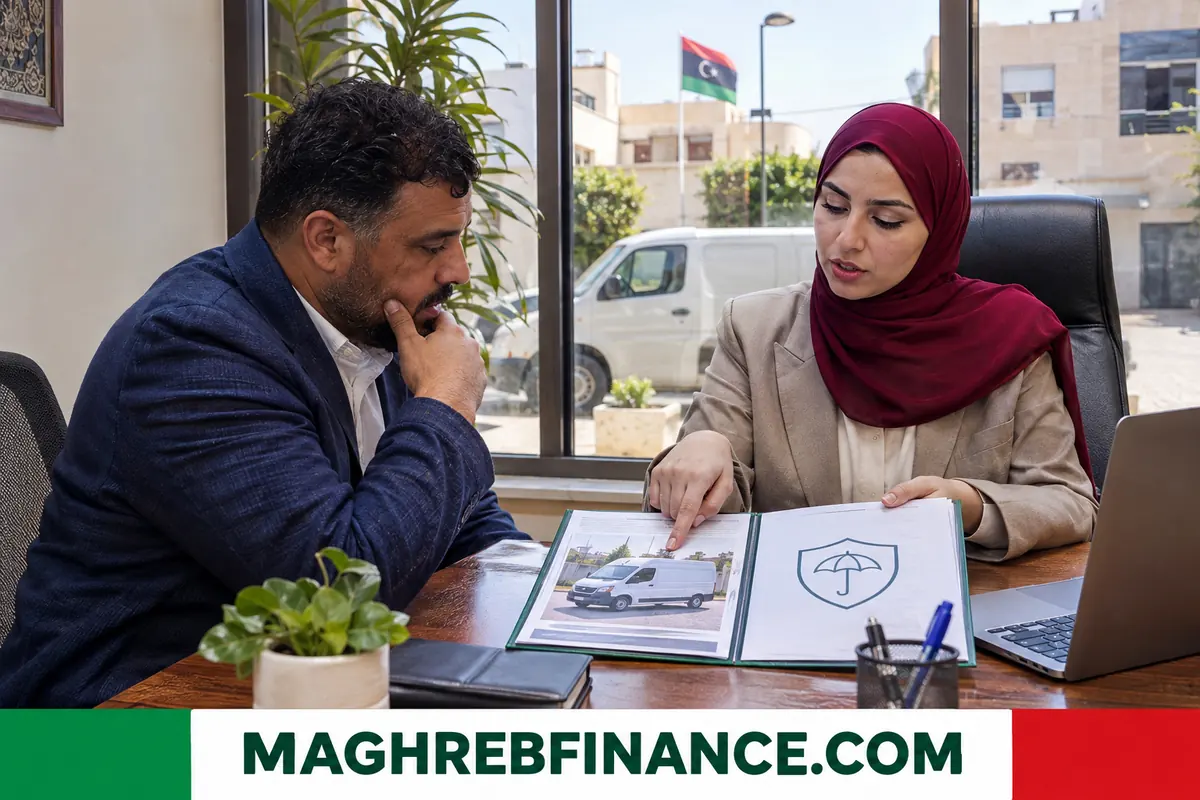
Libya: business Takaful is a participatory model in which members of a company group contribute to a shared fund that pays claims, and it can protect a company fleet in the same way that conventional insurance would. The concept responds to the demand for Sharia-compliant products in a country whose banking legislation prohibits interest. Offers remain limited and are often delivered through Islamic windows, specialised operators or regional partners, with contributions set in Libyan dinars (LYD) or foreign currency under the supervision of the insurance authority. Choose the operator carefully.
How Takaful differs from conventional insurance
Conventional insurance transfers risk to a company in exchange for a premium. In Takaful, participants contribute to a pooled fund based on mutual assistance and donation, and the operator manages the fund for a fee or a share of results.
Surplus after claims and expenses may be returned to participants or kept in reserve, depending on the model. The operator does not own the fund. A Sharia supervisory board reviews contracts and investments to avoid interest, uncertainty and prohibited sectors, which gives customers confidence about compliance.
Takaful contracts are usually based on the concepts of tabarru, or donation, and wakala, or agency, which should appear in the policy document.
Why businesses consider participatory cover
Owners and managers who follow Islamic principles may prefer that their insurance protection avoids interest-bearing investments. Banks that finance equipment on Islamic terms sometimes favour compatible insurance for the assets they fund.
Companies serving religious or community clients can also use Takaful to align their practices with their stated values. Price and service still matter, so compare the cover, the claims experience and the operator's financial strength alongside the religious aspect. Compliance is a reason to consider Takaful, not a guarantee of quality.
Trade associations or fleet owners with many vehicles can negotiate group contracts, which give them a stronger voice over price and service.
Insuring a company fleet under a participatory model
A company fleet of cars, vans, pickups and trucks faces accidents, theft and fire, and third-party motor liability is compulsory in Libya. A participatory scheme can offer comprehensive protection for vehicles and compensation to people injured or whose property is damaged.
The contract defines contributions, covered events, deductibles and claims procedures. Where Takaful operators are unavailable, companies may combine conventional compulsory cover with Takaful for voluntary damage cover, subject to what the market offers and to advice from their Sharia scholar.
A fleet manager should also check that drivers are properly licensed, since the contract usually excludes accidents involving unqualified drivers.
Roles of contributor, operator and supervisory board
The company contributes to the fund and receives protection. The operator administers claims, investments and reserves, and charges an agreed fee for management, which may be fixed, based on performance or a combination.
The Sharia board approves products, wording and investment policies, and an annual review confirms compliance. Ask for the names of the board members, the documents that set out the model, and the policy on surplus. Transparent answers show that the scheme respects the principles on which it is marketed.
Annual audits by independent accountants add another layer of assurance beyond Sharia review, and the operator should be willing to share summaries.
Legal and regulatory context in Libya
Libyan legislation on interest has pushed banks to offer Islamic services, but the specific framework for Takaful is less developed than for banking. Insurers operate under insurance law and the oversight of the insurance supervision authority, and compulsory lines remain subject to general rules.
Companies should therefore verify the licence of any provider, the legal form of the scheme and the arrangements for reinsurance. Foreign operators may require local partners or authorisation. Seek written confirmation of what law applies to the contract and where disputes will be resolved.
Reinsurance arrangements, sometimes through retakaful, protect the fund against large losses, and they should be explained in clear terms.
Costs, contributions and surplus sharing
Contributions are priced from fleet size, vehicle types, driver profile and claims history, in a similar way to conventional rates. Operators may charge a fee for management and a share of investment profits.
Check whether surplus is returned to participants, offset against future contributions or retained, and whether deficits are covered by an interest-free loan from the operator. These terms change the real cost over several years, so compare them, not only the first-year contribution.
Premium payment dates and grace periods deserve attention, because a missed contribution can suspend cover.
Claims handling and practical tips
Report accidents or theft immediately, provide police reports, photographs and the vehicle documents, and wait for the expert's inspection before repairs. Claims are paid from the fund and handled by the operator according to the contract.
Keep records of maintenance and driver details. Ask the operator to explain in plain language what is covered, what is excluded and how long claims normally take. A clear explanation before signing prevents misunderstanding and builds a long relationship.
Complaints should first go to the operator, and then to the competent supervisory body if the issue remains unresolved.
Frequently asked questions
Is Takaful allowed in Libya?
Islamic finance is accepted in principle and interest is prohibited in banking, but the availability of Takaful products depends on licensed providers. Verify the operator and its approval before buying.
Can Takaful cover vehicles used for work?
Yes, in principle, as a fleet scheme can protect vehicles and liability risks. Check the conditions for commercial use, drivers and goods carried.
Who owns the Takaful fund?
The participants collectively, not the operator, who manages the fund as an agent or entrepreneur under the model chosen.
Is Takaful more expensive than conventional insurance?
Not necessarily. Contributions are often comparable, but fees, surplus sharing and coverage terms vary, so compare quotations carefully.