
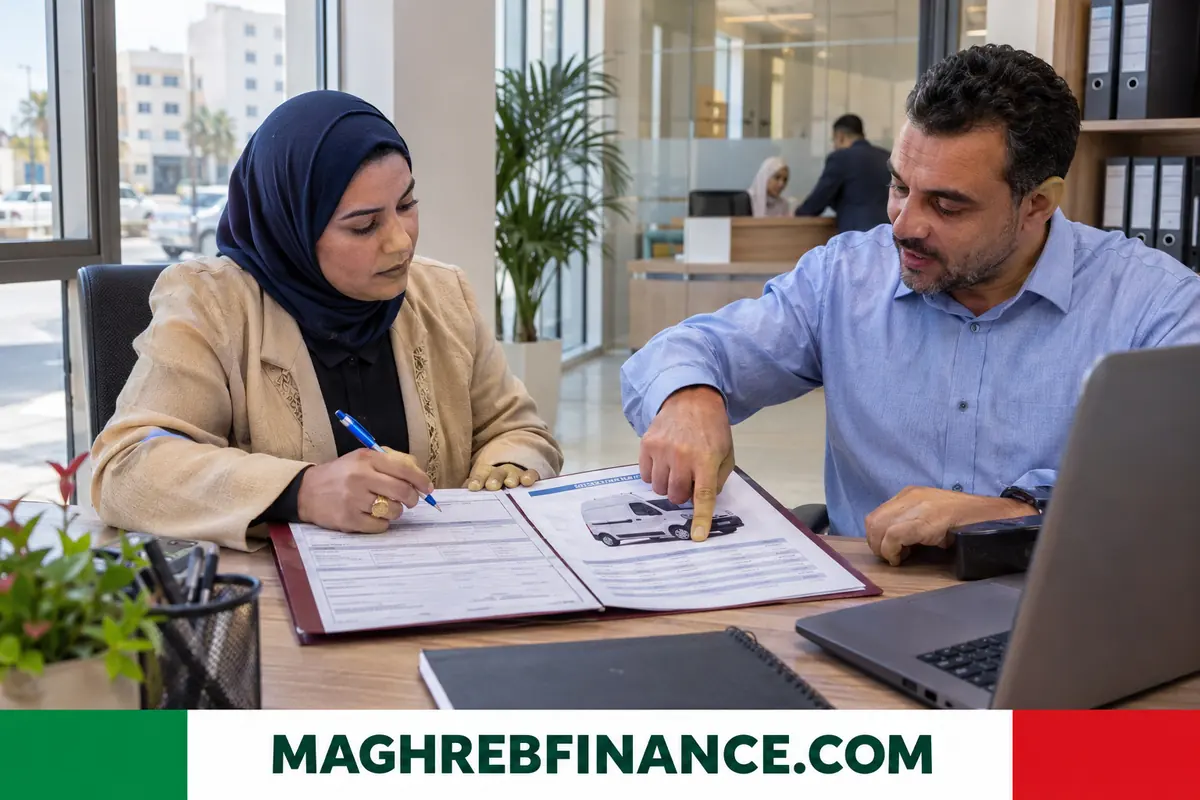
In Libya, car and motorcycle loans provide private vehicle financing, helping individuals buy a new or used vehicle and repay in instalments over a fixed period. Since the banking law prohibits interest, banks use sale-with-margin or leasing contracts, supervised by the Central Bank of Libya in Tripoli. Vehicles are essential in a country with limited public transport, so demand is strong, but supply of credit is uneven, and buyers should compare dealers, contracts, insurance and the reliability of every vehicle.
Car and motorcycle loan: why vehicle financing matters
Distances are long and public transport is limited, so a car or motorcycle is often a necessity for work, school and family life. Prices of vehicles are high compared with typical incomes, and exchange rate changes affect the cost of imports. Financing spreads the price over time, but it must remain affordable in dinars.
Fuel is relatively cheap in Libya compared with many countries, but spare parts and quality repairs may be hard to find. Include these costs in any decision to buy.
Households in rural areas depend even more on vehicles, which makes reliable financing and maintenance support a practical concern rather than a luxury.
How banks structure it
The bank purchases the vehicle from the dealer and sells it to the customer at a disclosed higher price, payable in instalments. In a lease-style contract, the customer uses the vehicle and ownership passes at the end. Each structure assigns responsibility for insurance, repairs and registration differently.
Request a clear sheet showing the cash price, the financed price and the monthly instalment.
Leasing contracts may let you hand the vehicle back, while sale contracts normally oblige you to pay the full price. Read the clause on early termination carefully.
Ask who pays for registration renewals and technical inspection during the contract, and whether the bank allows you to sell the vehicle early.
New and used vehicles
New vehicles come with a warranty but cost more. Used vehicles are cheaper but need inspection. Ask a trusted mechanic to examine a used car before the bank buys it, and check the chassis number, the registration papers, the customs documents and the history of accidents.
- Verify the seller's ownership.
- Check for outstanding fines or claims.
- Confirm the vehicle is not stolen or imported illegally.
Imported used vehicles may carry hidden damage, so ask for an independent inspection report and, where possible, check the chassis number against the customs records.
Walk away from a sale if the seller cannot show original documents, since a vehicle with unclear ownership can be seized.
Eligibility and documents
Banks look for stable income, usually through a salary transfer, as well as identity documents, a driving licence for car buyers and a guarantor where needed. A down payment is normal, often a share of the price. Self-employed applicants may need to show business records.
Salaried applicants often qualify faster. Others should prepare account statements, trade licences and a guarantor with stable income.
Ask how soon after signing the bank pays the dealer and when you can collect the vehicle.
Insurance and registration
Third-party insurance is mandatory, and banks usually require comprehensive cover during the contract. Check premiums and exclusions. The vehicle is registered with the traffic authority, and the bank may hold a lien until the final payment. Keep copies of every document and obtain a release when the debt is repaid.
If the vehicle is sold or written off, the contract should explain how the remaining debt and any insurance payment are handled.
Check whether the insurer will pay the bank first in case of total loss, and how any shortfall is divided.
Costs and risks
Besides the instalment, count fuel, maintenance, tyres and parts, which may be costly where imports are disrupted. A vehicle loses value quickly, and an accident or theft can leave the owner paying for something no longer usable. Security conditions in some areas increase these risks.
Choose a modest vehicle and a term that keeps instalments comfortably within income.
Park securely and fit a tracker or alarm where theft is a concern, since insurance may not cover all losses.
Accidents without valid insurance can lead to personal liability, so never let cover lapse.
Comparing options
Compare financing against saving for a cheaper vehicle, buying with family help or sharing a car among relatives. Motorcycles may suit short distances and lower budgets, but weigh the safety risks and insurance cost.
Whichever you choose, set a total budget that includes running costs, not only the monthly instalment.
Check dealer guarantees on the engine and gearbox, and keep the service book up to date.
A smaller, reliable model often costs less over time than a larger one that is costly to repair.
Dealers and the purchase process
Choose an established dealer and obtain a written offer showing the model, year, price, accessories and delivery date. The bank usually pays the dealer once the vehicle is registered in the right name.
Do not pay a deposit to an individual or a dealer without a receipt, and make sure that the deposit is refundable if the bank refuses the financing.
Frequently asked questions
Can I finance a used car?
Some banks do, after inspection and valuation. Ask which models and ages are accepted.
Who owns the car during the contract?
It depends on the structure. The bank may hold ownership or a lien until the last payment.
Do I need insurance?
Yes. Third-party cover is compulsory, and banks often require more.
Is a down payment required?
Usually. The size varies by bank and applicant.
Can I finance a motorcycle?
Some banks include motorcycles. Confirm the terms and insurance.
How long can the repayment last?
Terms vary, often from one to several years. Longer terms lower the instalment but raise the total price.