
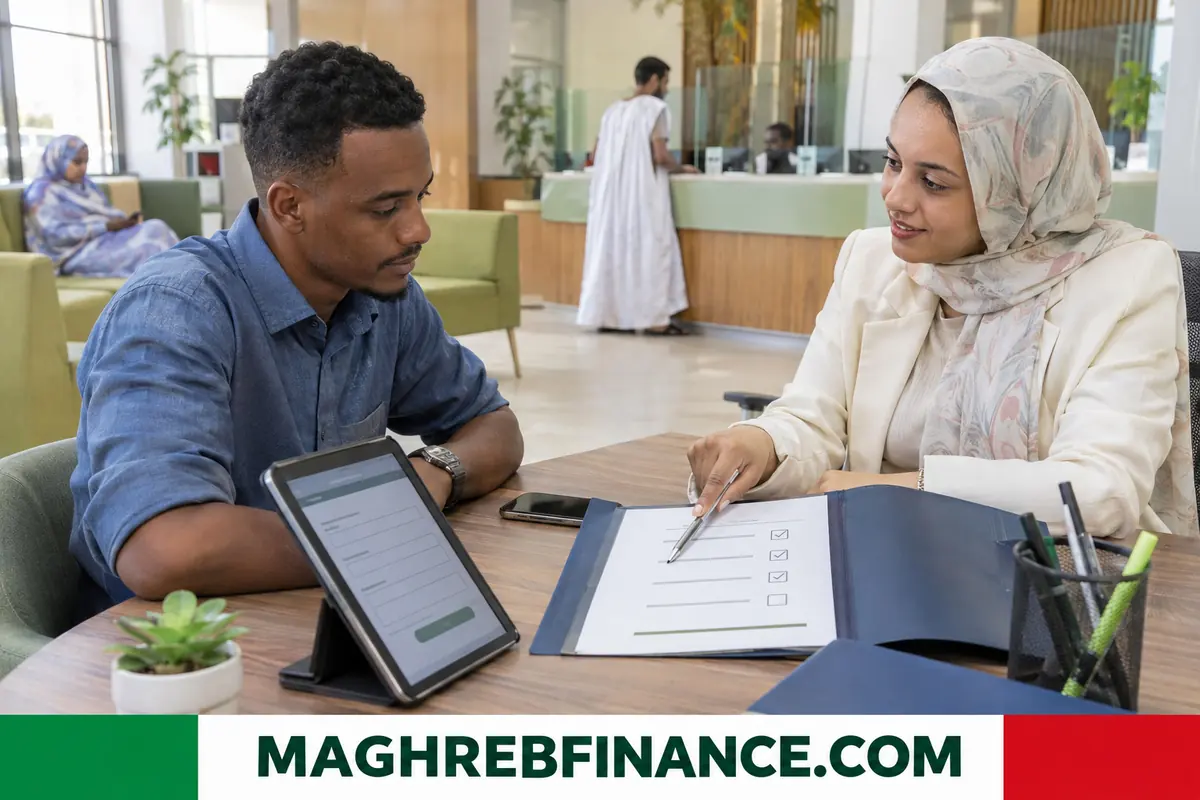
In Mauritania, business microcredit and honour loans are two forms of small entrepreneur financing aimed at people who cannot obtain classic bank credit. Microcredit is a low-value loan granted by a microfinance institution to a craftsman, trader or small producer. An honour loan is a personal loan, often interest-free and without security, granted to the entrepreneur in person to strengthen his or her own funds. Microfinance institutions are licensed and supervised by the Central Bank of Mauritania, and amounts are expressed in ouguiya (MRU).
Who these loans are for
They target micro-entrepreneurs: market sellers, tailors, mechanics, small livestock keepers, artisanal fishermen, shopkeepers and processors of local products. Many work in the informal economy, with no balance sheet and no physical collateral.
Young graduates and people creating a business find a first source of money there, sometimes with training attached. Women entrepreneurs are major clients of many microfinance programmes.
Amounts stay modest, enough for tools, a first stock or a machine, and rise over successive repayment cycles. In the outer districts of Nouakchott and in smaller towns and rural areas, retail markets, workshops and small herds generate most requests, because bank branches are fewer and more demanding there.
How business microcredit works
The loan comes from a microfinance institution, a mutual, a savings and credit cooperative or a specialised company. Procedures are lighter than in banks: a visit to the activity, an interview and a study of real cash flows rather than financial statements.
Security may be joint surety among group members, a personal guarantor or a pledge on tools. Repayment is in short weekly or monthly instalments.
First loans are deliberately small, to test the regularity of the borrower. Later and larger loans reward those who paid on time, which gives a strong reason to respect each date.
The honour loan in principle
An honour loan is granted to a person, not to the company, without interest and often without real security. It rests on trust and a moral commitment to repay, and it adds to the personal contribution of the entrepreneur, which makes a complementary bank loan easier to get.
It is usually offered by support programmes, associations, public youth employment bodies or entrepreneur networks, with follow-up and mentoring. Conditions differ from one scheme to another: age, sector, business plan and compulsory training.
It is not a gift and must be repaid even without interest. Its main value is to show lenders that the entrepreneur has a network behind him or her.
Preparing the application
A few papers are usually enough: identity document, proof of address, a description of the activity, estimated sales and costs, and quotations for planned purchases. More structured institutions ask for a trade register entry or an operating permit.
A simple one or two page business plan convinces more than a long text: product or service, customers, prices, costs, financing need and planned repayment. If several people work together, prepare a group agreement setting roles and responsibilities.
For a business not yet launched, a quotation for equipment, a lease or workshop agreement and a prudent sales estimate prove that the project is real.
Real cost and vigilance
Microcredit often costs more than a bank loan, because follow-up is expensive. Always ask for the total cost in ouguiya: interest or margin, arrangement fees, insurance and any compulsory savings. Compare several institutions and refuse offers that do not detail their pricing.
Beware of informal lenders who demand quick repayment at very high rates. A microcredit should never be used to repay another loan, since over-indebtedness strikes small businesses fast.
A serious lender explains the schedule, the late penalties and the result of default, and hands over a signed copy.
Combining microcredit and honour loans
The two tools complement each other. The honour loan builds the personal contribution, while microcredit or a bank loan funds the rest. An entrepreneur who already holds an honour loan reassures the institution about seriousness.
Some schemes provide support after disbursement, such as bookkeeping help, management advice and introductions to buyers. Use it, because survival of small firms depends on management as much as on money, and note daily takings and spending to improve decisions. Training in basic accounting, pricing and marketing, which some programmes provide, noticeably raises the survival chances of a small enterprise.
Moving towards bank credit
After several repaid microcredit cycles, the entrepreneur can apply for larger sums at a bank. The activity must then be formalised: registration, a business account and simple accounts. Statements and the repayment record serve as proof.
Some banks and institutions work in partnership to ease this transition. As soon as the business grows, separate personal and business accounts, a basic condition for any structured finance.
Formalisation also brings rights such as access to public tenders and contracts with companies, insurance and social protection.
Common mistakes of small entrepreneurs
The first mistake is borrowing for personal expenses such as a wedding or a trip, which weighs on both household and business. The second is setting a price without counting real costs: raw materials, transport, electricity and working time.
The third is neglecting savings. Setting aside a small sum from every sale builds a reserve that avoids a new loan at the first incident. A cash book completed each evening is enough to begin.
Frequently asked questions
Is a guarantor needed for microcredit in Mauritania?
Not always, since many institutions accept group joint surety or a lighter guarantee than banks.
Is an honour loan really interest-free?
In most schemes yes, but check any arrangement or support fees.
How much can be borrowed?
Amounts are modest and depend on the institution, the activity and the repayment record.
Are microfinance institutions supervised?
Yes, they are licensed and supervised by the Central Bank of Mauritania, so check the licence before signing.
Can several loans be held at once?
It is possible but risky, and the total instalments must stay affordable from the receipts of the activity.