
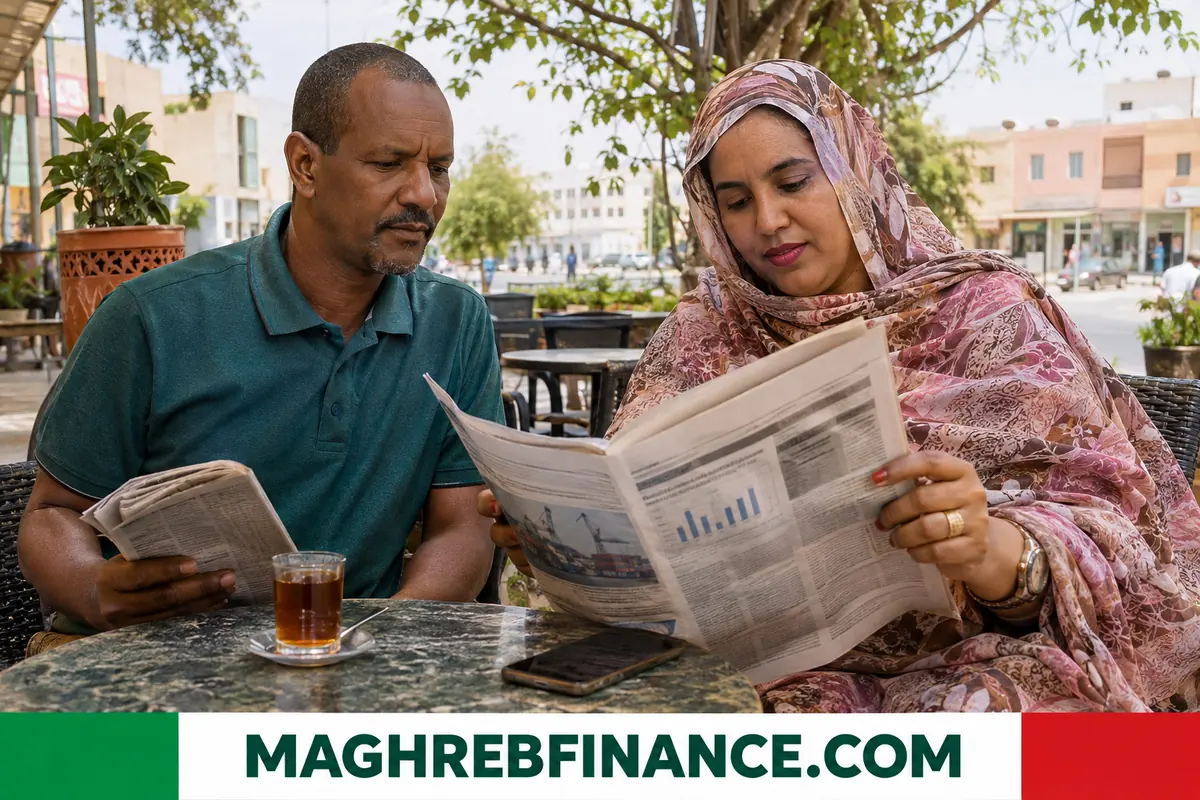
In Mauritania, national and international daily economic and financial newspapers form an uneven landscape: few titles are devoted entirely to the economy, so readers combine the general press of the country with foreign publications, choosing titles by language, price and reliability. National dailies, often in Arabic or French, report on the central bank, mining, fisheries and the state budget. International reference papers bring world markets, regional analysis and comparisons with neighbouring countries, which help in understanding the environment of the ouguiya (MRU).
A press landscape in transition
The Mauritanian print press includes a few public and private dailies, weeklies and many online outlets. Paper circulation is modest, and a growing share of readers now turn to phones and social networks.
No daily is exclusively economic at national level. Most publish a business page covering tenders, taxes, prices and company news, and readers must assemble a picture from several sources.
Advertising revenue is thin, so investigative business reporting remains rare, and readers should expect more announcements than analysis.
National dailies worth following
The public French-language daily Horizons and the public Arabic-language daily Chaab relay government action and economic decisions at length. Private newspapers and sites, in Arabic or French, bring investigations, interviews and a wider range of opinions.
Independent online titles sometimes run a business section with tender notices and company announcements, which is useful for firms looking for contracts. Comparing a public and a private source on the same decision is a good habit.
Official gazettes and government communiqués, although not newspapers, are worth reading alongside the dailies because they carry the exact wording of laws and decrees that articles only summarise.
Useful international newspapers
For markets and companies, readers rely on the world business press: Les Échos and the Financial Times for finance, Jeune Afrique and The Africa Report for the continent, and Maghreb dailies such as L'Économiste in Morocco or La Presse in Tunisia to compare practices.
These papers supply exchange rates, commodity prices, central bank decisions and analysis of regional trade, which put Mauritanian events in context. Paywalls are common, but free articles and newsletters often suffice for a first overview.
Regional titles also help with comparisons: a reader can see how Morocco handles a banking reform or how Tunisia treats a tax change, and judge whether a similar measure might follow in Mauritania.
What each reader looks for
A business owner seeks tax decisions, tenders and currency conditions. A banker follows central bank measures, liquidity and government securities. An exporter watches international prices and port logistics. A student finds case studies and data for a dissertation.
Each profile benefits from a short list of sources chosen for relevance, not volume, and reviewed every few months to see whether they still deliver.
Professionals who follow the ouguiya should note the date of every exchange rate quoted, since official and market rates can move apart.
Languages and access
Arabic is the language of official texts and of most titles. French remains widely used in business, banking and administration. English dominates the world financial press.
On access, the sites of national newspapers are generally free, whereas international titles use paywalls or registration. A reader can alternate between free articles and a single paid subscription to the title that matters most.
Mobile data costs matter too, and many readers prefer lightweight sites and newsletters that can be read offline.
Recognising reliable information
A reliable economic article cites sources, gives dated figures with their unit and separates facts from opinion. It corrects its errors. By contrast, an over-confident headline, a figure without origin or an article built on a rumour calls for caution.
The reader compares titles, goes back to the original text of a decision and checks the date of publication, because an outdated figure can mislead as much as a false one.
Headlines that announce a miracle investment or a guaranteed return should always be checked against the company's own filings.
Press and financial decisions
A savings or investment decision is not made on a newspaper headline. A daily informs about context, but the decision requires reading the contract, the prospectus or the text of the law and, where possible, the opinion of an independent professional.
For a company, the daily press review feeds internal notes to management and helps spot changes in tax, customs or banking rules before they affect the accounts.
Where a decision involves a large sum, ask a bank adviser or an accountant to read the same sources and give a second opinion.
Building an efficient press review
An efficient review takes ten to fifteen minutes a day. Choose two national dailies, one regional paper, one international financial title and a news agency. Sort articles by theme, date them and keep the useful passages in a shared document.
A weekly summary of three or four lines per theme keeps the whole team informed and builds a record that is easy to search when a question comes up later.
Free tools such as keyword alerts and RSS readers send new articles on chosen topics to one inbox, so the review takes less time.
Frequently asked questions
Is there a Mauritanian economic daily?
No national daily is entirely economic. Readers use general dailies with business pages and add specialist foreign titles.
Which foreign newspapers cover Mauritania?
Pan-African and French-language titles such as Jeune Afrique and The Africa Report, plus world financial papers, report on the country from time to time.
Must one subscribe to read the economic press?
Not always. Many national sites are free, while international papers often limit free articles, so a mix of free and paid sources is practical.
Which language is best for following the economy?
Arabic and French cover national news, and English helps with world markets. Reading in two languages gives the best coverage.
How can false economic information be avoided?
Check the source, the date and the figures, compare several titles and go back to the original document before acting.