
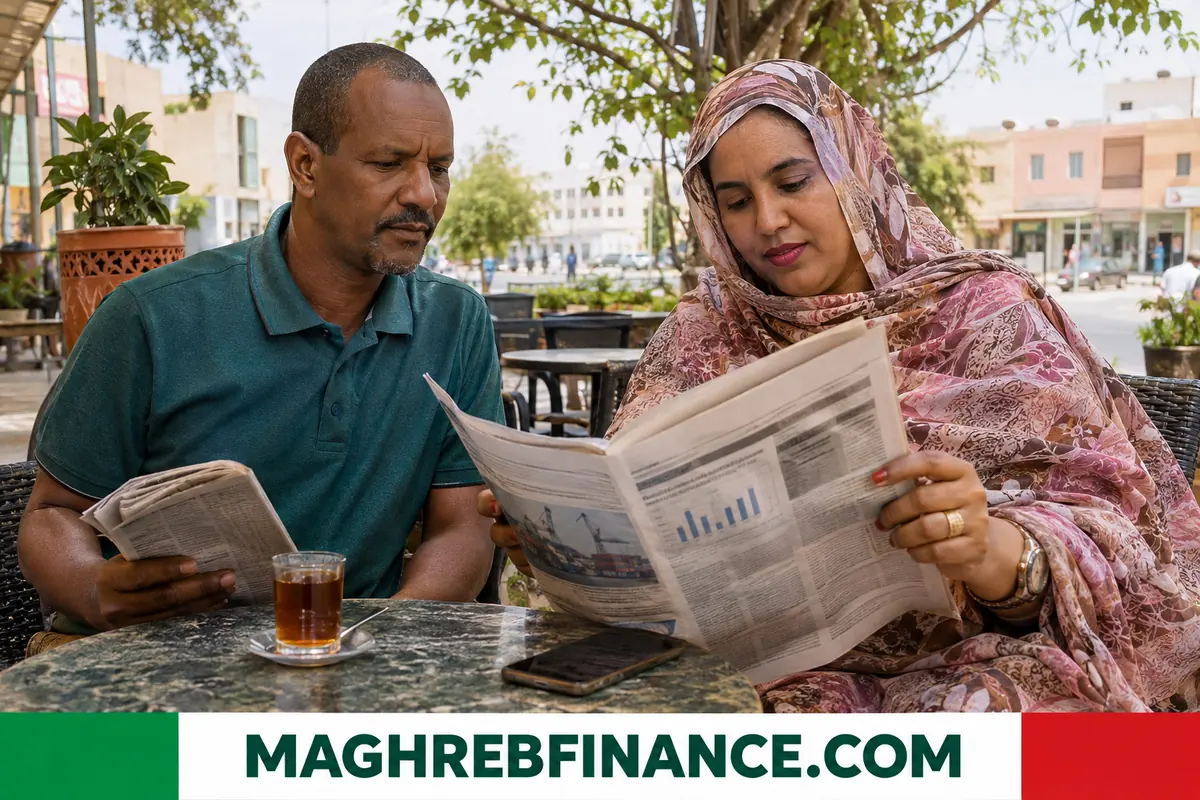
In Mauritania, economic geopolitics and strategic intelligence analysis journals publish studies that connect power relations with economic decisions, trade flows and investment choices. They examine how the Sahel, the Atlantic, the Maghreb and West Africa shape trade routes, mineral resources, fishing and gas. Their reader is a decision maker, researcher, diplomat or business leader who must anticipate political risk and investment opportunities, without relying only on the news of the day or on official statements, and who need a method to read signals over several years.
Economic geopolitics: what is it about?
Economic geopolitics studies how states and companies use trade, energy, finance and resources to defend their interests. It looks at alliances, sanctions, sea routes, fishing agreements and large infrastructure contracts.
It differs from pure economics by giving weight to power, geography and politics, and from political science by following the money and the supply chains behind decisions.
The Atlantic coast, the borders with Mali and Senegal and the overland routes towards Morocco and West Africa make Mauritania a place where trade and security questions meet.
Strategic and economic intelligence
Strategic intelligence, also called economic intelligence, means collecting and analysing open information to support a decision: monitoring competitors, following regulations, mapping actors and anticipating risks. It is not espionage.
It relies on legal sources such as official gazettes, company reports, trade statistics, press and academic work, processed with a clear method and questions fixed in advance.
A useful intelligence product answers a specific question, such as whether a supplier country may restrict exports or whether a new tax on mining could change a project's returns.
The major Mauritanian files
Several topics structure the analyses published. Offshore gas, with the cross-border project shared with Senegal, raises questions of revenue sharing, local content and timetable. Mineral resources, iron, copper and gold, bring dependence on world prices.
Fisheries, in one of the richest maritime zones of the region, involve access agreements and the sustainability of stocks. Port development, regional transport corridors and the security situation in the Sahel complete the picture.
Debt, the balance of payments and the effect of international prices on public revenue are recurrent themes, because they decide the room the state has to invest.
Who publishes these analyses
Regional and international research centres, universities, think tanks on Africa and the Arab world, and general foreign policy journals devote articles to the region. International organisations also publish reports on economic outlook and governance.
Readers should note the institution behind a study, its funding and its usual position, since these shape the questions asked and the conclusions drawn.
Specialist newsletters, annual outlooks and conference papers often reach readers earlier than books, and many are free to download. Some universities in the region run seminars open to professionals, giving access to researchers and to peers working on similar questions.
Reading an analysis critically
A good journal separates facts from interpretation, gives its sources, cites its data and sets out opposing views. It avoids final statements about the future.
Warning signs
An article that gives a single cause for a complex event, relies on anonymous sources without justification or reads like a campaign text deserves caution. Comparing two analyses from different institutions often shows what is established and what is only opinion.
Where an analysis is commissioned by an interested party, such as a company or a state, readers should look for the declaration of interest and read the conclusions with that in mind.
Practical uses for a company
An exporter consults these analyses to assess the risk of a new market. A bank uses them to calibrate exposure limits by country. An investor looks for hints about regulatory stability and the taxation of resources.
Even a small firm draws lessons: reliance on a single supplier, a single customer or a single route is a weakness that wider events can expose.
A commodity trader may combine these readings with price data to decide when to sign long-term contracts, and a lender may use them to set the maturity of a loan.
Country risk, insurance and financing
Country risk analyses feed the decisions of credit insurers, development banks and funds. They measure political risk, transfer risk, currency risk and counterparty risk. Companies investing in long projects also study guarantee mechanisms offered by multilateral bodies.
Such work does not predict events. It helps set prudent limits, price risk and prepare alternatives, which is the real value of this type of reading.
Political risk insurance, offered by specialist insurers and public agencies, can protect an investor against expropriation, currency transfer restrictions or political violence, within limits and conditions that vary.
Building a strategic watch
An effective watch starts with three to five questions: which markets, which competitors, which regulations. Reliable sources are then chosen, a reading rhythm is fixed and important information is archived.
A short monthly summary note, listing key facts, risks and decisions to take, keeps management aligned and turns reading into action.
Free tools such as alerts, shared folders and a simple spreadsheet of sources are enough to start; sophistication can come later.
Frequently asked questions
What is economic intelligence in Mauritania?
It is the lawful gathering and analysis of open information to guide business decisions, such as monitoring rules, competitors and market changes.
Which journals deal with Mauritania?
Regional research centres, Africa-focused think tanks and international economic and foreign policy journals publish on the country from time to time.
Does economic geopolitics concern small businesses?
Yes, indirectly. Fuel prices, shipping routes and trade agreements affect the costs and markets of firms of every size.
How can a geopolitical analysis be checked?
Look at the author's sources, compare it with another institution's view, and test its claims against hard data such as trade statistics.
Can a journal predict country risk?
No. It can describe scenarios and signals, but serious analysts avoid precise predictions and recommend prudent limits.