
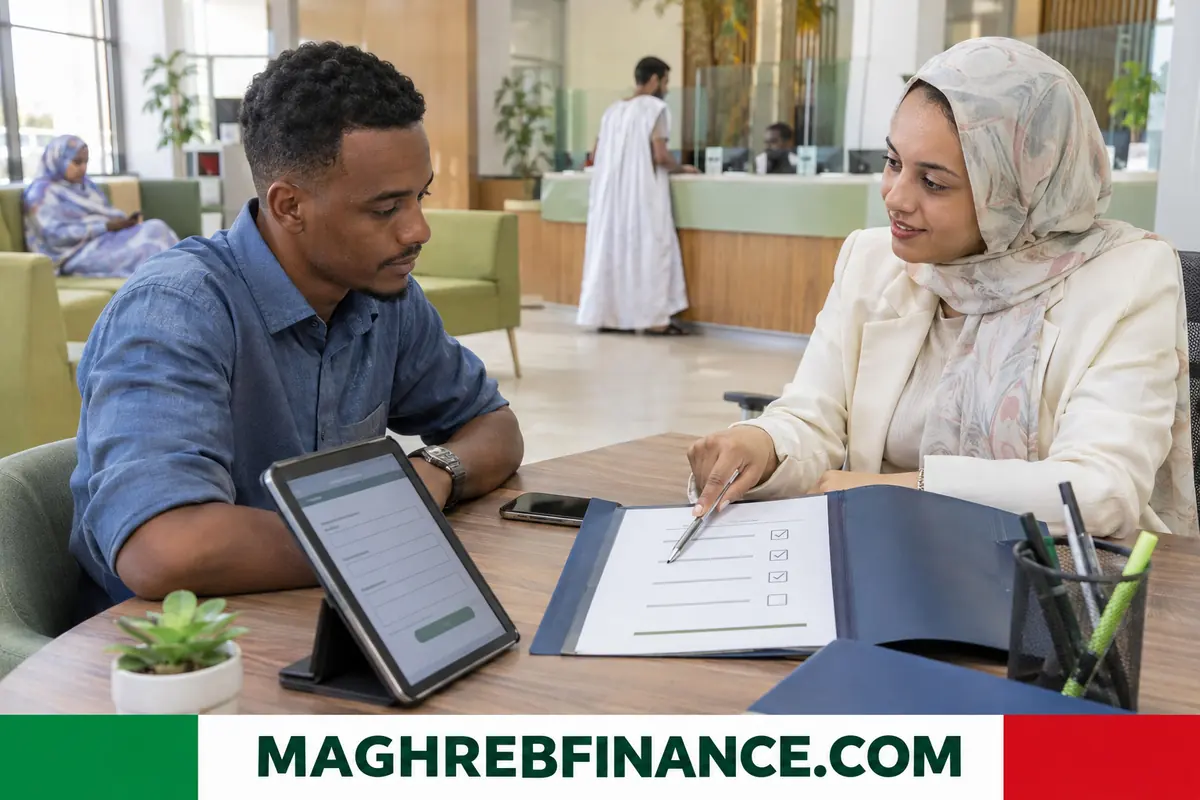
In Mauritania, a diaspora or nonresident bank account lets people who live abroad keep a financial base in the country, receive transfers from relatives and use international services. It suits Mauritanians in Europe, North America, the Gulf and other African states, as well as foreign investors who buy property or start a business. Banks licensed by the Central Bank of Mauritania, including the Banque Populaire de Mauritanie, offer accounts in ouguiyas (MRU) with remote access. Exchange rules, documents and tax duties differ from those of a resident customer.
Who counts as a nonresident
The nonresident status applies to anyone who lives permanently outside Mauritania, whether of Mauritanian or foreign nationality. Mauritanians settled abroad find in this account a tool to stay connected with their country, and foreign investors who buy property or start an activity also use it.
The distinction between resident and nonresident affects exchange rules, the documents requested and sometimes ceilings. A member of the diaspora who returns for several months may change status, so tell the bank to avoid a blockage.
Opening an account from abroad
The Banque Populaire de Mauritanie presents a space reserved for Mauritanians living abroad, where a current or business account can be opened, even by phone using the Bankily application. Other banks accept scanned files or ask for a visit to a branch during a stay in the country.
Usual documents
- A valid passport or consular card.
- Proof of residence abroad, such as a utility bill or residence permit.
- Proof of income or activity.
- Specimen signature and opening form.
- An initial deposit set by the bank.
The bank must identify the beneficial owner of the account, so never open an account for someone else without saying so clearly.
Ask the bank to confirm in writing how long the file takes and whether you must present originals at a later date.
Receiving and sending money
Remittances from abroad are an essential resource for many families. Several channels coexist: bank transfers, money transfer operators, online platforms and mobile wallets. The Banque Populaire de Mauritanie announced a partnership with the Remitly platform, showing how digital services now send funds to an account or wallet.
Compare the total cost: sending fee, applied exchange rate, delivery time and the way the money is collected. A transfer that seems free may hide an unfavourable rate. For regular remittances, a standing order from abroad to the local account simplifies matters.
Transfers may be subject to limits or to proof of source, so keep evidence of your foreign income.
Cards, remote banking and management from abroad
An international card allows payments and withdrawals during stays in Mauritania and abroad, and a credit card may be offered to diaspora customers. An app or web service shows balances and transfers without travelling.
To manage the account from abroad, consider a power of attorney for a trusted relative to handle counter operations, stating its duration and limits. An overly broad power invites abuse, so reserve it for precise acts such as collecting a cheque book or signing a purchase deed.
Keep your phone number and email address up to date, because security alerts and access recovery depend on them.
Financing a project at home
Many Mauritanians abroad wish to build or buy at home. A bank can examine financing based on declared income and regular payments into the account. Sharia-compliant products such as murabaha are an option: the bank buys the asset and resells it to the customer with a margin known in advance.
Avoiding traps
Always check the land title before paying, use a notary and send money only to an account in the seller's name, never to an intermediary. Land scams target distant buyers who cannot inspect the plot.
Taxes, compliance and applicable law
A nonresident may be taxed in both the country of residence and Mauritania, depending on the source of income and tax treaties. Information exchange between states is increasingly common, so declare foreign accounts correctly and take professional advice before opening accounts in several countries.
The bank may request evidence for large transfers and refuse an operation that cannot be explained. Keep contracts, salary slips and statements.
Heirs living abroad face particular difficulties in settling an estate. An active local account with up-to-date details of beneficiaries speeds up procedures.
Savings, rights and security
Depending on the bank, a nonresident can open a current account, a savings account or a term deposit. The Banque Populaire de Mauritanie presents a savings account that invests funds in projects financed by the bank, with a share of results, which interests customers wishing to place part of their savings at home on Islamic principles.
The holder has the right to clear information on fees, to accurate statements and to timely handling of complaints. In a dispute, write to the bank's management, then the Central Bank of Mauritania.
Distance requires stronger security: two-factor authentication, a locked phone and no code shared by message.
Frequently asked questions
Can I open a Mauritanian account without travelling?
Some banks allow opening by phone or with scanned documents, but others ask for a visit to a branch. Check the current procedure with the bank.
Which documents does a diaspora customer need?
Typically a passport, proof of residence abroad, proof of income, a specimen signature and an initial deposit.
Is the account taxed?
Tax depends on the source of income and on treaties between Mauritania and the country of residence, so seek professional advice.
How can relatives receive my money?
By bank transfer, an international platform, a transfer operator or a mobile wallet, after comparing cost and delivery time.
Can I give someone a power of attorney?
Yes, and it is wise to limit it in time and to precise acts.