
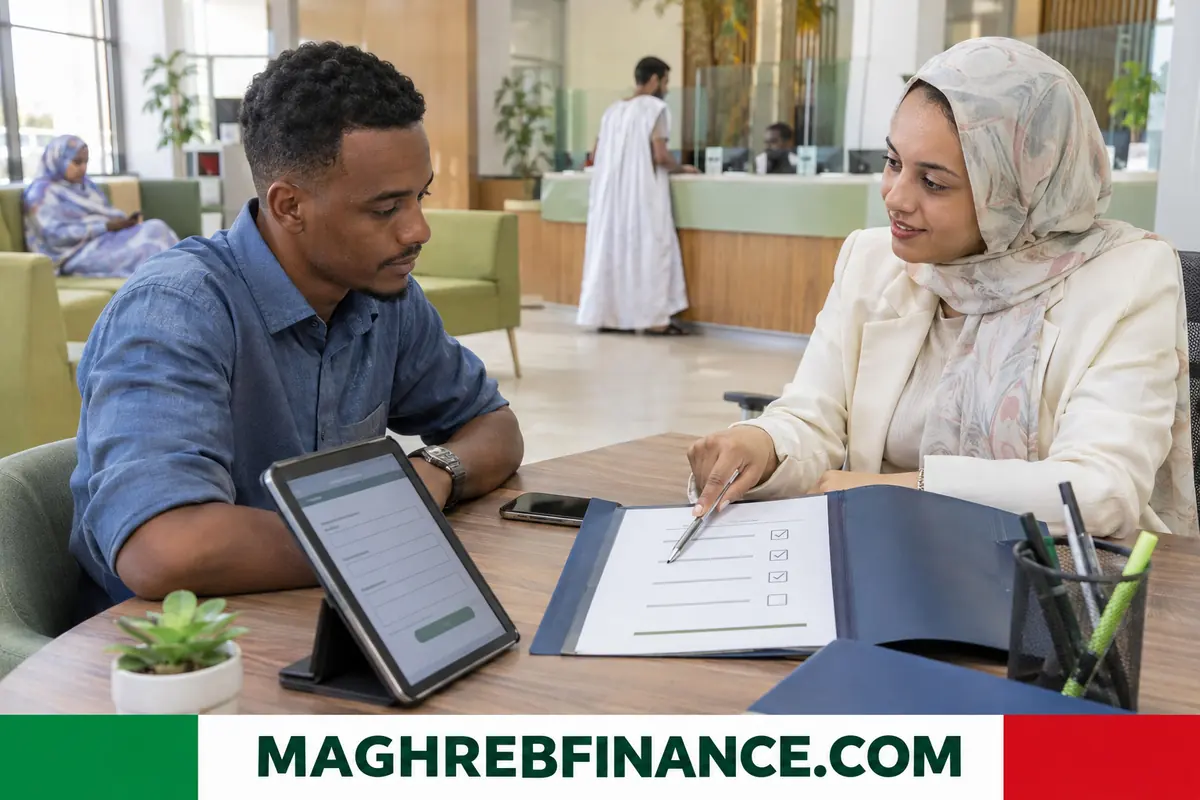
In Mauritania, checkbook and bank check issuance are payment services governed by the rules of each bank licensed by the Central Bank of Mauritania. A checkbook contains blank cheques drawn on the holder's account, while a bank check is issued by the bank itself against funds already set aside, which gives the beneficiary greater certainty. Both instruments are used for rent, purchases, fees and business payments in ouguiyas (MRU), and they require care in writing, storing and presenting the document.
Checkbook and bank check: two tools
A checkbook is delivered to an account holder, who writes cheques as needed. Each cheque is an order to the bank to pay a named beneficiary, and payment depends on enough funds in the account when the cheque is presented.
A bank check is issued by the bank for a customer, who pays the amount in advance. As the funds are blocked, the beneficiary has more security, which is why it is often requested for large transactions such as the purchase of a vehicle or property.
Each has a cost and a delivery process, so ask which tool the other party will accept.
Some bank checks carry a fee that is a fixed amount, while others use a percentage of the sum, so ask for the exact price before ordering one.
Obtaining a checkbook
The bank decides whether to issue a checkbook according to the account history and the customer's profile. A new customer may wait for a trial period. The holder signs a receipt on collection, and some banks require a personal visit with an identity document.
The Banque Al Wava Mauritanienne Islamique indicates that its mobile service allows a customer to request a checkbook remotely. Ask your own bank whether a request can be submitted by app and where delivery takes place.
Count the cheques on receipt and note the first and last serial numbers.
Writing a cheque without errors
Use a pen with permanent ink, write the date, the beneficiary's full name and the amount in figures and in words, then sign as on your specimen. Cross out empty spaces so that nothing can be added.
Do not leave a space between the name and the amount. Complete the stub with date, amount and beneficiary. A correction may invalidate the cheque, so write a new one if you make a mistake.
Never give a signed blank cheque to a third party, even for convenience.
Write numerals close to the left edge of the box and the words starting at the left of the line, so no digit or word can be inserted afterwards.
Cashing and presenting a cheque safely
The beneficiary must present the cheque to the bank within the legal period. Check the identity of the issuer and the amount, and deposit it in your account rather than carrying cash. A crossed cheque can be paid only into an account.
For a large amount, ask the issuer for a bank check or verify with the bank that funds are available.
Keep a copy or photograph of the cheque until the payment is credited, because this will be useful if a dispute occurs.
Beneficiaries who receive a cheque from a stranger should wait for the bank's confirmation that it has been paid before handing over goods.
Cheques without funds and their consequences
Issuing a cheque without enough funds is a serious fault: the bank rejects the item, charges fees and may record the incident in a central file kept with the Central Bank of Mauritania. The holder faces penalties set by law and may be unable to issue cheques for a period.
If you anticipate a shortfall, deposit funds before the cheque is presented or contact the beneficiary to agree on a new date.
A beneficiary who receives a rejected cheque should keep the rejection notice and take the steps set by law.
Loss, theft and forgery
If a checkbook or a single cheque is lost or stolen, notify the bank immediately by phone and confirm in writing. The bank will stop payment and may issue a new checkbook after checks.
Store the checkbook in a secure place, separate from identity documents, and never leave it in a vehicle. Check statements regularly for unfamiliar cheque numbers.
If a cheque is altered, notify the bank without delay and file a complaint with the competent authorities.
Keep a list of the cheques you have issued with their numbers, dates, amounts and recipients, because it helps to detect any item that you did not write.
Costs, alternatives and rights
Banks may charge for the checkbook, for each bank check and for stop payments. Compare the tariff with the cost of a transfer or a wallet payment. For many payments, electronic options are faster and cheaper.
The holder can request a clear tariff and a statement showing each cheque. If a bank refuses to issue a checkbook or a fee is disputed, he or she may write to the bank's management and then refer to the Central Bank of Mauritania.
Keep records of all requests and the replies received.
Frequently asked questions
What is the difference between a cheque and a bank check?
A cheque is drawn on your account and depends on available funds. A bank check is issued by the bank against funds set aside in advance.
Can I order a checkbook by phone or app?
Some banks allow it. The Banque Al Wava Mauritanienne Islamique mentions a mobile service for requesting a checkbook.
What should I do if I lose my checkbook?
Notify the bank at once by phone, confirm in writing and ask it to stop payment on the missing cheques.
What happens if a cheque bounces?
The bank rejects it, charges fees and may record the incident, with possible legal consequences.
Is a bank check better for large purchases?
Often yes, because the funds are blocked and the beneficiary has greater certainty of payment.