
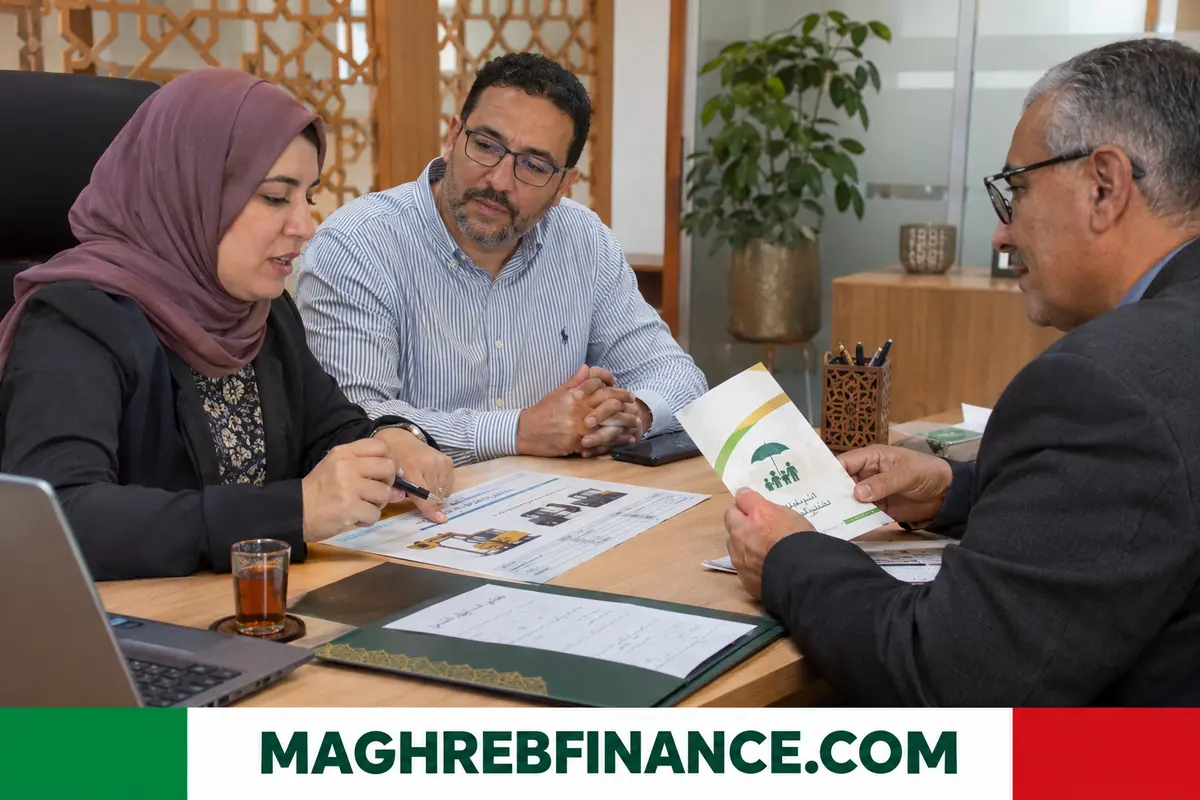
Morocco applies Ijara wa Iqtina, an Islamic vehicle and property leasing contract, through which a participative bank buys an asset, makes it available to an individual against lease payments, then transfers it at the end. The contract combines two distinct operations, the Ijara, a lease for use, and the Iqtina, a final acquisition, with no interest-bearing loan involved. It is supervised by Bank Al-Maghrib and approved by the Sharia Board, and is meant for customers who want financing consistent with their beliefs.
Two ideas: Ijara and Iqtina
Ijara means a lease: the bank buys the car or the home chosen by the customer and grants the right to use it in return for lease payments. It stays the owner during that period, which obliges it to bear certain risks that the lender of an ordinary loan does not assume.
Iqtina means acquisition: at the end of the contract, or in stages, the customer becomes the owner. Together the two words describe a lease that leads to ownership, with a separate promise organizing the transfer. This is why the contract is treated as two linked undertakings rather than a single loan.
How the contract proceeds in Morocco
The customer names the asset and signs a promise to acquire it in the end. The bank buys from the seller, then concludes a lease contract with the customer for a fixed period, with payments set or revisable under stated rules. A separate undertaking organizes the transfer of ownership, by sale at an agreed price, by gift or by gradual transfer of shares.
Usual steps
- choice of the asset and a quotation;
- approval of the file by the bank;
- purchase by the bank and signature of the lease;
- payments, then transfer of ownership.
Ijara for a vehicle
For a car, the bank buys from the dealer and puts the vehicle at the customer's disposal. The registration reflects the legal position, and the bank keeps ownership until the end. The customer pays monthly lease payments, insures the vehicle and bears the ordinary costs of use.
At the end, the car is transferred to the customer for a price or by a gift stated in the promise. Early settlement or a sale to a third party needs the bank's consent, which is given once the amounts due are settled.
Ijara for property
In real estate, the bank acquires the dwelling and makes it available to the customer. The customer pays lease payments and, depending on the formula, extra instalments that buy the property gradually. At the end, ownership passes by a notarial deed and the land registry entry is updated.
This formula requires an identified property, a clear title and a valuation. Costs such as notary fees, registration and insurance are agreed in advance and should be added to the comparison.
Payments, duration and comparison with a loan
Payments include the bank's remuneration and the amortization of the value of the asset. They can be fixed for the whole term or adjusted by an agreed index. To compare, add up all the payments and the final price, then set the total against the cost of a conventional loan of the same length.
Presenting the cost as lease payments can give an impression of flexibility, but the commitment is just as firm, and early exit is governed by the contract. Ask for a full schedule in writing, including the sum payable on the transfer date, the insurance premium and any penalty for late payment.
Conditions, documents and risks
Income and debt requirements resemble those of conventional credit. The customer provides an identity document, proof of income, bank statements and the papers of the asset. Insurance, conventional or takaful, is required.
Risks include failing to compare offers, the complexity of the vocabulary, and assuming that every product sold as halal is approved. Check the licence of the institution and the approval mention before signing, and have a notary read a property contract.
Who offers these contracts in Morocco
Participative banks and the participative windows of conventional banks offer Ijara products. One of them, Arreda, the participative window of Crédit du Maroc, presents Ijara-type financing together with savings and investment accounts.
Offers differ by institution, and each is approved by the competent religious body. The list of authorized establishments is published by the supervisor. Comparing at least two providers on the price of the asset, the lease payments and the closing costs is a sound habit.
A family from Casablanca chooses Ijara
A family in Casablanca wants to acquire an apartment in line with its convictions. It compares a conventional loan with an Ijara: duration, total payments, deed costs and insurance. The figures are close, and the family selects the participative bank's offer.
It has the contract checked by a notary, confirms the approval mention and keeps a reserve for unexpected expenses such as repairs or a drop in household income. The calendar of payments and the transfer date are written in the documents, which removes any later doubt.
Frequently asked questions
What is the difference between Ijara and Iqtina?
Ijara is the lease giving the right to use an asset, while Iqtina is the acquisition by which the customer becomes the owner at the end.
Who owns the vehicle or home during the contract?
The bank remains the owner until the transfer. The customer uses the asset and bears the ordinary costs of use and insurance.
Is Ijara wa Iqtina more expensive than a loan?
Not necessarily. Compare the sum of all payments and the final price with the full cost of a conventional loan over the same term.
Can the contract be ended early in Morocco?
It is possible under the terms of the contract, which should say how the remaining payments and the price are treated. Ask before signing.
Does the customer have to be Muslim?
No. These contracts are open to any customer who meets the bank's conditions.