
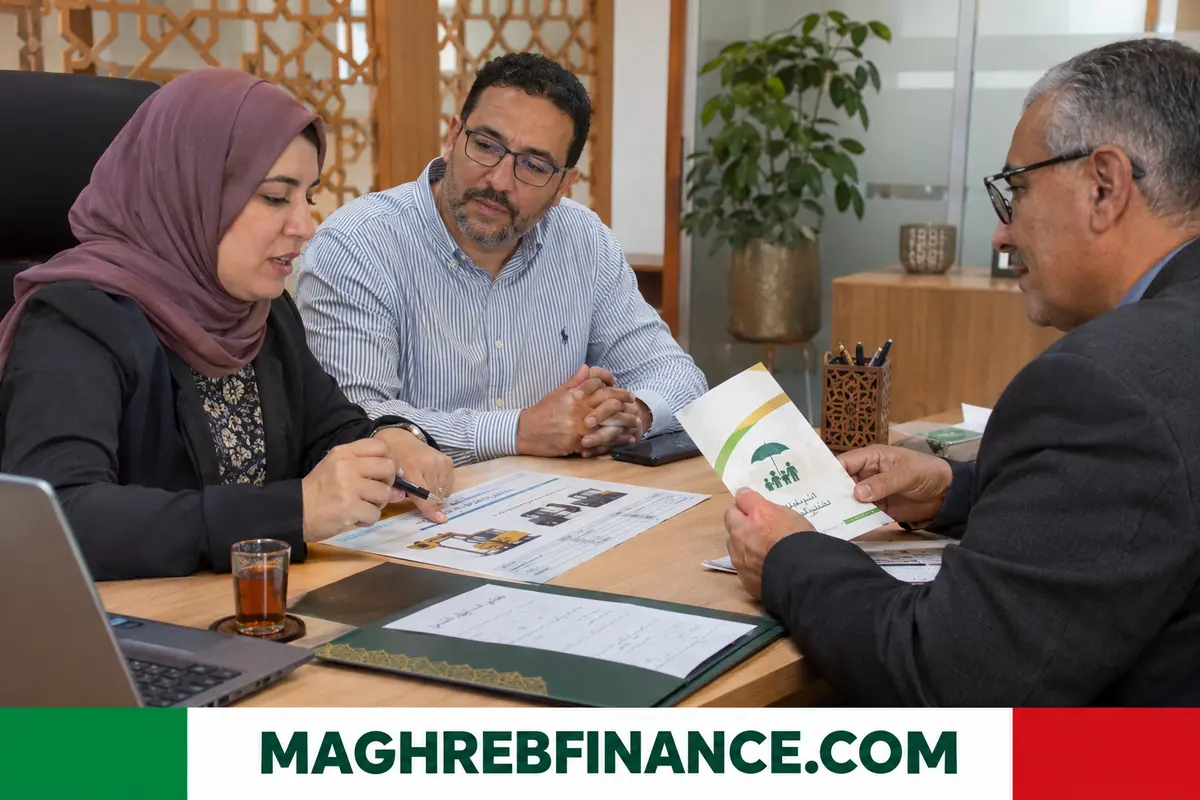
In Morocco, Islamic business financing is based on contracts such as Murabaha, Istisna and Musharaka, which replace interest-bearing loans with sale, manufacture to order or partnership. Offered by participative banks and by participative windows of conventional banks, under the supervision of Bank Al-Maghrib and the opinion of a sharia board, these contracts finance the purchase of equipment, production lines and investment projects for companies in dirhams. The system is governed by the participative banking rules and concerns manufacturers, traders, contractors and professionals who prefer to avoid interest.
Participatory and Islamic financing: equipment Murabaha: financing based on real assets
Islamic finance excludes interest, speculation and prohibited activities. Each operation is tied to an identifiable asset, service or project. For a company, this means that the financing matches a concrete need: buying a machine, building a unit or sharing a project.
Each contract has its own accounting and tax implications, which the company's accountant should review before signature.
For example, a printing company that needs a new press asks the bank to buy it from the supplier, and then repays the agreed price in monthly instalments without any interest clause.
The compliance rules also require that the asset financed and the activity be lawful under Islamic principles, which excludes trade in alcohol, pork products or gambling.
Murabaha for buying equipment
Murabaha is the most common formula. The bank buys the equipment chosen by the company and resells it at a price that includes a disclosed margin. Payment is spread over the agreed period.
Professionals use it to buy machinery, vehicles or stock. The price stays fixed throughout the contract, which helps budgeting. The company should check who bears the risks between the purchase by the bank and the delivery to the customer.
Late payment charges, if any, are usually not kept by the bank as income but donated to charity, a point that differs from conventional lending and should be read in the contract.
Istisna for manufacturing or building
Istisna is a manufacture-to-order contract. The company orders an asset, a structure or an installation to be made to precise specifications. The bank finances the project, possibly with a subcontractor, and invoices according to progress.
It suits industrial, property or infrastructure projects of some size. Banks often require a technical expert to monitor the work and certify each stage before releasing funds.
A building contractor ordering a prefabricated hall, or a manufacturer ordering a bespoke production line, is a typical Istisna customer. Delivery dates and technical standards should be written precisely.
Musharaka for joining a project
In Musharaka, the bank and the company invest together in an operation or a company. Profits are shared in a proportion agreed in advance, while losses are borne according to contributions. A diminishing version organises the progressive buy-out of the bank's share.
It fits larger projects whose profitability depends on the success of the activity. Both parties agree on governance, reporting and exit conditions.
- Capital contributions of each partner;
- profit-sharing ratio;
- management and reporting rules;
- buy-out schedule for the diminishing form.
Because the bank shares the outcome, it examines the business model and the management more closely than it would for a fixed-price sale, and it may ask for regular financial statements.
Mudaraba and Salam
Mudaraba pairs a provider of capital with an entrepreneur who manages the project: gains are shared, while financial losses fall on the provider. Salam allows a buyer to pay immediately for goods delivered later, which finances a producer before harvest or manufacture.
These contracts are less common but useful for particular needs, and they suit sectors with predictable output such as agriculture or processing.
Comparison with a conventional investment loan
For the company, the process looks similar: file, study, guarantees and instalments. The differences concern the legal nature of the contract, transfer of ownership, price setting and risk sharing.
As with any financing, the total cost is compared by examining the final price, the duration, the fees and the guarantees. The Salam contract, for example, allows payment today for goods deliverable later, which a conventional loan cannot replicate.
Some companies find that the documentation, the delivery steps and the need for a bank purchase take longer than a classic loan, so they should plan the timetable of their project accordingly.
Legal framework, compliance and preparing the file
Participative institutions are licensed and supervised, and their products receive the opinion of a sharia board attached to the Higher Council of Ulema. The contracts follow templates that respect those opinions and banking legislation. A company can ask to see the documentation and compliance certificates.
To prepare, present a financing plan, detailed quotes, activity forecasts, proposed guarantees and administrative certificates. Compare several institutions, including conventional ones, on price, time and services. A legal adviser helps to understand the clauses and anticipate obligations, since contract documents are more numerous than in a standard loan.
Ask the adviser to explain in writing what happens in case of late payment, early settlement and default, because the answers differ from one contract to another.
Frequently asked questions
Is Islamic financing available in Morocco?
Yes. Participative banks and participative windows offer such products under Bank Al-Maghrib's supervision and sharia board opinions.
Is Murabaha the same as a loan with interest?
No. It is a sale with a disclosed margin, though the company still pays in instalments and should compare the final price.
Which projects suit Istisna?
Manufacturing, construction and installation projects made to specifications, financed in stages as the work advances.
Does Musharaka mean sharing profits?
Yes. Profits follow a pre-agreed ratio, and losses follow each partner's contribution.
Can any company apply?
Eligibility depends on the institution's analysis, the nature of the activity, which must be permitted, and the quality of the file.
Further reading
- Tamwilcom : Moroccan public financial institution offering guarantees and co-financing that help small and medium-sized businesses obtain bank funding.