
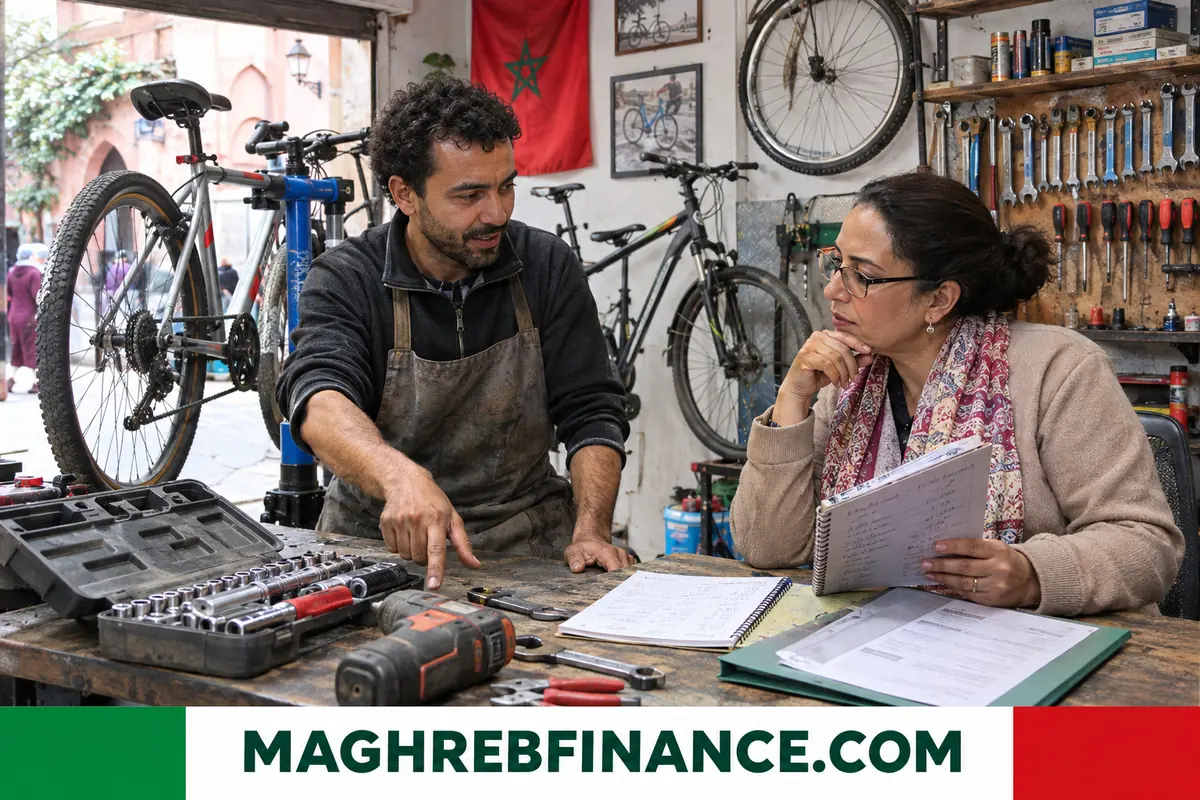
Morocco has a microfinance sector that grants personal microcredit loans for the individual needs of low-income households, a financing of everyday family expenses such as housing repairs, health care and schooling. Unlike a business microloan, its purpose is the home rather than a trade. Loans are small, made in dirhams by microcredit associations and microfinance institutions governed by the microcredit law, and the borrower, often left out of mainstream banking, gets a simplified file and close follow-up from a local adviser.
Personal microcredit: filling the gap left by banks
Many Moroccans have no current account, no regular payslip and no property to pledge. For them ordinary bank credit is out of reach. Personal microcredit fills that gap by financing family needs without the usual bank guarantees.
Microcredit associations employ field advisers who visit clients at home or in local branches, assess their situation and support repayment. This relationship of trust partly replaces material security. Lending focuses on rural households, women heading a family and people living on the edge of cities, who gain access to a basic financial service.
What can be financed
Personal microcredit pays for essential expenses: repairing or improving a home, connecting it to water or electricity, buying household appliances, covering health costs or school fees, or facing a family event. Some institutions offer an individual housing loan for renovation or connection work.
Common uses
- housing improvement: roof, sanitation, connections;
- household equipment: water heater, refrigerator, furniture;
- medical care not reimbursed and school costs;
- urgent spending caused by an unexpected event.
Who lends
Lenders are microcredit associations and microfinance institutions, among them Al Amana, which offers housing loans and loans for small businesses. They fall under the microcredit law and the supervision of the national financial authorities.
They do not take deposits from the public as banks do and do not issue chequebooks. Their mission is to fund small projects through a dense local network. A professional federation brings the associations together and speaks for them to the public authorities, and recent regulatory changes aim to widen the supply of microfinance and strengthen customer protection.
Amounts, duration and cost
Amounts stay modest, usually far smaller than a bank loan, and terms run from a few months to a few years. The rate is generally higher than at a bank because managing small loans is costly and the perceived risk is greater.
The borrower should ask for the effective annual rate, which combines interest, file fees and insurance, and compare the offer with another microfinance institution or even an advance from the employer. Early repayment is possible under the conditions in the contract. The safest course is to borrow no more than needed: a small sum repaid quickly costs far less than an oversized loan.
Conditions and documents
Requirements are looser than at a bank: a national identity card, proof of address or a residence certificate, and evidence of income even if informal, such as a small trade, a modest job or family earnings. The adviser judges repayment capacity through an interview and a visit.
A relative or a group of people may be asked to stand as guarantor, since security rests more on trust than on property. Applicants who already have debts are examined closely because over-indebtedness is the central risk. A clean record with the same institution often leads to larger amounts in the next cycle.
Risks to watch
A higher rate and closely spaced repayments can upset a fragile budget. The instalment must remain compatible with the household's lowest monthly income, and new loans should not be taken to repay earlier ones. Offers of fast loans that demand an advance payment are fraud.
Check that the institution is licensed, read the contract with a relative, keep the receipt for each payment and refuse any informal lender who imposes hidden terms or extreme interest. A serious adviser never asks for money before the loan is released and never keeps the borrower's identity card.
Borrower rights and complaints
The client is entitled to clear information on the amount, the total cost, the schedule and the consequences of late payment, in a language he or she understands. A copy of the contract and of the repayment table should be given at signing.
If a dispute arises, the first step is the institution's complaints service, then the federation or the authorities that supervise microfinance. Consumer associations can also advise. Written records of every payment are the best evidence in any disagreement.
Fixing a house in the countryside
A widow living near Beni Mellal wants to connect her home to the water network and repair a leaking roof. No bank would lend to her, but a microcredit association grants a small individual loan after an adviser visits the house and studies her income from sewing and family help.
She chooses a short term, keeps all receipts and asks for the full cost in writing. Thanks to regular repayments, she can later request a slightly larger sum for a household appliance, without ever borrowing from informal lenders.
Frequently asked questions
Is personal microcredit different from a business microloan in Morocco?
Yes. The business loan funds an income-generating activity, while the personal loan finances family needs such as housing, health or schooling.
Do I need a bank account to obtain it?
Not always. Microfinance institutions accept clients outside the banking system and rely on an interview, a visit and proof of some income.
Are the rates higher than at a bank?
Generally yes, because small loans are expensive to manage. Always compare the effective annual rate, including fees and insurance.
Can I repay early?
Usually yes, under the conditions of the contract. Ask in writing how the remaining interest is treated before signing.
How can I recognize a fraudulent offer?
A serious lender never asks for payment before releasing the money and is licensed. Be wary of anyone who keeps your identity card or promises approval for all.
Further reading
- Al Amana Microfinance : Moroccan microcredit association offering solidarity, business and individual housing loans, with an online loan simulator.