
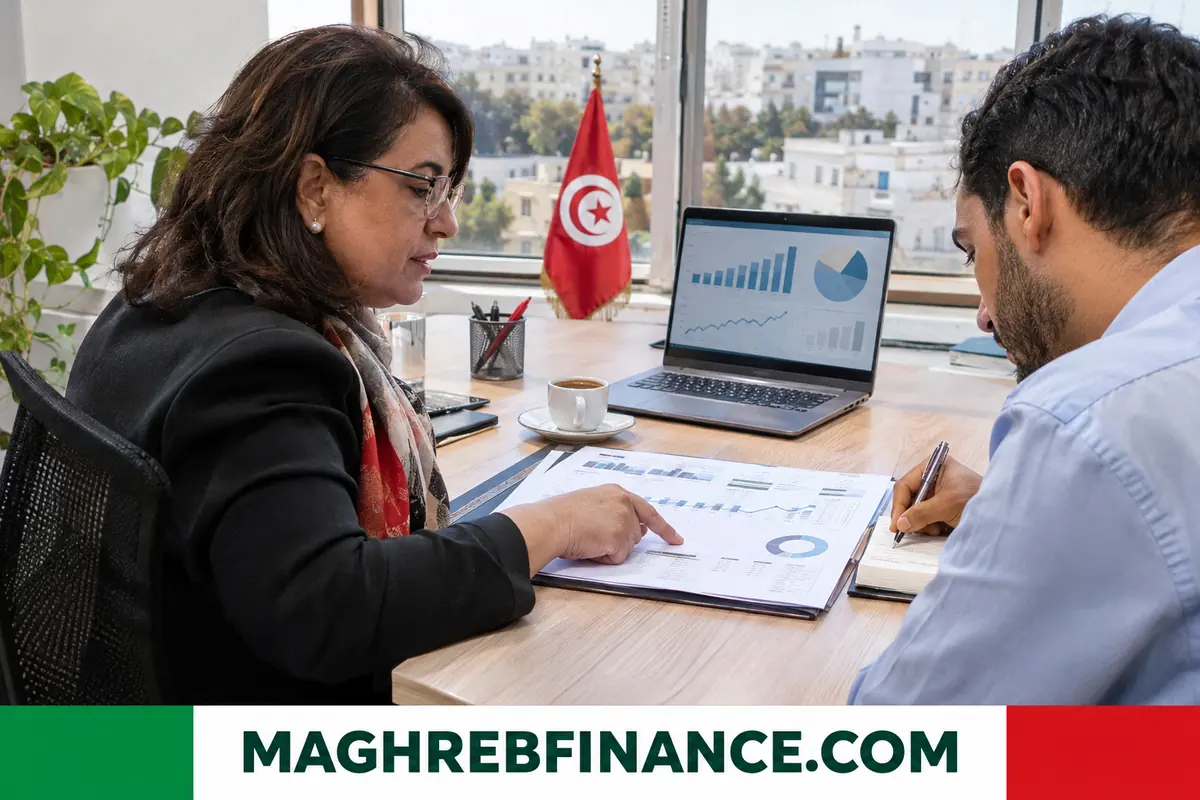
In Tunisia, collective investment funds, known as OPCVM (undertakings for collective investment in transferable securities) and taking the form of SICAV and FCP, pool the savings of many investors. A manager approved by the Financial Market Council invests this money in Tunisian dinars (TND) in shares, bonds or money market products, and each holder owns units whose net asset value is published. They allow savers to diversify without picking securities themselves, with professional management and an entry amount within reach of most households.
Collective investment undertakings in transferable securities: what an OPCVM is
An OPCVM is a vehicle that collects money from savers and invests it according to a stated strategy. Each investor receives units proportional to their stake. The unit value moves with the securities held by the fund and is calculated regularly.
Pooling brings three advantages: diversification, professional management and access with a modest sum. In return, the investor accepts management fees and the risk that unit value falls, since the capital is not guaranteed.
SICAV and FCP: two legal forms
A SICAV, an open-ended investment company, is a company of which the investor becomes a shareholder. An FCP, a mutual fund, is joint ownership of securities without legal personality, run by a management company.
For the saver, the distinction is mainly legal. In both cases they buy and sell units at net asset value, with entry fees and management fees that should be read in the prospectus.
The main fund categories
Funds differ in composition. Money market funds invest in short-term instruments and aim for stability. Bond funds hold mostly debt securities of the State or companies. Mixed funds combine bonds and shares, and equity funds invest in listed shares.
A saver planning a project in a few months chooses a money market fund, a medium-term investor a bond fund and a long-horizon saver an equity fund.
Buying and selling units
Units are bought from the management company, banks or brokers. The investor fills in a form, pays the amount and receives units at the net asset value of the day or the next day. Selling works the same way, with a settlement delay.
Banks offer SICAVs they manage or distribute, for example the bond SICAV presented by UIB. Savers compare fees, past performance over several years and the clarity of documents before choosing.
Fees, performance and reading the prospectus
Fees include entry charges, annual management fees and sometimes exit fees, and they reduce yield. Past performance does not guarantee future results and should be read over several years against a reference index.
The prospectus and the key information document describe the strategy, risk, fees and recommended holding period. Reading them before investing prevents unpleasant surprises.
Tax treatment in Tunisia
The tax regime of OPCVM depends on the nature of the fund, the holding period and the investor's status. Some categories, such as funds linked to the share savings account, open advantages under conditions.
Ask the management company or the bank for a summary of how income and gains are taxed and check it against the finance law in force.
Choosing a fund and reading net asset value
The choice rests on investment horizon, accepted risk and need for liquidity. Look also at the strength of the management company, the clarity of documents, the fee policy and the regularity of the net asset value. A beginner often starts with a prudent fund and small amounts.
Net asset value is the price of a unit on a given date: the fund's net assets, meaning the value of all securities minus debts, divided by the number of units. Subscriptions and redemptions are made at that price, and its history shows how the fund behaved in different market conditions.
Risk, diversification and who offers funds
Every fund carries a risk level. A money market fund moves little but earns less, whereas an equity fund can swing sharply in the short run. Matching the fund to the investor profile matters more than chasing the best recent performance.
A prudent household can split savings between a money market fund for needs within a year, a bond fund for the medium term and a small equity share for long goals. Rebalancing once a year keeps this mix in line with the plan.
Management companies, banks and brokers distribute funds, and several Tunisian banks run their own SICAVs. Ask who manages the fund, who holds the assets, how often the net asset value is calculated and how results compare with similar funds, then move the money if the fund stops matching the goal.
Before the first subscription, read the prospectus, note the recommended holding period and check how quickly units can be redeemed. A saver who may need the money soon should favour a fund with daily valuation and a short settlement delay, and should avoid putting an emergency reserve into volatile funds.
Frequently asked questions
Is an OPCVM guaranteed?
No. Capital is not guaranteed, and the value of units can fall as well as rise.
How do I find the value of a unit?
The net asset value is published at regular intervals by the management company, banks and the financial press, and it is also available from the broker or the branch that sold the units.
How can I tell a SICAV from an FCP?
A SICAV is a company whose investor becomes a shareholder, while an FCP is joint ownership managed by a management company.
What minimum amount is needed?
It is often modest and varies by fund. The prospectus or the distributor states the minimum subscription.
Can I sell my units at any time?
Generally yes, at the next net asset value, with a settlement delay. Check the redemption rules in the prospectus, and note that some funds charge an exit fee for early redemption.
Further reading
- Amen Bank : Tunisian commercial bank whose English-language site lists the values of its SICAV investment funds and offers online credit simulation.