
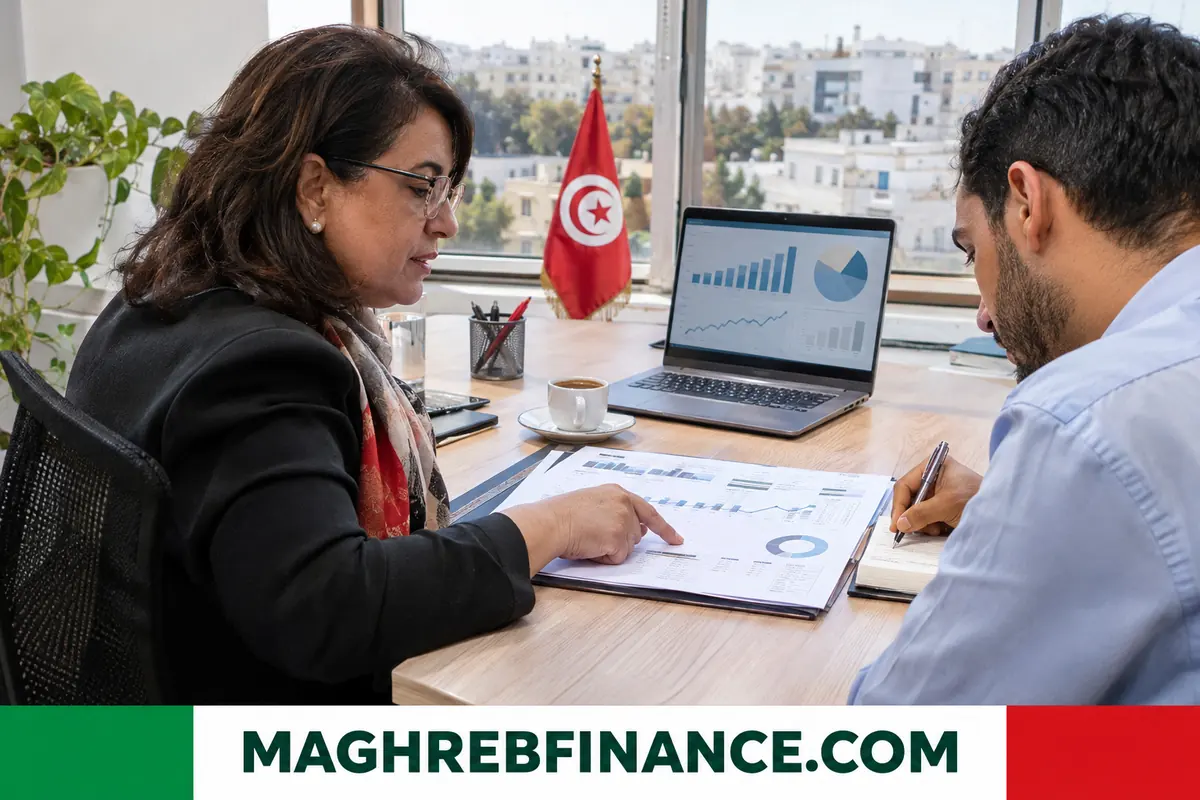
In Tunisia, grants, investment incentives and government subsidised loans are public aids that reduce the cost of a business project. They include premiums paid as a share of the investment, tax and customs advantages, and bank credits with an interest subsidy. Agencies for investment, industry, agriculture and tourism examine applications, while banks handle subsidised loans in Tunisian dinars (TND). Eligibility depends on the sector, the region, the size of the project and the number of jobs created, so each project needs its own check.
Grants: the main families of support
Support falls into three groups. Premiums and grants cover a share of the investment, for example regional development bonuses for projects in less developed areas. Tax and customs advantages reduce taxes on profits, duties on equipment or social contributions for a period. Subsidised loans carry a lower interest rate funded by the state or a dedicated fund.
Aid changes with the finance law and with sector policy, so the details must be confirmed before a project is planned around them.
A business that qualifies for several schemes should check which can be combined, because some programmes cap the total public support for one project.
Agencies that handle applications
Several bodies are involved.
- The Tunisia Investment Authority, a single entry point for investors.
- The Agency for the Promotion of Industry and Innovation, for industrial projects.
- The Agricultural Investment Promotion Agency, for farming and fishing.
- Tourism and handicraft bodies for their sectors.
- The Export Promotion Centre, known as CEPEX, and funds such as FAMEX for access to foreign markets.
The regional branches of these agencies are often the best first contact for a small project.
Business associations, chambers of commerce and professional federations also run information sessions and help members to identify the programme that fits.
Eligibility criteria
Rules vary by programme but share some common points: the project must be new or an extension, in an eligible activity, located in an eligible zone and respect environmental and labour rules. Minimum investment amounts and job creation targets may apply.
Applicants should be registered, up to date on tax and social contributions and free from unpaid debts to the state. Investors with a strong innovation, export or regional development content often have access to better terms.
Priority is often given to under-served regions, to export-oriented firms and to projects that create jobs for graduates or women.
How an application proceeds
The path is usually the same.
- Prepare a business plan and an investment budget.
- Submit the application to the competent agency before starting the investment.
- Receive an approval or a technical opinion setting the amount of aid.
- Obtain bank financing where a loan is part of the scheme.
- Carry out the investment and justify expenses with invoices.
- Receive the payment, often in stages after verification.
Starting spending before approval can make costs ineligible, so ask the agency about timing.
Keep a copy of every document submitted and note each reference number. Reviews can stretch over months, and a clear file speeds up follow-up.
Subsidised loans and the banking circuit
A subsidised loan, or credit with an interest bonus, is granted by a bank under a state scheme. The bank applies a reduced rate, and the state or a fund covers the difference. Sometimes a guarantee or a refinancing line accompanies the loan.
The bank still assesses the borrower's solvency, so approval for the aid does not mean approval of the loan. Entrepreneurs should apply to both in parallel and check the rate actually offered.
Compare the offer with a normal loan on the same terms. A subsidy that is smaller than the extra fees or the longer delay may not be worth the paperwork.
Obligations after receiving aid
Aid comes with duties. The beneficiary must use the money for the declared purpose, keep the assets for a minimum period, maintain the promised jobs and provide reports or accept inspections. Failure to comply may lead to repayment of the aid with penalties.
Keep invoices, bank proofs and a project file in order for several years after payment.
Inspections may include visits to the site, review of accounts and checks that the equipment bought is the same as in the application.
Common mistakes in Tunisia
Typical errors recur among applicants.
- Starting to spend before the file is approved.
- Underestimating the time needed for review and payment.
- Submitting incomplete documents or unrealistic budgets.
- Relying on outdated information about the rates of aid.
- Forgetting that aid is rarely paid in advance, so bridge financing is needed.
A consultant or the agency's advisers can help to avoid these problems.
Hiring an adviser who knows the agencies is not compulsory, but for a larger project the fee may be repaid many times by a smoother file and fewer rejections.
Aid for export, innovation and training
Beyond investment, programmes support participation in trade fairs, market studies, certification, research and development, and staff training. A small exporter of olive oil might obtain help to attend an international fair, while a software firm may receive support to hire engineers. Check each programme for conditions and ceilings, because they differ widely.
Agencies publish updated lists of eligible activities and zones, so consult the current list before drawing up the budget.
Trade associations in textiles, food and information technology regularly publish guides for exporters, which are worth reading before applying.
Keep in mind that support schemes are subject to budget decisions. A programme may close or reopen, so plan with a fallback if the aid arrives later than expected.
Frequently asked questions
Can I start investing before approval?
It is risky. Many schemes only count expenses made after the application, so confirm with the agency first.
Are grants paid in advance?
Usually not. They are paid after the investment is made and the expenses are verified.
Does a subsidised loan guarantee bank approval?
No. The bank still examines the borrower's solvency and guarantees.
Where should a small business start?
With the regional office of the relevant agency or a chamber of commerce, which can explain current schemes.