
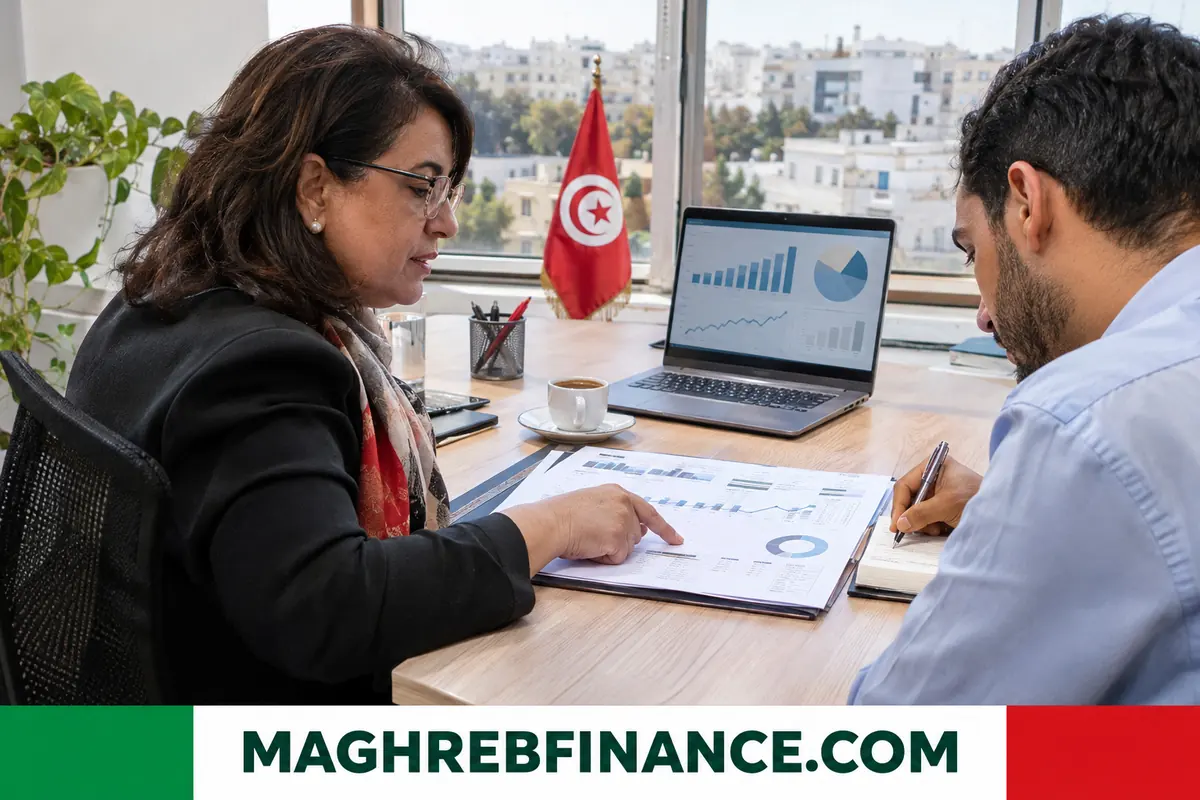
In Tunisia, venture capital and growth capital are forms of equity financing in which investors buy shares in a company instead of lending money. Venture capital backs young, innovative firms with high potential, while growth capital helps established companies expand. Investors include family and friends, business angels, risk capital companies known as SICAR and investment funds, who take part of the ownership and often a seat on the board. Deals are in Tunisian dinars (TND) or foreign currency, depending on the investor.
Why raise equity rather than borrow
A bank loan must be repaid with interest whatever happens. Equity does not create a debt and brings an investor who shares the risk. This suits firms whose sales are still small but promising, or those that need more capital than banks will lend.
The price is dilution. Founders give up part of ownership and sometimes decision rights, so each round must be justified by a clear plan.
Equity also improves a balance sheet. A company with a stronger capital base finds it easier to borrow later, so equity and debt often work as partners rather than rivals.
Love money and business angels: the first money
Early funds often come from family and friends, a practice known as love money. The sums are small, but they allow a prototype or pilot to prove the idea.
Business angels, who are experienced individuals or groups, add money and advice. Several networks operate in Tunisia and link founders with investors, especially in technology, agrifood and health. Terms should be written down, with clear shares and exit conditions, even among relatives.
Founders should remember that angels invest in people first. Meeting regularly, sending short updates and being open about setbacks builds the trust on which later rounds depend.
Venture capital for innovative projects
Venture capital funds invest in companies with fast growth potential, often in technology. In Tunisia, they operate mainly through SICAR vehicles and managed funds, sometimes with public or international partners.
- Investments are staged: a first round, then more money if milestones are met.
- The investor expects a strong team, a scalable product and a credible path to market.
- Founders may benefit from the Startup Act framework, which offers a label and incentives for qualifying young firms.
Many ventures fail, so investors need a few strong successes to compensate.
A prototype, early customers and a clear pricing model make a stronger case than a presentation alone, because they show that someone is ready to pay.
Growth capital for established companies
Growth capital is for firms that already earn profit and want to expand: opening new plants, entering export markets, buying a competitor or professionalising management. The investor usually takes a minority stake and works with the owners on strategy.
Funds such as AfricInvest and Tuninvest, which originated in Tunisia, are among the names associated with private equity in the region. A growth investor looks at profitability, quality of management and the ability to grow without losing control of costs.
Growth deals often include a plan to professionalise governance: monthly reporting, an independent director and a budget approved by the board.
Operational improvements are often a condition of investment. Expect the investor to ask for better cost accounting, a stronger sales process or a clear succession plan if the founder is close to retirement.
Valuation, shareholders' agreement and exit
The price paid per share depends on the valuation, which reflects earnings, assets, market and risk. A founder should be ready to justify numbers and to negotiate.
- The shareholders' agreement fixes voting rights, board seats and decisions needing consent.
- Anti-dilution and pre-emption clauses protect investors in later rounds.
- Exit routes include sale to a strategic buyer, buy-back by the founders, a sale to another fund or a listing on the stock exchange, including its alternative market.
Legal advice before signing is essential, since terms are hard to change afterwards.
Founders should model how their stake changes after each round, since several small dilutions add up to a large one.
Preparing an investment file
Investors read many proposals. A strong file is short, honest and specific.
- Executive summary with problem, solution, market and traction.
- Financial projections with explicit assumptions.
- Biographies of founders and key staff.
- Use of funds and the expected milestones.
- Cap table showing who owns what today and after the round.
Audited or well-kept accounts, clean legal documents and a clear tax position shorten due diligence, the investigation that precedes a deal.
A short, honest risk section builds credibility, as investors know that every project carries unknowns.
Alternatives and complements
Equity is not the only option. Bank loans suit predictable cash flows, leasing suits equipment, and public grants can reduce the amount to raise. Crowdfunding and quasi-equity tools such as convertible instruments help bridge rounds.
Combining equity with a bank loan often gives the best mix, since the investor's presence strengthens the bank's confidence.
Crowdfunding platforms are still limited in Tunisia, but equity-style campaigns and convertible notes are being tested by start-ups that want a lighter process than a full funding round.
Whatever route is chosen, keep the cost of fundraising in view: legal fees, valuation work and management time are real expenses, and an unsuccessful round can distract a small team for months.
Support structures
Incubators, accelerators and business support organisations help founders to prepare. They provide mentoring, workspace, introductions to investors and training in finance and law. A founder who has passed through such a programme usually presents a more convincing case than one who approaches investors alone.
Mentors from earlier cohorts also provide references, which matter in a small market where investors speak to one another.
Frequently asked questions
What is the difference between venture capital and growth capital?
Venture capital funds early, risky and innovative firms. Growth capital funds profitable companies that want to expand.
What is a SICAR?
A SICAR is a Tunisian risk capital investment company, a legal form used to invest in unlisted firms.
Will I lose control of my company?
Not necessarily. Many investors take minority stakes, but they usually request governance rights and consent on major decisions.
How long do investors stay?
Often several years, until an exit through sale, buy-back or listing.