
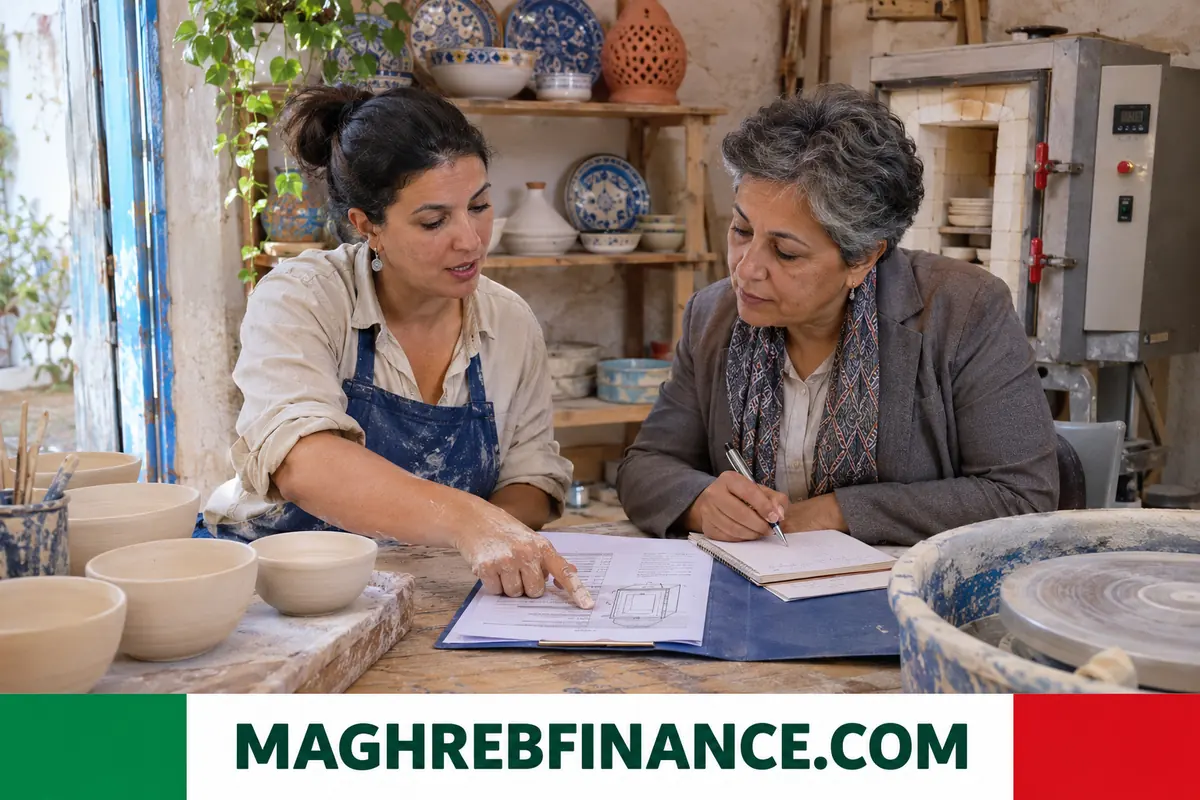
In Tunisia, personal microcredit loans are small loans that help with individual needs, a type of financing for health costs, school fees, home equipment or minor repairs, repaid in Tunisian dinars (TND) over a short period. They target households with modest or irregular incomes who struggle to obtain bank credit. The institutions that grant them are licensed and supervised by the Microfinance Supervisory Authority, and they rely on group guarantees or personal sureties, because most borrowers have no real estate to offer as security in practice.
Personal microcredit: A small loan for a defined public
Microcredit fills a gap that banks leave open: sums of a few hundred dinars for households with no collateral and sometimes no formal payslip. Clients include informal workers, low-paid employees, women from modest families and residents of areas far from a bank branch.
The deal is closer supervision in exchange for access. Credit officers visit homes, assess the real budget and stay in regular contact, which also helps to spot repayment trouble early.
Who lends in Tunisia
The sector rests on microfinance institutions, organised as associations or companies, with Enda Tamweel among the best known. Some banks and public programmes also provide small loans to modest households.
The Microfinance Supervisory Authority sets rules on transparency, rates and client protection. Always confirm that a lender is authorised and avoid informal moneylenders with no legal existence.
The contract should name the institution, state its licence, and set out the rate, fees and repayment schedule in clear French or Arabic. A complaints service should be available.
Private needs, not only business projects
Many microloans finance a small trade, but social products exist as well: home improvement, connection to water or electricity, health and education. A personal microcredit covers a family need without starting an activity.
The line between private and business use can blur for small traders, so lenders state the permitted use in the contract and may check it with a visit.
A family replacing a refrigerator, paying for an operation or connecting a home to the water network finds a loan sized to its budget, and can often borrow again after repaying.
Conditions and documents
Requirements are lighter than at a bank: no domiciled salary, few formalities and sometimes just a visit to a branch. The institution looks at residence stability, reputation and repayment capacity based on the household's actual income.
- National identity card.
- Proof of address or a residence certificate.
- Proof of income, even informal, when available.
- A relative's surety or the commitment of a solidarity group.
Rates, fees and repayment
Microcredit can look expensive next to a bank loan because small amounts and field follow-up cost a lot to manage. The annual rate must stay within regulatory limits and be shown before signature.
Repayment is usually weekly, fortnightly or monthly over a short term. Check the effective annual rate, arrangement fees, any insurance and the late-payment charge. Repaying on time often unlocks a larger loan later.
To judge the cost, convert all charges into an annual rate and compare it with a bank consumer-credit offer.
Group guarantees and sureties
Lacking real security, lenders rely on joint liability, where several borrowers guarantee one another, or on a relative who vouches for the loan. This encourages repayment but exposes the guarantors if someone defaults.
Before agreeing to act as a surety, measure the commitment: if the borrower stops paying, you may be asked to repay. A written agreement and an honest talk about each person's finances prevent conflict.
Avoiding over-indebtedness and planning the repayments
Taking several small loans from different lenders can create a burden that is hard to carry. Institutions exchange some information to limit this, but the borrower must stay alert.
Borrow only for a precise need, compare two offers and plan for illness or lost income. If difficulties appear, speak early to the credit officer, who may stretch the repayments. Be wary of anyone who demands fees before paying out or refuses to give a written contract.
A realistic plan starts with the monthly budget: rent, food, health and schooling come first. The instalment should fit what remains, with some margin for the unexpected. If it threatens an essential expense, borrow less or look for social assistance.
Talking the plan through with a trusted relative or a social worker helps test whether it is realistic, and keeping every receipt makes it easy to prove repayments later.
Questions to ask before signing
Before committing, put a few simple questions to the credit officer and ask for the answers in writing.
- What is the effective annual rate, with fees and insurance included?
- What is each instalment and on which dates?
- What penalties apply if a payment is late?
- Can the loan be repaid early, and on what terms?
- Who acts as surety, and up to what amount?
- How can a complaint be filed?
A serious officer answers directly, hands over a readable contract and allows time to think. Pressure to sign, refusal to give a written document or a demand for money before disbursement are warning signs of an unlicensed lender.
Frequently asked questions
Do I need a bank account for a microcredit in Tunisia?
Usually not. Many microfinance institutions lend without a domiciled salary, although they may ask for proof of residence and of some income.
What is a typical use of a personal microcredit?
Health expenses, school costs, household appliances, small repairs or utility connections are common examples of family needs financed this way.
How can I check that a lender is legitimate?
Ask for its licence number and verify that it is supervised by the Microfinance Supervisory Authority. A legitimate lender gives a written contract.
What happens if I cannot repay on time?
Contact the credit officer quickly. Many institutions can reschedule instalments, but late fees and consequences for guarantors may apply.
Can a woman or a young person apply alone?
Eligibility rules differ by institution, but microfinance is widely used by women and young adults. A surety or group commitment is often requested instead of property.