
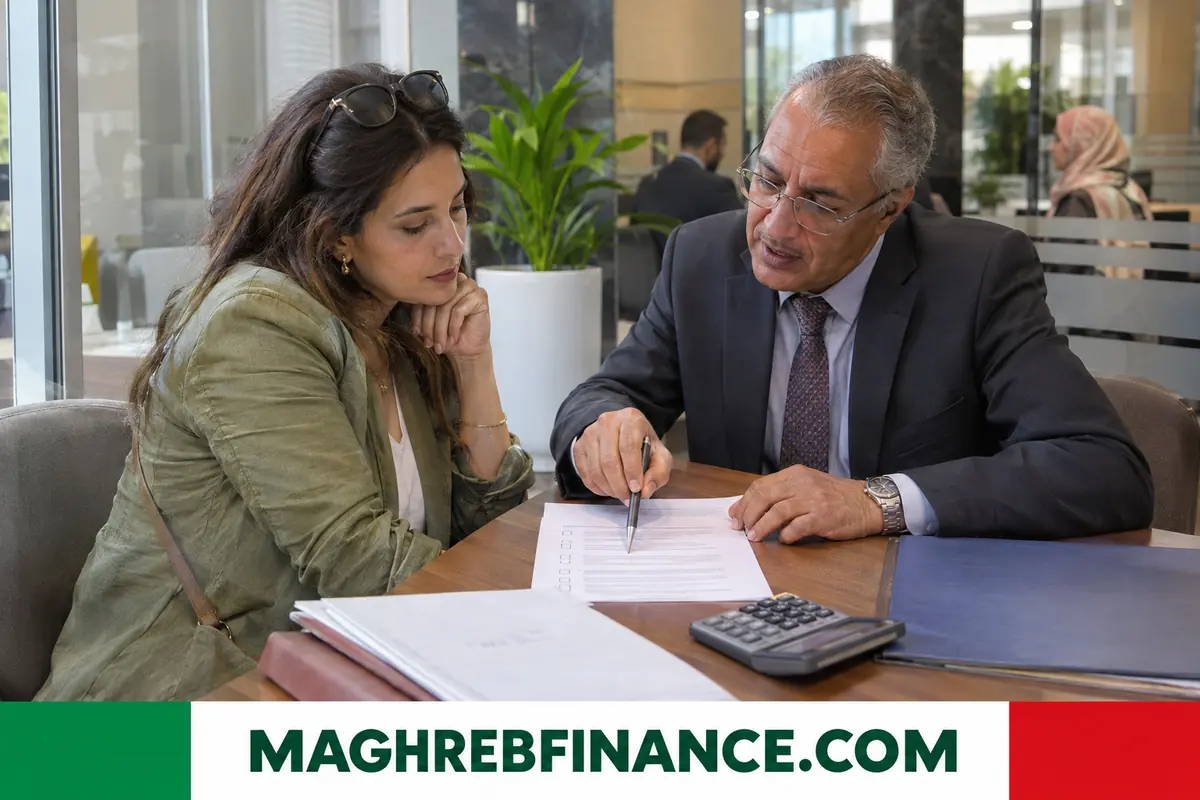
In Morocco, checkbook and bank check issuance gives individuals access to two written payment services, and signing either one commits the person who issues it. A checkbook contains blank forms that the account holder fills in personally, while a bank check is drawn by the bank itself, which guarantees that it will be paid. Individuals use them to settle a rent, school fees or a large purchase in dirhams when the beneficiary wants a written trace. Cheques are governed by the Commercial Code, and incidents are recorded by Bank Al-Maghrib.
Two instruments, two levels of security
An ordinary cheque is drawn on your own account and is worth only the funds available when it is presented. If the balance is insufficient, the cheque bounces and the payee is not paid, which is why sellers of expensive goods are cautious.
A bank check removes that uncertainty. The bank debits your account first and issues the cheque on its own funds. Sellers of cars or flats often insist on it. A certified cheque, where the bank blocks the funds on your account, offers similar reassurance.
Obtaining and safeguarding a checkbook
You ask your bank for a checkbook, and the bank may refuse it to a customer with a history of payment incidents. It is handed over at the branch or sent under the bank's own procedure, and some banks charge for each booklet.
Basic precautions
- store it safely and never next to the payment card;
- never sign a blank form;
- keep stubs or a register up to date;
- report any loss or theft to the bank immediately, in writing if possible.
Stopping payment on a cheque is allowed only in the cases listed by law, such as loss, theft or insolvency proceedings against the payee.
Filling in a cheque correctly
A valid cheque shows the amount in figures and in words, the name of the payee, the date and place of issue and the drawer's signature. Crossings out, or a mismatch between figures and words, can lead to refusal. Use indelible ink and leave no blank space where a word or digit could be added.
Crossing a cheque with two parallel lines means it can be paid only through a bank account, not in cash to the bearer. This lowers the loss from theft and is advisable whenever a cheque is handed to a third party.
Getting a bank check: procedure and charges
Go to your branch with an identity document, name the beneficiary and the amount, and make sure the sum is available. The bank debits it and hands over the cheque, sometimes for a flat or proportional commission shown in its price list.
It is common for a second-hand car, a deposit at a notary's office or registration charges on a property. For high amounts, buyer and seller do well to meet at the beneficiary's bank, where deposit and verification take place on the spot.
Funds, bounced cheques and bans
Issuing a cheque without sufficient funds is a serious breach. The incident is reported to the central payment-incident file kept by Bank Al-Maghrib, the bank may suspend your right to issue cheques and recover the checkbook, and you must settle the debt, often with charges.
Beyond banking sanctions, the Commercial Code provides criminal penalties for cheques issued without funds, which also covers post-dated cheques given in the hope of topping up the account later. The safest rule is never to sign a cheque unless the money is certain to be there.
Presentation deadlines and good practice
A cheque must be presented for payment within a short legal period, after which part of the payee's protection is lost. The beneficiary should therefore deposit it promptly and keep the deposit slip.
For a significant payment, check the identity of the bearer, compare the name on the cheque with the identity card, and wait for the cheque to be cleared before handing over the goods. Instant transfers are increasingly used, but a bank check remains valued when a written document is required.
A used-car purchase and how to complain
Picture two private parties in Fès. The seller refuses an ordinary cheque for fear of a bounce, and the buyer distrusts a transfer before seeing the papers. They meet at a branch: the buyer hands over a bank check, the seller has it verified at the counter and the vehicle documents change hands. The buyer notes the cheque number and asks for a signed receipt.
If a cheque is lost, stolen or forged, tell the bank and the police at once and contest the unauthorised debit in writing. If the bank refuses to refund, the banking mediator or the customer relations service of Bank Al-Maghrib can be contacted.
Frequently asked questions
What is the difference between a certified cheque and a bank check?
With a certified cheque the funds stay on your account but the bank blocks them. A bank check is issued by the bank after debiting you, so it carries the institution's own guarantee.
Can I stop payment on a cheque I have issued?
Only in the cases set by law, such as loss, theft or insolvency proceedings against the beneficiary. An unjustified stop-payment request can be penalised.
What do I risk with a cheque that bounces in Morocco?
The cheque is rejected, the incident is recorded, charges are added and the bank can take back your checkbook. Criminal proceedings are possible if you do not put things right.
Can a crossed cheque be cashed over the counter?
No. Crossing forces payment through a bank account, which limits fraudulent use if the cheque is lost or stolen.
How long is a cheque valid?
It must be presented within the short period fixed by the Commercial Code. After that the beneficiary keeps some remedies but with fewer guarantees.