
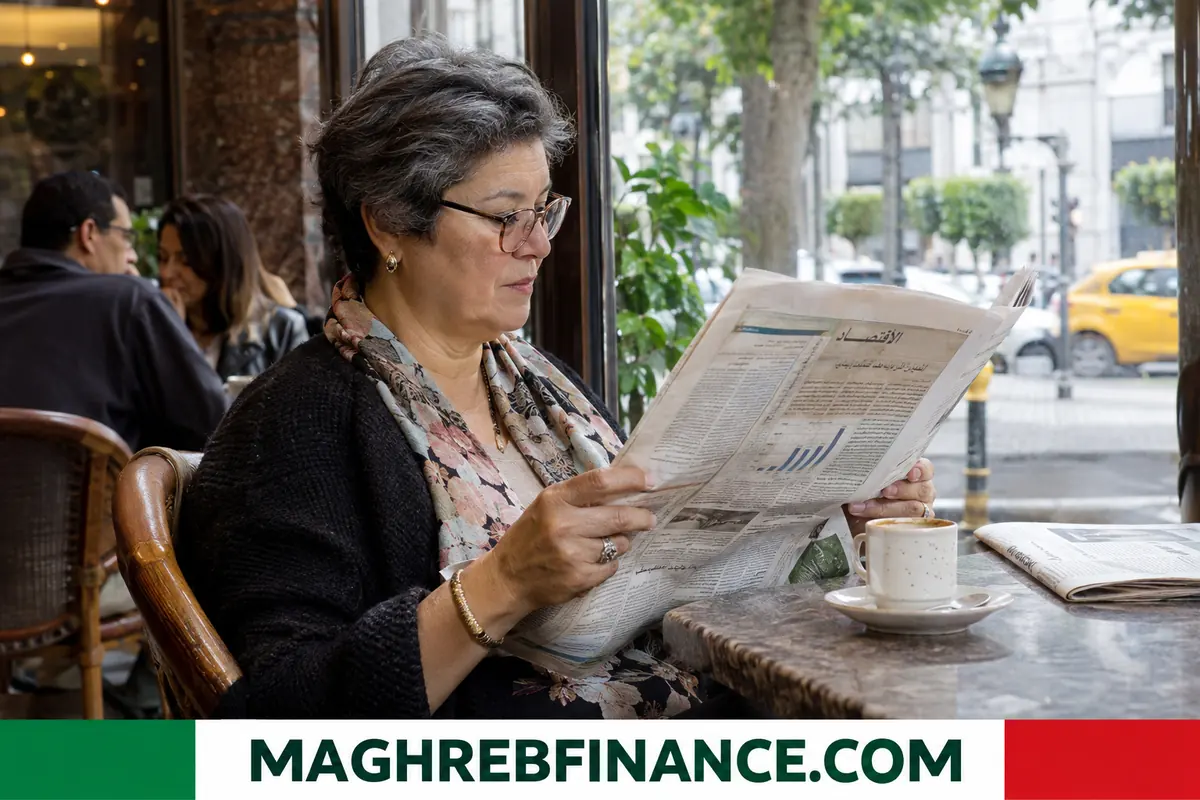
In Tunisia, personal finance and wealth management savings magazines deal with the money of households: budget, credit, investments, retirement, insurance and tax, explained in plain language that avoids jargon and sales talk. They address employees, the self-employed and retirees who earn in Tunisian dinars and want to choose between cash, property, securities and bank products. Some titles are specialised monthlies, others are supplements of weeklies or sections of news sites. Their value lies in teaching: explaining a product before it is bought.
Subjects these magazines handle
A personal finance magazine starts from daily life: building a budget, repaying a loan, preparing studies, buying a home, planning retirement. It compares solutions rather than praising a product.
Recurring reports concern the choice of a savings account, life and death insurance, buying property, passing on wealth and declaring income. Early-year issues often examine the effects of the finance law on households.
Clear vocabulary gives these titles their value: they define terms before drawing conclusions.
Practical pages, such as how-to sheets, detail the administrative steps linked to money: opening an account, bank power of attorney, requesting a statement or closing a savings product.
Formats range from comparative surveys to expert interviews, through readers' letters where real questions get a reasoned answer.
Regulated savings and common investments in Tunisia
Magazines first present the vehicles Tunisian households know: savings books at banks and at the National Savings Bank, housing savings accounts, investment savings accounts and share savings accounts.
Next come Treasury bonds, bond issues, open-ended investment companies and mutual funds. A serious article states the lock-in period, the risk of capital loss and the tax regime of each vehicle.
Property and gold remain habits of wealth saving, which magazines place within a diversification strategy.
Wealth management: building an allocation
Wealth management means spreading assets according to time horizon and risk tolerance. A teaching magazine separates emergency savings, immediately available, from medium-term investments and long-term savings meant for retirement.
It also explains the role of advisers: bankers, stockbrokers, insurers, notaries and accountants. Each works on a specific part, and the article reminds readers to ask for fees and terms in writing.
Figures used in comparisons serve as illustration, never as a promise: past returns do not indicate future returns.
A model allocation table, given as an illustration, shows how a household can combine cash, securities, property and life insurance, adjusting proportions to age and family costs.
Credit, debt and personal insurance
Personal finance includes debt. Magazines detail consumer credit, mortgages, the total cost of a loan and the effect of a variable rate on monthly payments. They advise comparing several offers and reading the borrower insurance that comes with the loan.
On insurance, they distinguish compulsory motor insurance, supplementary health cover, home insurance and protection against death or disability. A reader learns to spot exclusions and deductibles, more useful to know than the premium alone.
Magazines warn against over-indebtedness: when payments exceed too large a share of income, any job loss weakens the household. They explain how to negotiate a rescheduling with the bank and why consolidating loans is not always advantageous.
Household tax and retirement
Tunisian taxpayers find in these magazines explanations of personal income tax, the annual return, allowed deductions and the regime for investment income. Articles take up the novelties introduced by the finance law.
The retirement chapter compares the compulsory scheme run by the national pension and social welfare fund or the national social security fund with supplementary solutions. It urges readers to estimate their future pension before choosing a retirement savings product.
Readers also find the list of documents to keep, filing deadlines and frequent errors, such as forgetting rental income or a pension received from abroad.
Judging the reliability of a savings magazine
A few reflexes are enough to judge a title.
- Is the author identified and competent?
- Are risks presented along with advantages?
- Are official sources cited: the Central Bank of Tunisia, the Financial Market Council, the Ministry of Finance?
- Is advertising separated from editorial content?
An article promising a guaranteed return or quick enrichment should raise suspicion. A good magazine also publishes corrections when information proves inaccurate, a sign of serious editorial work.
Family budget: tools and methods presented
Magazines give much space to budgeting, because it conditions any capacity to save. The most quoted method splits income between fixed spending, variable spending and savings, then tracks the gap month after month with a simple table or a banking app.
Articles urge readers to sort outgoings such as mortgage payments, transport, school fees, electricity and gas bills and phone costs, and to spot those that can be renegotiated. They also remind families to plan exceptional costs, like a wedding or a repair, so as not to dip into long-term savings.
A dated and costed goal, for example a deposit for a home, is easier to keep than a vague intention.
Savings of Tunisians living abroad
Several sections address Tunisians settled abroad, who send funds or hold foreign-currency accounts. They explain how a convertible dinar account works, transfers from Europe or the Gulf and the exchange rules applied by the Central Bank of Tunisia.
Articles also describe property investments made from a distance, with the usual precautions: check the land title, use a notary, compare transfer fees and keep proof of the origin of funds.
Frequently asked questions
Which sections should a beginner read first?
Start with budgeting and emergency savings, then savings accounts and basic insurance, before turning to securities and property.
Can a magazine replace an adviser in Tunisia?
No. It informs in general terms, while a licensed adviser considers each saver's situation, income and goals.
Are the returns quoted guaranteed?
Only some products with a contractually fixed rate offer a return known in advance. Investments in shares or funds are never guaranteed.
Is property or financial investment better?
It depends on the horizon, the liquidity wanted and the budget. Magazines mainly recommend diversifying rather than betting everything on one vehicle.
What is the best vehicle for emergency savings?
One available at any time and without risk of loss, such as a bank savings book or an interest-bearing current account, holding a few months of spending.
Further reading
- News Tunisia, English edition of Tunisie Numérique : English-language edition of a Tunisian news site with economy coverage, useful for following the dinar and household finance news.