
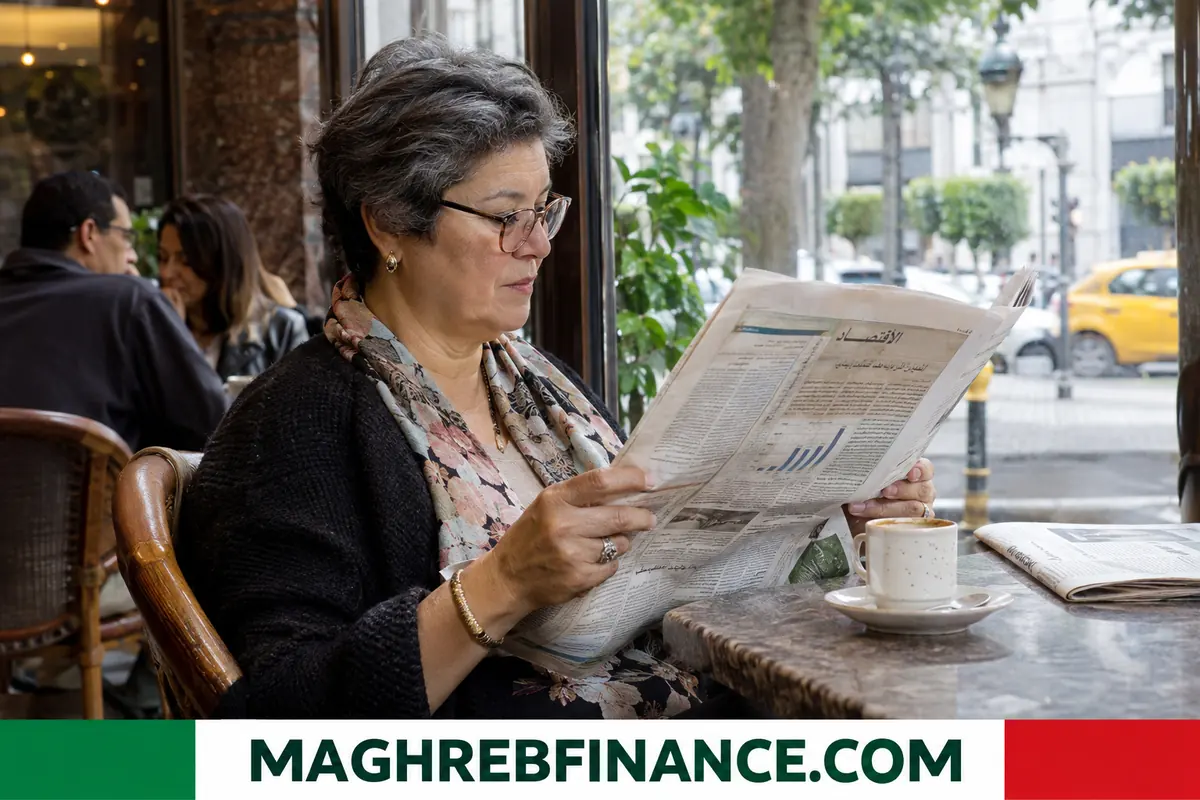
In Tunisia, private-equity, venture-capital, mergers and acquisitions journals publish financial analysis on how companies raise equity, change shareholders or combine. They address small business owners, investors, corporate lawyers and finance students. Deals are priced in Tunisian dinars or foreign currency and involve specialised investment companies, funds and investment banks. These publications help readers grasp the vocabulary, the stages and the risks of each operation, before they sit down at a negotiating table with a fund, a buyer or a bank, and to ask sharper questions of their advisers.
Private equity and venture capital: definitions
Private equity means taking a stake in an unlisted company, supporting it for a few years, then selling the holding. Venture capital is the branch aimed at young innovative firms with high potential and high uncertainty.
Journals explain the difference between seed, start-up, development and transfer stages. They point out that the investor brings equity, sometimes quasi-equity, but also strategic support and management control.
Growth capital finances the expansion of an already profitable company, for example opening a plant or winning an export market, while buy-out capital serves to organise a purchase or the departure of an owner.
Investment vehicles in Tunisia
The Tunisian landscape rests notably on venture capital investment companies, known as SICAR, and on venture capital mutual funds. These structures enjoy a special regime and manage resources from institutions, banks or informed individuals.
Articles describe the life of a fund, management fees and exit mechanisms. They recall that the Financial Market Council oversees funds and their management companies.
Public schemes and funds of funds also support the ecosystem, notably for companies labelled under the Startup Act. Institutional investors such as banks, insurers and pension funds are among the main subscribers to these funds, alongside international development institutions.
Mergers and acquisitions: stages of a deal
A merger or acquisition follows a classic sequence: identifying the target, letter of intent, due diligence, valuation, negotiation of price and shareholders' agreement, then signing and closing. Journals illustrate each stage with anonymised cases.
They insist on sensitive points: liability warranties, non-compete clauses, treatment of staff and any approval by competition authorities. In Tunisia the Competition Council examines certain concentrations according to their size.
A merger joins two companies into one, a share purchase transfers control, and an asset sale concerns only one branch of activity. Journals explain these legal and tax nuances.
Valuation and financial analysis
To set a price, analysts use several methods: earnings multiples, discounted cash flows and adjusted net assets. Journals publish studies on valuation gaps between sectors and on the effect of the exchange rate.
They remind readers that every valuation depends on assumptions and that two experts can reach different ranges. A table of figures without a method is not enough.
They detail the step from enterprise value to equity value, taking into account net debt and off-balance-sheet commitments, as well as the discounts applied to unlisted companies.
Succession in family firms and exits
Many Tunisian companies are family owned. Journals deal with succession, the entry of a minority fund, management buy-outs and stock market listing. They present an investor's exit as a project to prepare from the moment of entry, with written conditions.
- sale to an industrial buyer;
- purchase by the managers;
- sale to another fund;
- listing on the stock market.
Reports on family governance mention the family council, managers' pay and the separation between private wealth and company assets.
Reading these journals with discernment
Announcements of fundraising or buy-outs sometimes rest on company releases, which highlight the event without detailing price or terms. It is better to cross several sources and look for the official document, such as a regulator notice or a Bourse release for a listed company.
A reader must also consider the publication date: the situation of a fund or a target changes fast.
Rankings of dealmakers and league tables should be read with distance, because their calculation criteria differ from one publisher to another.
An entrepreneur gets more from these readings by completing them with talks with a corporate lawyer and an accountant, who know the constraints of the company, its sector and the tax side of the deal.
Start-up financing and the role of the Startup Act
Venture capital journals devote reports to the framework that has structured the ecosystem of young innovative companies in Tunisia. The label given to start-ups opens access to tax and social benefits and to adapted financing schemes.
A young company generally goes through seed funding, a Series A and later rounds. Articles say who brings what: business angels, seed funds, regional funds or foreign investors. They describe the dilution founders suffer at each round.
Shareholders' agreement, preference rights, exit clauses and conversion terms for convertible bonds are frequently explained, with examples that use no fixed figures.
Cross-border deals and foreign investors
Mergers involving a foreign buyer raise questions of currency, repatriation of capital and prior authorisation. Journals recall that some sectors are regulated and that the Central Bank of Tunisia intervenes in foreign currency operations.
They also follow investments by European and Gulf groups in industry, banking and services, as well as purchases made abroad by Tunisian companies. A reader spots the active sectors and the legal structures used.
The governing law and international arbitration clauses, frequent in such contracts, are also discussed.
Frequently asked questions
What is the difference between venture capital and private equity?
Venture capital finances young innovative firms with high risk, while private equity also covers established companies in growth or transfer.
What does SICAR mean?
It is a venture capital investment company, a Tunisian structure that takes stakes in unlisted businesses.
Can a journal give the price of a transaction?
Only if the parties have made it public. In most cases the financial terms stay confidential.
Does one need to be an expert to follow these analyses?
No, but a base in accounting and corporate finance helps interpret valuations and structures.
What risks does a private equity investor face?
Partial or total loss of capital, the lack of liquidity of unlisted securities and the lock-in period of funds, often several years.