
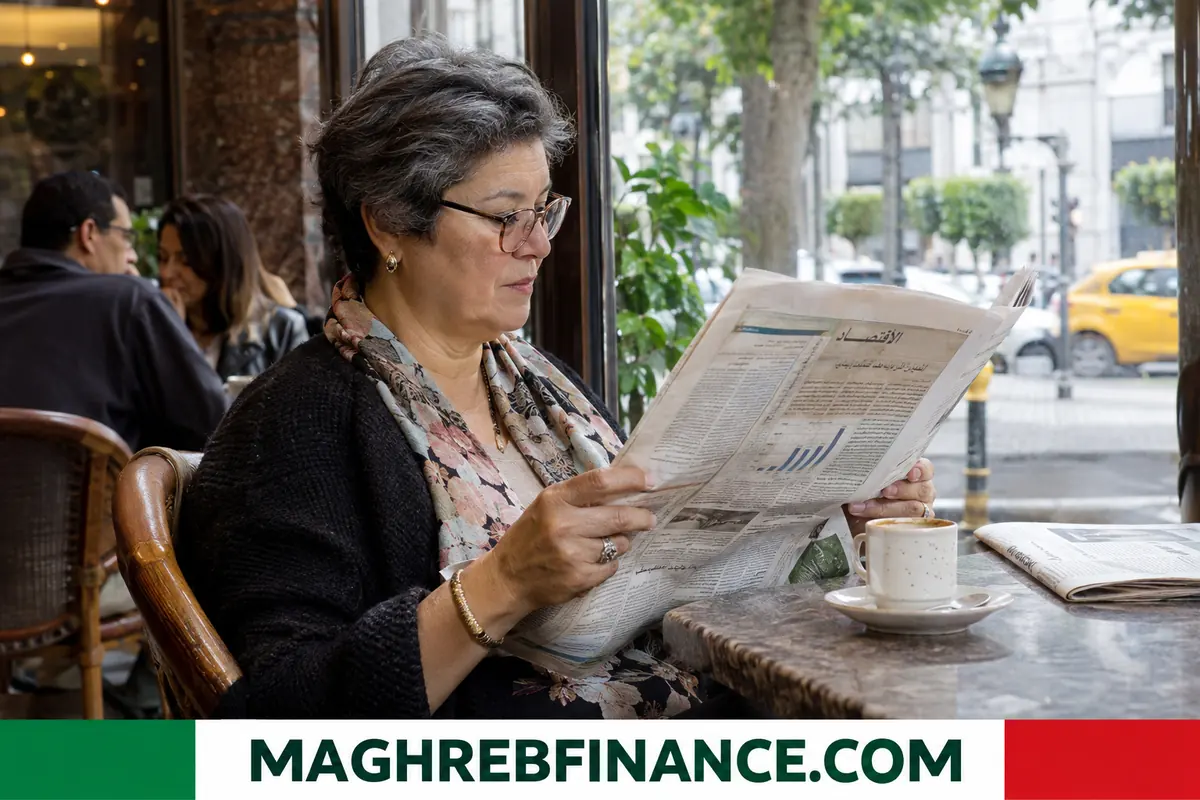
In Tunisia, specialist banking, finance and insurance journals and publications, whether reviews, bulletins or reports, inform professionals of the financial sector and their customers. They decode circulars of the Central Bank of Tunisia, the activity of insurance companies and developments on the Bourse. Bankers, insurers, auditors, lawyers and students find sector analysis, commented figures and interviews with executives. Reading them clarifies the rules applying to operations in dinars and foreign currency, and helps readers prepare better questions for their bank or insurer.
A financial sector followed by a specialised press
The Tunisian financial sector brings together banks, financial institutions, insurance companies, leasing firms, stockbrokers and microfinance institutions. Each of these families gives rise to publications of its own.
Some journals are published by the economic press, others by professional organisations, firms or supervisory bodies. The tone varies: in-depth analysis, regulatory news, statistical study or interview.
The reader can thus identify the level of detail needed, from a simple annual review to a technical note on a text.
Special issues, often devoted to an anniversary, a reform or an annual ranking of institutions, become real reference files that are kept beyond the publication date.
Banking: circulars, results and strategies
The banking part of these publications relays circulars of the Central Bank of Tunisia, prudential rules, solvency and liquidity ratios and the results of listed and unlisted institutions. It follows the digital transformation of branches and the growth of mobile payments.
The professional association of Tunisian banks and financial institutions represents the sector, and its positions feed the articles. Journals also report developments in lending to businesses and individuals.
They also discuss the restructuring of some public banks, the handling of doubtful loans and risk cover through provisions, themes followed by analysts and shareholders.
Insurance: market, regulation and products
Insurance journals present the evolution of premiums by line, company results, the place of bancassurance and regulatory news. The General Insurance Committee supervises the sector, and the Tunisian federation of insurance companies speaks for it.
They detail compulsory insurance, such as motor third-party liability, and optional products: health, life, home, business risks and farm insurance. Feature articles explain pricing and claims handling.
Reinsurance, which lets companies spread their heaviest risks, is the subject of technical columns, as is insurance of farming and climate risks.
Financial markets, microfinance and leasing
A third family of content deals with markets. It looks at issues of shares and bonds, collective investment schemes and decisions of the Financial Market Council. Leasing, widely used by businesses to finance equipment, has regular sections.
Microfinance is the subject of reports on financial inclusion, credit associations and licensed institutions, placed under the watch of a dedicated supervisory authority.
Annual reports of the financial market regulator complete this reading with statistics on issues, funds and saver protection.
Formats and publication rhythm
Readers find monthly or quarterly reviews, shorter newsletters, annual reports of institutions and digital letters sent by email. Digital formats make keyword search and archiving easier.
- paper and PDF reviews for in-depth analysis;
- weekly bulletins for regulatory monitoring;
- annual reports for consolidated figures;
- thematic files at the time of major reforms.
Free weekly digital letters give a first level of monitoring before subscribing to a full review.
Who uses these publications
A bank manager follows competition and compliance there. A broker or insurance agent spots new products. A finance student finds case studies, while a business owner compares available financing before negotiating with the bank.
Journalists and researchers use them as a secondary source, then go back to official texts to quote precisely. Legal and compliance teams consult them to follow the entry into force of a text.
Universities and business schools include them in reading lists, because they provide concrete cases of applied regulation, market studies and international comparisons, for example with neighbouring Maghreb countries. Human resources departments also use them to spot the skills in demand, from actuarial work to compliance.
Compliance, anti-money laundering and governance
Compliance holds a growing place in banking journals. They explain duties of customer due diligence, reporting of suspicious transactions and internal control. The Tunisian financial analysis commission receives suspicion reports, and institutions adapt their procedures to changes in the legal framework.
Governance reports describe the role of the board, the audit committee and the risk management function. Banks must follow internal control rules, and journals comment on how leaders apply them.
Publications also treat complaint handling and fee transparency, subjects followed closely by consumer associations. Protection of customer data and security of information systems complete these files.
Digital transformation and new players
Online banking, mobile payment, electronic money and account aggregation services feed many articles. These journals explain the framework applying to payment institutions and follow the rapprochement between banks and fintech firms.
They address cybersecurity, since the digitisation of operations exposes customers and institutions to fraud. Advice on caution, such as never sharing a code received by message, is repeated regularly.
In insurance, online subscription and digital claims handling progress, with questions of evidence and protection of personal data.
Frequently asked questions
What is the difference between a review and a bulletin?
A review develops analysis and special reports, while a bulletin briefly summarises news or regulation over a given period.
Are these publications reserved for professionals in Tunisia?
No. Many are open to students and individuals, even if their vocabulary is technical.
Where can the official texts quoted be found?
On the websites of the Central Bank of Tunisia, the General Insurance Committee, the Financial Market Council and in the Official Gazette of the Tunisian Republic.
Are market figures comparable from one journal to another?
Not always: scope and closing dates differ. The method should be checked before comparing.
Do these journals charge a fee?
It depends on the title. Some are sold by subscription, others offer free articles or summaries online, and institutional reports are generally public.
Further reading
- African Manager (English edition) : English-language edition of a Tunisian financial news site, covering bank profitability, bond issues and the economy.